Get Full Government Meeting Transcripts, Videos, & Alerts Forever!
Get email alerts on the Short Term Rental Bylaw topic
No spam. Unsubscribe anytime.
Falmouth advisory committee defends short‑term rental bylaw as Board of Health flags inspection burden
Summary
Committee members defended a proposed short‑term rental bylaw set for Town Meeting, saying registration and a contractor-funded system can provide 24/7 contact and help fund oversight; Jed Goldstone of the Board of Health warned annual inspections for 800+ rentals would strain health‑department staffing.
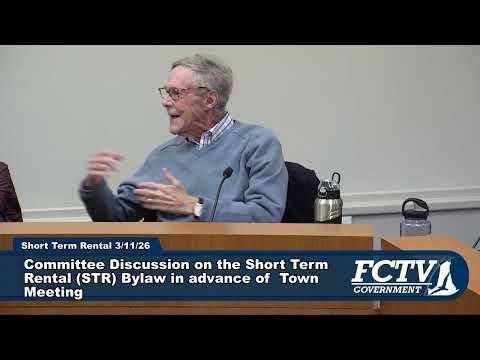
A Select Board short‑term rental advisory committee met March 16 to prepare for an upcoming Town Meeting debate on a proposed short‑term rental bylaw and to hear concerns raised by the Board of Health.
The committee emphasized that the bylaw creates a registration system to provide a 24‑hour contact for neighbors and enforcement, and that a $50,000 contractor contract has been budgeted to build a registration system that could allow owner self‑inspections, store records and reduce staff workload, a committee member said. "This is a registration program for now and a contact information for people when there's problems," the committee member said.
Jed Goldstone, identified in the transcript as a member of the Board of Health and a prospective chair, told the committee the board was worried about staffing if inspections were required. "We know that there are at least 800 short term rentals, probably more than that," Goldstone said, and annual inspections would likely require "two full time inspectors in addition to any staff that we have now." He and other board members argued long‑term rental inspections and core public‑health duties (restaurant inspections, disease surveillance) should take priority.
Committee speakers said the bylaw's inspection language is permissive and could be administered by the health department, building department or fire/rescue, or by contractors that facilitate self‑certification. One committee member said town council advised that ownership of enforcement policy and liability questions rests with the town's legislative/administrative process, not with the Board of Health.
Police‑department representatives who spoke to the committee said a registration requirement would give officers a direct contact for nuisance complaints and improve compliance. "To have somebody there to have a way to contact somebody and say, this is a problem," the police representative said, arguing that a posted, monitored phone number is a critical component for responding to late‑night calls.
Committee members also discussed communications ahead of Town Meeting, debating tone for a planned enterprise piece and agreeing that a presentation should be ready for Town Meeting and that two committee members should attend the Board of Health meeting the following Monday to iron out specific sticking points. The committee asked the administration to confirm how much work could be contracted out and to confirm staffing plans.
On procedural business, the committee approved the draft minutes from Feb. 4 by voice vote and set a follow‑up meeting for the week after the Board of Health discussion. The Town Meeting vote on the bylaw remains scheduled as posted on the warrant; the committee said it will finalize public messaging and a PowerPoint presentation before that meeting.