Superintendent says district would face $621 million shortfall without half‑penny renewal; board hears $1.2B capital plan
Loading...
Summary
Superintendent Fred outlined a 15‑year capital outlook and urged renewal of the half‑penny sales tax, saying it funds roughly 45% of local capital dollars and that without renewal the district projects a $621 million shortfall; department leads detailed safety, technology, transportation, maintenance and construction needs.
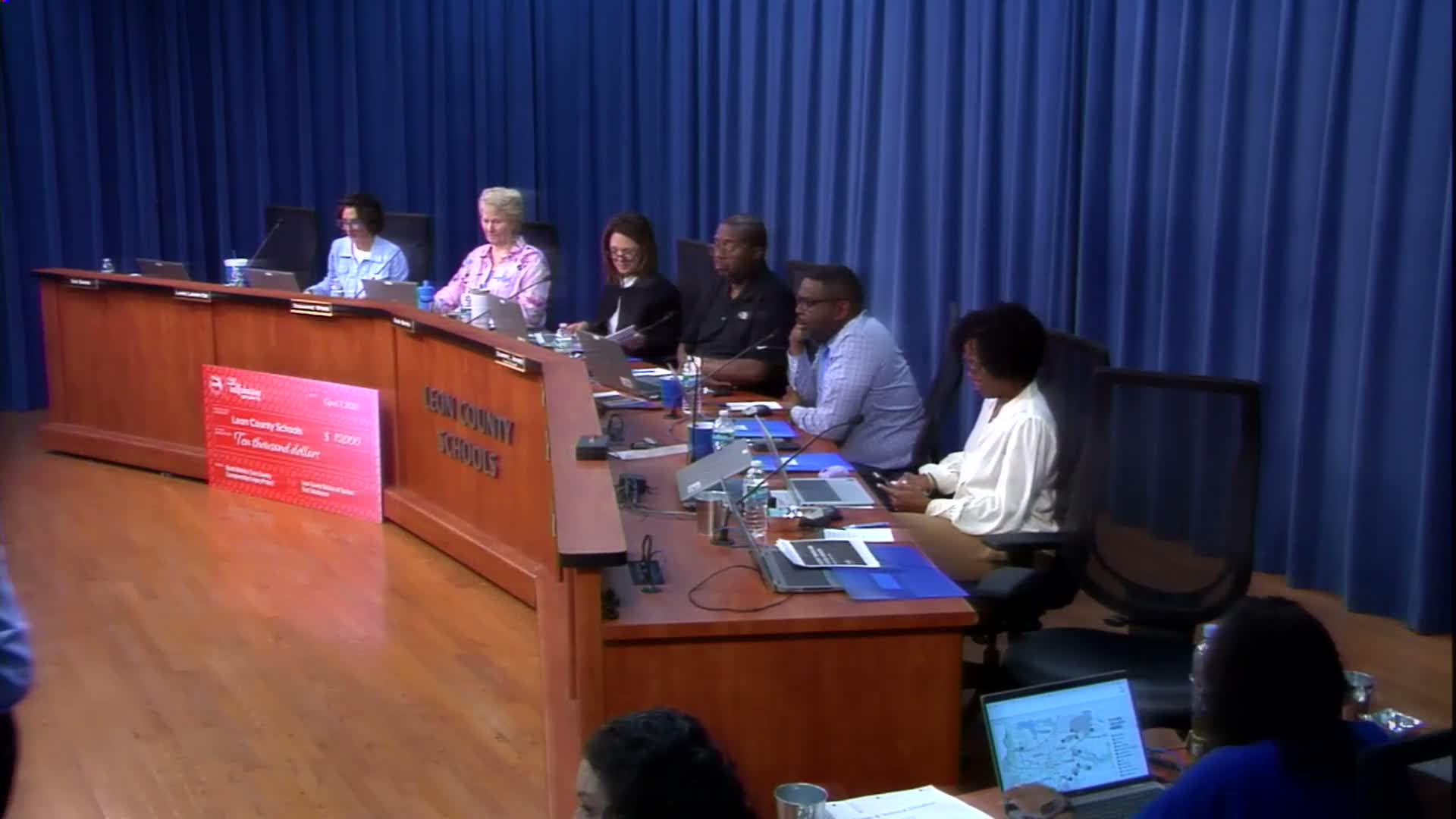
The Leon County School Board on April 13 heard a multidepartment presentation laying out a proposed capital plan and the rationale for renewing the half‑penny local sales surtax that has funded school capital projects for more than two decades.
Superintendent Fred said the district combines local capital improvement funds (about 1.5 mills) and half‑penny revenue to generate roughly $72–$73 million annually for capital work, with half‑penny money accounting for about 45% of that total. He warned that without renewal the district would be roughly "$621,000,000" short of the capital needs laid out in the 2028–2043 projection.
Why it matters: the board is considering whether to place a renewal referendum on the November ballot; the half‑penny has paid for school construction, renovations, bus replacement and other capital projects since 2002. Trustees and staff discussed timing, required ballot language changes (statutory updates require charter schools to receive a proportionate share) and the logistics of an OPAGA performance audit if the referendum language materially changes from prior versions.
Key departmental summaries:
- Safety and security (Chief Williams): district priorities include classroom access control (fobs), automated gate control, additional fencing, upgraded cameras and mass emergency notification. Williams estimated about $25 million for priority items over 15 years and said access control "is the future for this district." He noted some safety personnel and operational costs are supported by categorical state funds but that infrastructure relies on capital outlay.
- Instructional technology (Justin Williamson): roughly $183 million is planned over 15 years to maintain networks, school systems (Canvas, Focus, ParentSquare), student device replacement, classroom displays and a new plan to provide mobile devices for teachers.
- Transportation (Fred Johnson): bus fleet replacement is ongoing (recent purchases include 30 buses), GPS and camera systems are in place, and the district is exploring student tracking/management tools to support attendance and FTE reporting.
- Maintenance and construction (Ryan Peck, Rod McQueen): maintenance will continue on a preventative cycle with annual allocations for flooring and HVAC/roofing (examples cited: $1 million/year for flooring and $3 million/year for HVAC/roof/priority projects). Construction leaders outlined current and proposed major projects (new wings, rebuilds and a new Bradfordville bus compound) and noted the district spent more than $200 million in capital improvements over the past decade.
Ballot language and oversight: staff circulated draft resolution language for the referendum. The board debated whether to include a "citizen oversight" committee in the ballot/resolution text; the attorney warned that "oversight" could be interpreted as conferring authority and recommended phrasing such as "review by a citizen advisory committee." The board also learned there is a 75‑word limit for ballot language and that recent statutory changes require language about charter school proportional shares and allowable lease/lease‑purchase of buses; staff agreed to revise the language and return with a redraft at a follow‑up workshop.
Next steps: staff will prepare corrected maps (where needed), a more detailed capital‑project list by school, and a revised ballot/resolution draft that addresses board direction and statutory requirements for discussion at the next workshop and meetings leading to a final vote about placing the question on the November ballot.