Lifetime Citizen Portal Access — AI Briefings, Alerts & Unlimited Follows
Oro Valley delays vote on ordinance to allow temporary bagging of no-parking signs after residents raise safety concerns
Loading...
Summary
Council opened a public hearing on a proposed ordinance (O26-06) to permit temporary suspension of no-parking restrictions for special events but, after extensive resident concern about safety and definitions, voted to table the item for more code language and public-notice options; item is scheduled for further consideration on August 12, 2026.
The Oro Valley Town Council opened a public hearing on proposed ordinance O26-06, which would create a code process allowing the town engineer and police chief to temporarily lift council-established no-parking restrictions for "special circumstances." After extended public testimony and council questions focused on safety, notification and definitions, council voted to table the ordinance to a future date to allow staff and the town attorney to refine the language and propose required safety and notification protocols.
Multiple residents from the Calle Buena Vista area told the council that existing no-parking restrictions had been installed for safety reasons and said temporary exemptions would reintroduce hazards. Patricia Tozier described narrow roadside widths, lack of lighting and forced pedestrian travel in the roadway and said simply that allowing parking for special events "is not safe." Another resident, Deborah Patrick, told council that neighbors had experienced vandalism and personal threats in the dispute over prior parking; she asked council to prioritize residents' safety and rights.
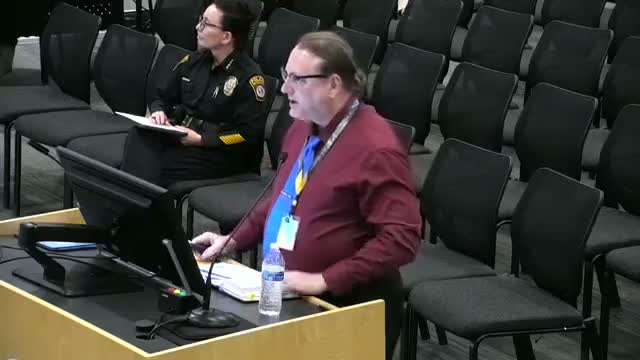
Town Engineer Paul Keesler told council staff had for decades informally "bagged" no-parking signs for events near schools and churches, but that the practice lacked formal code support. He proposed a new subsection allowing temporary bagging within a 1,000-foot radius of an applicant's property under "special circumstances," subject to an application that documents available parking, event timing, denial of other parking options, and conditions imposed by the traffic safety committee (town engineer, police chief and staff). Keesler emphasized staff would evaluate whether additional safety measures—lighting, on-site traffic control, police presence—were required.
Council members pressed staff to tighten definitions; Vice Mayor Barrett suggested limiting covered events to "unique, nonrecurring events that significantly increase vehicular and pedestrian traffic," and asked that the code require any required traffic control measures be described in the permit. Several council members also asked that property owners within a set notification radius be given advance notice when signs are to be bagged.
Given the number of open questions—definitions of special circumstances, required safety measures, how notifications will be handled, and whether the practice should differ for public versus private applicants—council voted unanimously to table the ordinance to the August 12, 2026 meeting to allow staff and the town attorney to return with a draft that addresses those points. In the interim staff said the town would continue to exercise its historical practice of ad hoc bagging in locations where the town has done so for many years, while clarifying that formal code change is pending.