Get Full Government Meeting Transcripts, Videos, & Alerts Forever!
Get email alerts on the Entrance Age Policy topic
No spam. Unsubscribe anytime.
Parents urge Shorewood board for clearer rules after delayed-enrollment denials
Summary
Several parents told the Shorewood School District board they were blindsided when administrators denied delayed-enrollment requests under entrance-age policy 5.112 without stated criteria or teacher consultation, urging the board to adopt transparent standards and an appeals process.
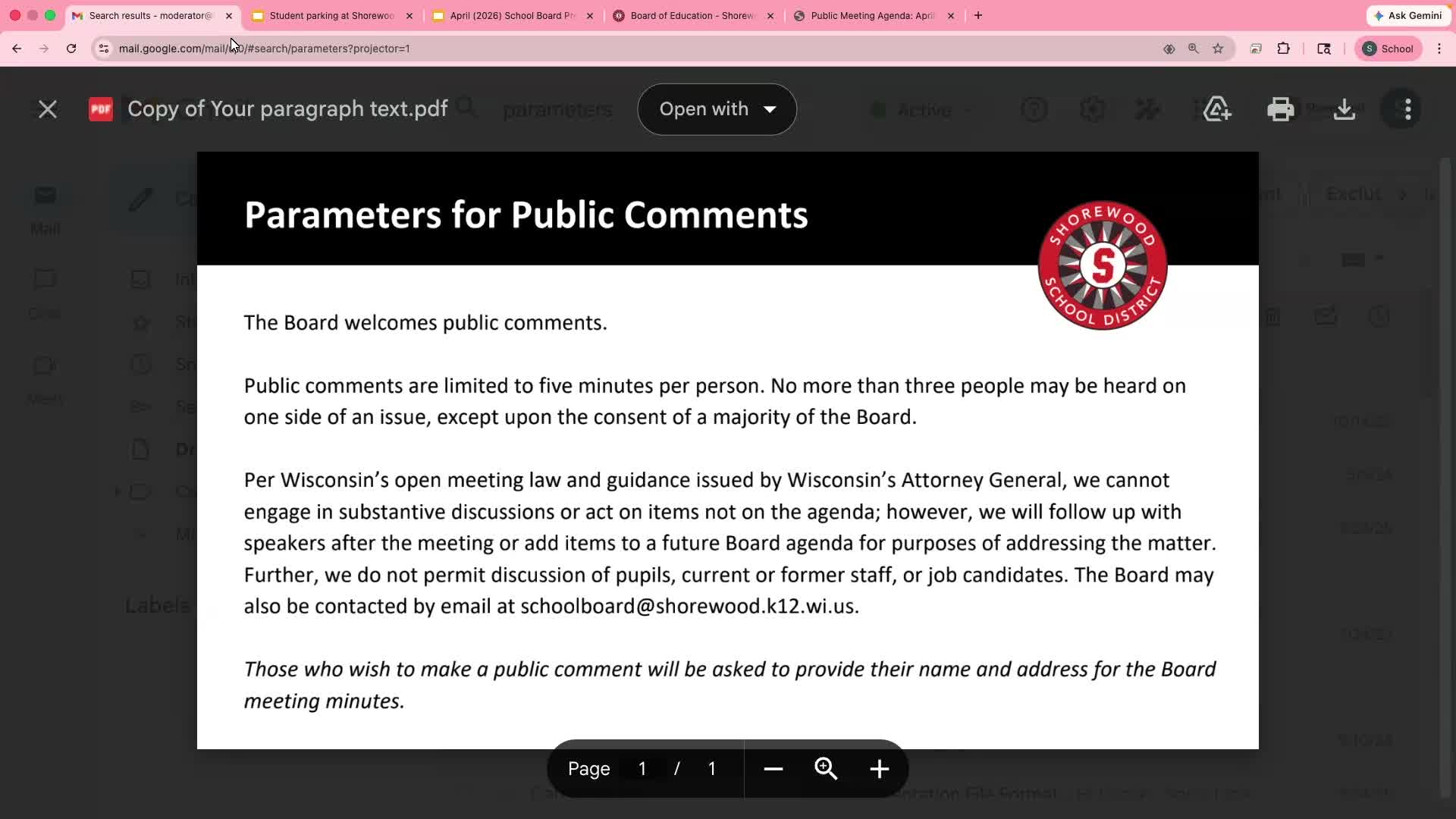
Several Shorewood parents used the board's public comment period on April 14 to urge clearer, consistent standards after recent denials of delayed enrollment under the district's entrance-age practice (policy 5.112).
Charles McKenna (2100 Kensington Boulevard) said his daughter Louisa was denied a delayed-enrollment request after attending the district's 3K program two years and despite a supporting letter from her teacher, Molly Handelsman. "The practice had changed with no communication, context, transition, or objective criteria," McKenna said, adding that the family was "blindsided" by a final denial from the superintendent's office. He asked the board: "What are the criteria for this decision? Would any educator who offered supplemental material be consulted?" McKenna requested board direction so future decisions center the child's best interest.
Madeline Duffy (2100 Kensington Boulevard) echoed those concerns and said the change was not communicated to families or Bright Beginnings staff. "There are no criteria for eligibility regarding delayed enrollment nor is any portion of the delayed enrollment process transparent," Duffy said. She warned that the practice risks inequitable outcomes because families with resources can arrange private alternatives while others cannot.
Sharon Meyer, a longtime Bright Beginnings teacher, said administrators should respect judgments formed collaboratively by parents, teachers and administrators: "No one knows a child better than his or her parent, and parents' views on matters such as these should be respected," she told the board.
Parent Chris Donahoe described delayed enrollment as a consequential family decision supported by pediatricians and educators in some cases. Donahoe said the district's default response now appears to be "no" unless a family successfully appeals, a change that left his family scrambling for alternatives. He urged the board to consider alternatives such as optional delayed enrollment available to all families or repeat 4K as ways to address equity concerns.
Superintendent Laurie Burgos (addressing the board earlier in the meeting) framed the comments as items the board can consider for future agenda work; the board did not take formal action on individual appeals at the meeting. Board members and the superintendent noted that individual student placement decisions are typically administrative but said the board can review district policy and requested that staff bring the entrance-age item forward for board discussion in a future meeting.
The board packet and policy materials referenced at the meeting identify the district's entrance-age practice as "policy 5.112" (as cited by public commenters). Several speakers requested that any administrative practice implementing that policy include clear, written criteria, timely communication to families, and a transparent appeals procedure. The board suggested the topic as a possible future agenda item and directed staff to consider how best to present options and clarifying details to the board and public.
Next steps: commenters asked the board to place the issue on a future agenda for formal review; the board indicated staff would prepare materials for a future meeting.