Get Full Government Meeting Transcripts, Videos, & Alerts Forever!
Get email alerts on the Floodplain Management topic
No spam. Unsubscribe anytime.
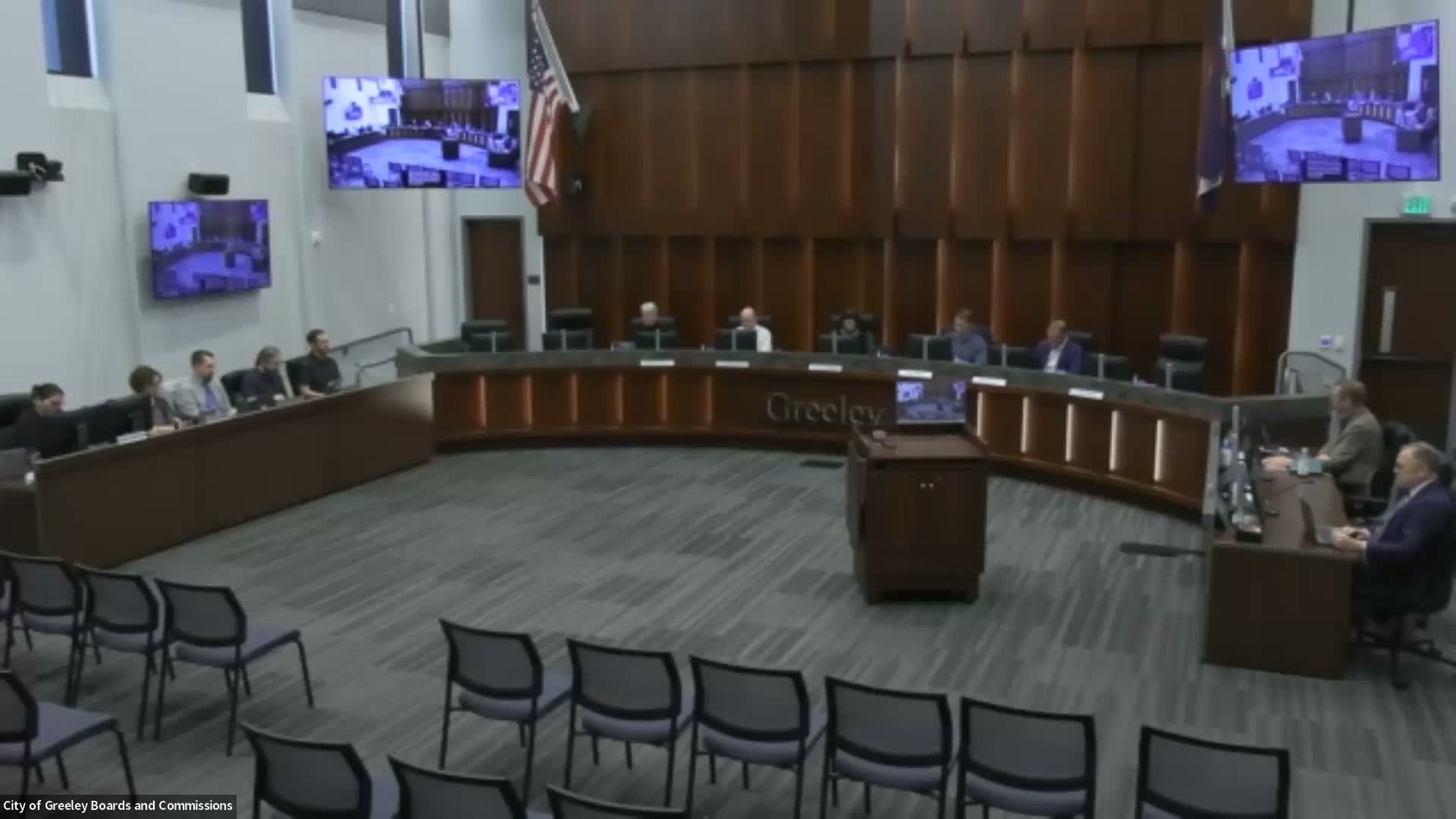
Greeley planning commission recommends floodplain ordinance updates after FEMA/CWCB audit
Summary
The planning commission voted to recommend that city council approve changes to the Greeley Municipal Code to address deficiencies identified in a 2019 FEMA/CWCB audit and to codify floodplain administration, variance procedures and base flood elevation rules. No public testimony was offered.
The Greeley Planning Commission recommended that the City Council approve an ordinance that would repeal parts of Title 24, Chapter 10 and add a new Chapter 12 to the Greeley Municipal Code to strengthen floodplain management.
Brian Hathaway, the city’s water quality and regulatory compliance manager and floodplain administrator, told commissioners the update is intended to keep the city eligible for the National Flood Insurance Program (NFIP) after deficiencies identified in a 2019 community assistance visit by FEMA and the Colorado Water Conservation Board (CWCB). "Participation and good standing in the NFIP allow the city and its residents to obtain flood insurance, receive disaster assistance, and is a prerequisite to obtain federal grants and loans," Hathaway said. He said the audit found ordinance gaps that must be fixed to avoid probation or suspension from the NFIP: "If we fail to resolve deficiencies identified through the CAV, it could really lead to probation or suspension from the NFIP."
Hathaway also described the area covered by FEMA-regulated special flood hazard areas in Greeley, saying the regulatory floodway affects approximately 300 parcels and the 100-year floodplain just over 1,000 parcels. The proposed code changes would clarify the floodplain administrator’s responsibilities, add required definitions and severability language, and establish a formal variance process based on FEMA’s model ordinance. He noted that approximate A zones (areas without a delineated floodway) would require applicants to determine base flood elevation (BFE) in those limited areas and that the draft ordinance would preserve a half-foot maximum encroachment limit where state law applies.
Commissioners questioned staff about the specific deficiencies and how the proposed language addresses them. Hathaway pointed to three primary updates: clarifying designation and responsibilities of the floodplain administrator, establishing a formal variance process (which involves the zoning board of appeals and checks against FEMA/CWCB guidance), and adding definitions/terminology required by the state and federal reviewers.
The chair opened the public hearing for comments but none were offered. A commissioner moved that the planning commission find the amendment consistent with development code criteria (section 24.2.11.b, items 1–4) and recommend that the City Council approve the amendment as submitted; the motion was seconded on the record and carried by voice vote with no recorded opposition. The commission’s action is a recommendation to the City Council; final adoption would occur at a future council proceeding.
The ordinance and supporting materials are to be forwarded to City Council for its consideration; staff said they will return draft ordinance language in redline and clean forms as needed during subsequent steps of the process.