Get Full Government Meeting Transcripts, Videos, & Alerts Forever!
Get email alerts on the Development And Finance topic
No spam. Unsubscribe anytime.
Residents urge Greeley council to slow Cascadia, raise transparency on water and financing
Summary
Multiple residents at the Jan. meeting urged the Greeley City Council to slow the Cascadia/Catalyst developments, citing water scarcity, project financing risks and a lack of transparency; commenters cited consultant studies and contracts and asked the council to pull related consent items for fuller review.
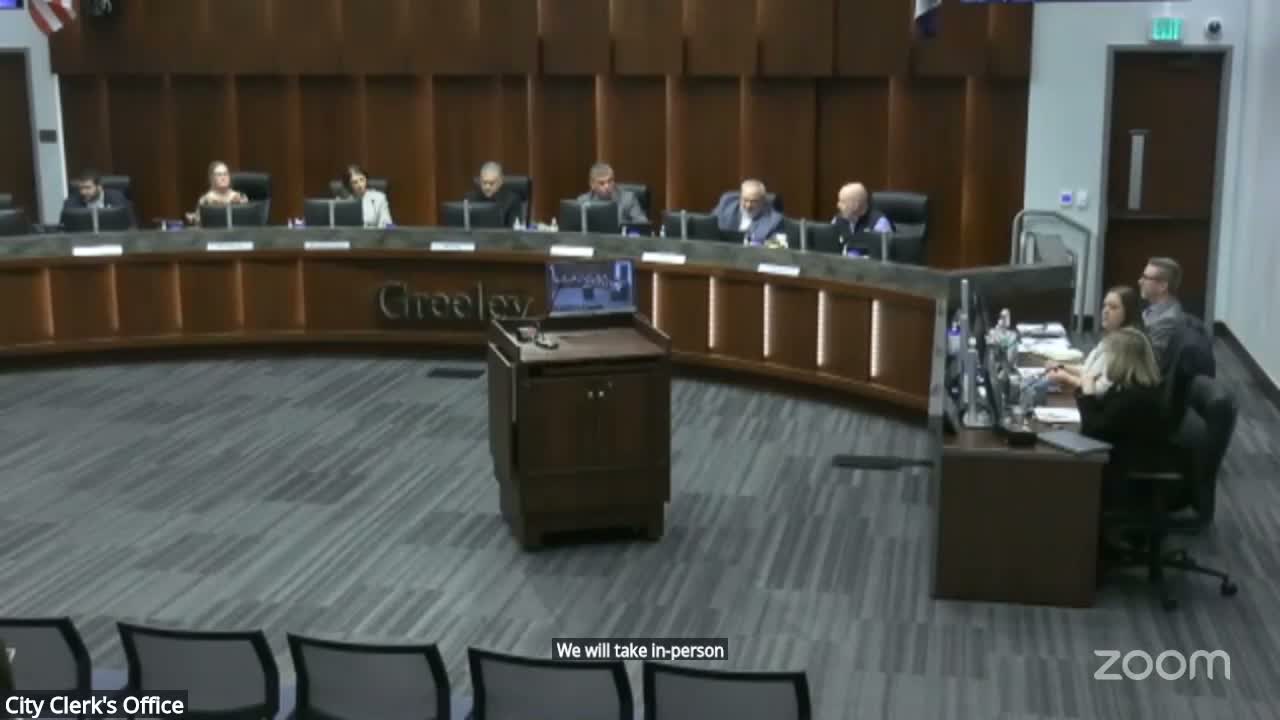
At the Jan. meeting, several Greeley residents used the public‑comment period to urge the City Council to slow big development projects and provide fuller financial and water‑supply transparency.
Mary Metzger told the council the citys dealings with the developer behind Cascadia and Catalyst show "growth being done to this community rather than with it," arguing data centers and other large uses strain water and local infrastructure and that the public has not received assurances about living‑wage jobs. "Growth should not kill people," she said.
Kathy Hash, a long‑time resident who said she had worked in mortgage lending, raised specific financing concerns, citing a project‑construction estimate of roughly $1.1 billion and alleging $115 million in certificates of participation (COPS) have been allocated to support projects. She asked what banks hold the financing, which properties were mortgaged, and what contingency plans exist if the economy deteriorates.
Others echoed water and fiscal worries. Rachel cited a CBRE analysis she said shows the proposed water park and arena would not produce sufficient cash flow to meet debt service for many years and questioned relying on optimistic occupancy and event assumptions; Karen Jarman noted missing feasibility studies and said the citys projections risk requiring general‑fund support. Rhonda Solis and multiple speakers emphasized that water availability remains the community's principal concern.
Council members did not vote on any project authorizations during public comment. Several speakers asked the council to pull related consent items and to provide fuller economic and technical analyses before committing city resources. Mayor Hall and staff acknowledged questions would be considered during upcoming agenda items and studies.
The meeting proceeded to the consent agenda and separate votes on pulled items, where council members discussed, and later adopted, an annual 3‑mile plan and other resolutions. The public commenters asked the council to incorporate the kinds of clarifications and guarantees they requested into forthcoming staff reports and proposals.