Get Full Government Meeting Transcripts, Videos, & Alerts Forever!
Get email alerts on the Wireless Facility 2115 117th topic
No spam. Unsubscribe anytime.
Planning commission approves 105‑foot monopole after discussion on visual impact and collocation
Summary
Commission approved a 105‑foot monopole (plus 5‑foot lightning rod) for a wireless facility at 2115 117th Avenue; applicant said monopine designs are costlier and harder to collocate, staff noted compatible existing poles nearby and at least two future collocators could be supported.
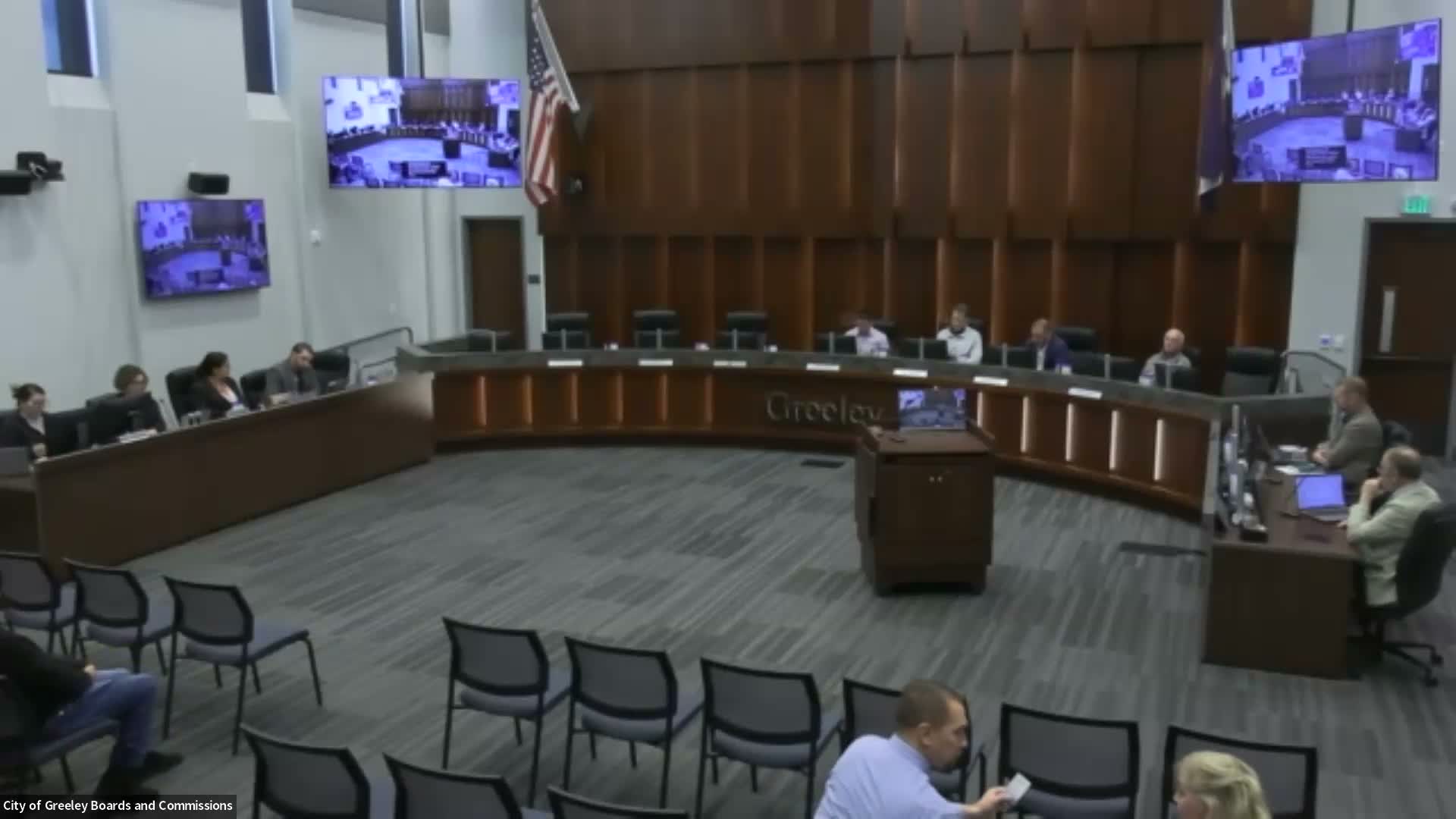
The Greeley Planning Commission approved a use‑by‑special‑review for a 105‑foot monopole wireless communications facility (plus a 5‑foot lightning rod) at 2115 117th Avenue in the Industrial Medium Intensity district.
Applicant Jared White, participating remotely, said the proposed monopole is intended to be built with Verizon as the anchor tenant and that the tower will be designed to allow collocation by additional carriers in the future, as required by city code. White told commissioners that monopine (stealth tree) alternatives are substantially more expensive, provide less structural capacity for collocation and—if placed where there are no trees—can draw attention rather than blend in.
Planner April Maderos said the industrial zone allows buildings up to 40 feet, the nearby site contains existing light poles of roughly 90 feet and a SCADA tower, and the proposed monopole would be consistent with the existing vertical elements along Highway 34. Staff also said the proposed pole could accommodate at least two additional collocators.
Commissioners asked about retrofit options; the applicant said converting a monopole into a monopine would require a full tower replacement (“drop and swap”) and would be significantly more expensive. The applicant shared Google Street View images to illustrate how a similarly profiled pole appears from the highway.
A motion to approve the use‑by‑special‑review was made, seconded and carried by voice vote.
Next steps: the applicant will proceed with final design and permitting, including required coordination for collocation and any CDOT permits if needed.