Get Full Government Meeting Transcripts, Videos, & Alerts Forever!
Get email alerts on the Rtd Governance topic
No spam. Unsubscribe anytime.
Senate approves overhaul of RTD board, reducing elected seats and adding appointed experts
Summary
The Senate passed Senate Bill 150 to shrink the Regional Transportation District board, add appointed seats for expertise, and remove ridership as a criterion for drawing districts. Sponsors said the change aims to improve accountability; opponents argued it dilutes voter representation. Multiple floor amendments were adopted.
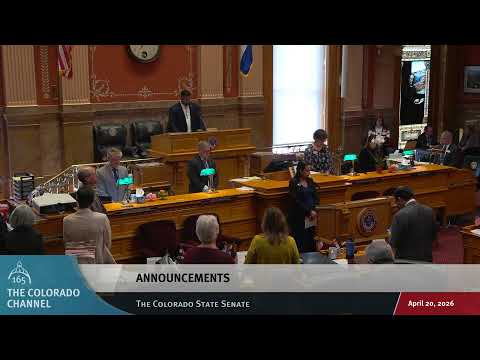
The Colorado Senate on April 20 approved Senate Bill 150, a major restructuring of the Regional Transportation District’s (RTD) governing board that reduces the number of elected seats and creates appointed positions intended to add financial and operational expertise. The measure passed following a series of floor amendments and debate.
Proponents, led on the floor by Senator Ball, said the 15‑member elected board has struggled to deliver reliable service and that a smaller, partly appointed board would bring needed expertise and improve oversight. "There have been a lot of problems at RTD and the current structure makes oversight difficult," Senator Ball said, urging support for the bill and for amendments that clarify appointment criteria and conflict‑of‑interest rules.
Opponents pressed concerns about democratic accountability and scale. Senator Benavidez argued the change would enlarge districts to near congressional size and limit the ability of typical candidates to run, noting voters originally supported a 15‑member board in 1980. "Changing it to five districts makes those districts almost as big as a congressional district, which is really prohibitive for people running for that seat," he said, urging a no vote.
Lawmakers adopted multiple amendments on the floor: L017 removed a mandatory two‑year term requirement for a board chair to allow flexibility; L020 clarified that public finance expertise for at‑large appointments may include operating and capital budgeting, asset management and capital planning; L016/L019 removed ridership as a criterion for drawing districts and lowered a petition threshold so prospective candidates could access the ballot more easily; L026/L027 placed conflict‑of‑interest and recusal rules on a labor‑representative seat; and L028 requires a 15‑year review of the new governance structure to assess effectiveness.
Supporters said several amendments came from RTD and reflected stakeholder engagement; critics said the package still centralizes power and urged giving voters a say. Senator Linstead, who backed the bill, said the changes are intended to improve on‑time performance and accountability for riders who depend on transit. "Bus riders are being failed by this agency," Linstead said, arguing the bill is a modest step toward making buses run on time.
After debate, the Senate adopted the amended bill and returned it for further processing. The bill’s floor debate included recorded votes on amendments and a final passage vote; the Senate recorded the adoption of committee recommendations before moving on to other business. Implementation details—such as the schedule for transitions, precise appointment mechanics and any funding implications—will depend on the enrolled bill text and subsequent guidance from agencies and staff.
The Senate’s action does not implement the changes until the law is effective under the statute; opponents who urged sending the change to the ballot did not prevail on those amendments during floor consideration. The committee and floor record show senators exchanged multiple amendments and votes; the Senate adopted the measure after the amendments described above.