Get Full Government Meeting Transcripts, Videos, & Alerts Forever!
Get email alerts on the Cascadia Project topic
No spam. Unsubscribe anytime.
Residents press Greeley council to pause Cascadia plans and increase transparency after special election
Summary
Months of public comment and a special election result prompted residents to urge the Greeley City Council to halt discretionary spending on the Cascadia/Catalyst development, demand fuller financial disclosures and consider a balanced citizen commission to re-evaluate options.
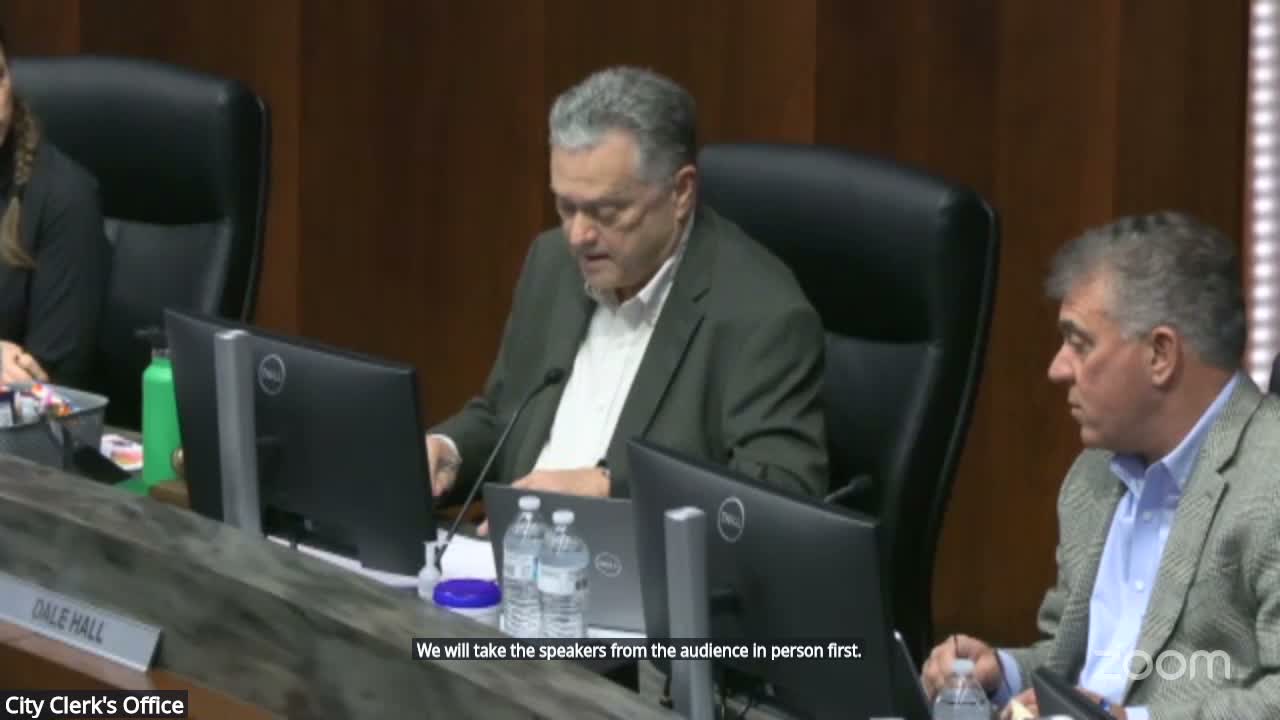
The Greeley City Council heard more than an hour of public comment March 3 in the wake of a special election that altered the path for the Cascadia/Catalyst development. Residents repeatedly urged the council to honor voters’ direction, stop discretionary spending, and open a transparent, participatory process to decide next steps.
"We ran a positive campaign focused on Greeley's future," Tom Donckel told the council, accusing opposition groups of misinformation and saying the project now faces "uncertainty" and large estimated costs. "Has this become a self fulfilling prophecy?" he asked, and called on Councilmember Tommy Butler to resign.
Evan Peterson, whose remarks noted the ballot measure received 54% support of those who voted, told council members: "What would serve you and your constituents is to acquiesce to the will of the people," and urged the council to release full financial disclosures about how much has already been spent and plans for replenishing funds.
Speakers across the ideological spectrum called for a slower, more inclusive process. "This is an opportunity to reset, rebuild trust, and move forward," Councilmember Olson said in a council report, proposing a structured three- to six-month pause and a citizen commission "intentionally balanced" with residents who both supported and opposed the project to review finances, zoning and options.
Several speakers raised concerns about the project's financial structure and public risk. Rhonda Solis (Ward 4) cited consultants' findings that the project "does not appear financially feasible at this time" and argued that the prior deal gave the developer limited financial exposure while placing unlimited risk on taxpayers. Barry Bode said institutional bond investors he consulted "would never invest in that project," and both petitioners and opponents asked for full disclosure of developer commitments and city liabilities.
Other residents suggested alternatives to blunt financial risk: refinancing COP (Certificate of Participation) debt to longer terms, renegotiating terms, selling predevelopment work to private investors, or scaling the project down in size. Tiffany Simmons proposed examining new municipal revenue options, including allowing retail marijuana sales, which she estimated could generate "between $1 million and $3 million annually" for a city Greeley's size.
Multiple speakers urged formation or use of local advisory bodies. Martha Kyler said planning commissions such as the Commission on Disabilities should be consulted early to avoid costly retrofits and ensure accessibility concerns are addressed at the design stage.
Council members repeatedly emphasized the need for clearer public information. Mayor Pro Tem Melissa McDonald said leadership changes have begun to reveal additional information and asked for patience while staff gathers "real information with real numbers." Olson said the pause and citizen commission would protect the city's financial position while preserving options.
The meeting did not produce a final council decision on the Cascadia/Catalyst projects; rather, it produced public calls for immediate spending freezes, fuller disclosure of feasibility and COP obligations, and a deliberative, citizen-inclusive review process. Councilmember Olson said staff would be asked to prepare options and plain-English financial materials during any pause so the public could better understand risks and trade-offs.
Next steps: Councilmembers proposed a pause and the creation of a balanced citizen panel; staff were asked to provide clearer financial explanations and explore alternative zoning or financing options. No formal budgetary reallocation or amendment was voted at this meeting.