Get Full Government Meeting Transcripts, Videos, & Alerts Forever!
Get email alerts on the Environment topic
No spam. Unsubscribe anytime.
Stockton adopts San Joaquin County multi-species habitat-fee schedule; fees to take effect Jan. 1
Summary
The council approved a San Joaquin County multi-species habitat conservation and open-space plan development fee schedule for 2026, a voluntary program that lets developers pay fees, provide land in lieu or opt out for state/federal permitting, with the fees effective Jan. 1, 2026.
The Stockton City Council held a public hearing and voted 7-0 to adopt the San Joaquin County multi-species habitat conservation and open-space plan development fee schedule for 2026, which the San Joaquin Council of Governments updates annually.
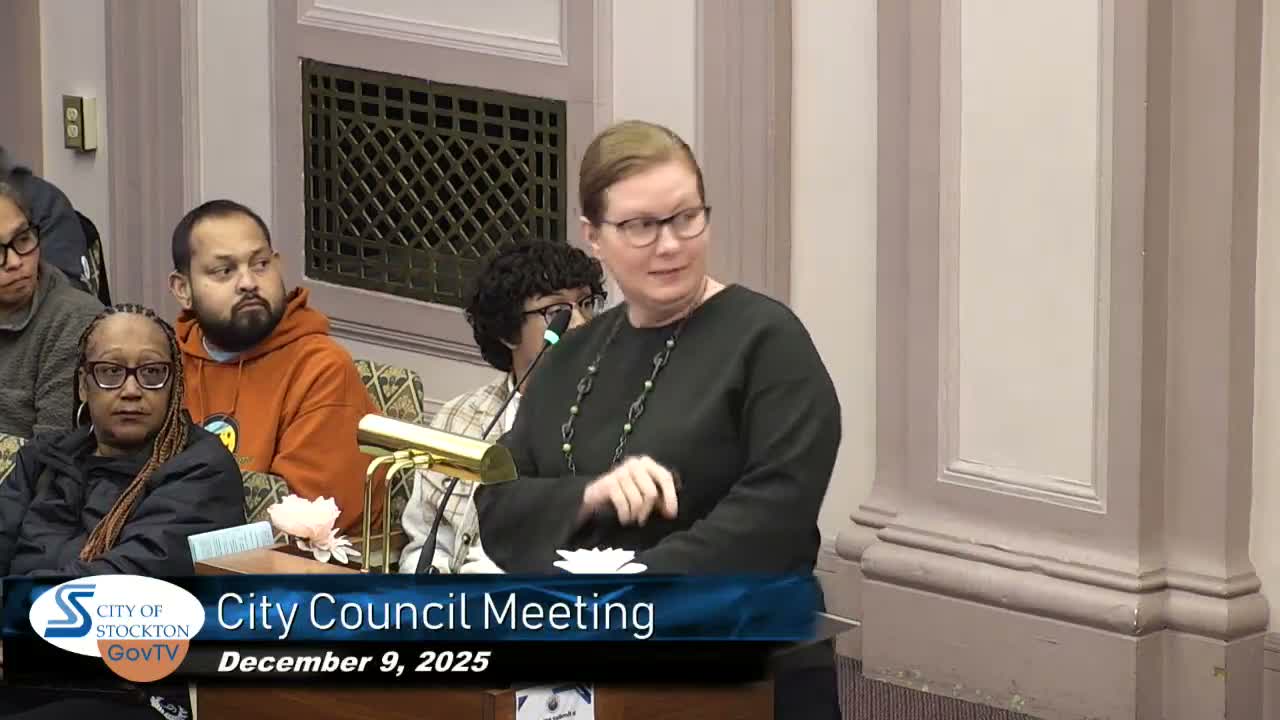
Miss Ocasio, representing the COG, told the council the plan balances new development with preservation goals and offers multiple options to mitigate habitat impacts: pay the prescribed fee, provide land in lieu (part of the fee may be applied toward land acquisition), redesign the project to avoid impacts, or opt out of the plan and pursue separate state and federal permits (including consultations with fish and wildlife agencies).
The fees vary by habitat type and fee zone; staff said the COG adopted only minor adjustments to the previously used methodology to account for market fluctuations. If Stockton adopts the fees, the COG will collect the fees before the city issues building permits; the fees are used for land purchase, restoration, monitoring, and biological review.
Councilors asked clarifying questions about where mitigation lands are typically located and whether the plan conflicts with the city's agricultural mitigation program; the COG representative said most preserved lands are outside city limits, often in Delta and agricultural areas, and the two programs are distinct.
The council adopted the resolution to implement the fee schedule, which the COG indicated will be effective Jan. 1, 2026.