Get Full Government Meeting Transcripts, Videos, & Alerts Forever!
Get email alerts on the Bikeway Design topic
No spam. Unsubscribe anytime.
National City presents 30% bikeway corridor design with protected lanes, parking tradeoffs and school crossing upgrades
Summary
City staff presented a 30% conceptual design for corridor improvements in National City that would add protected bike lanes, bike boulevards, a new signal near 22nd Street and school crossing upgrades; staff outlined parking tradeoffs, pilot traffic‑calming measures, funding sources and a multi‑year timeline.
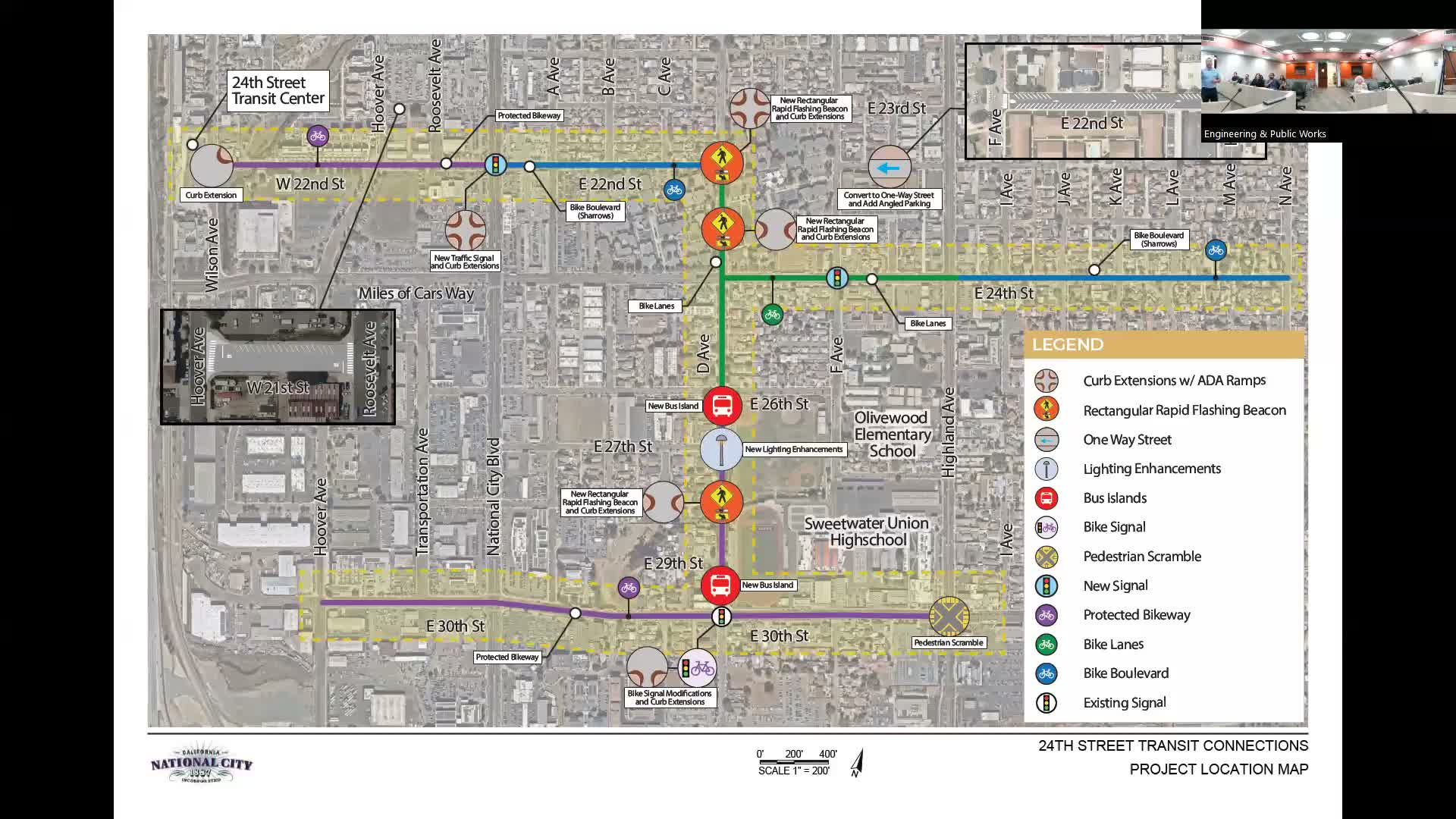
City staff presented a 30% conceptual design for multi‑modal corridor improvements in National City that would add protected bike lanes, bike boulevards and a series of pedestrian and school crossing upgrades. Staff said the corridor design follows the city’s bicycle master plan and focuses on closing network gaps while balancing residential parking needs.
Key elements described included physical separators and buffered bike lanes on major corridors, a two‑way protected bike facility on portions of 30th Street, bike boulevards on lower‑volume residential streets, and targeted traffic calming such as speed cushions. Near the 24th Street transit station and Paradise Creek housing, staff proposed a protected facility on the south side and angle parking on the north to preserve apartment parking; east of National City Boulevard the design shifts to a shared facility to avoid major parking loss.
Staff identified two additional signal priorities: a proposed signal at National City Boulevard and 22nd Street to create a direct walk/bike connection to the 24th Street transit hub, and a full signal near Sweetwater High School and the elementary school to replace an existing flashing beacon. Staff described a potential pedestrian‑scramble treatment and enhanced mid‑block crossings with LED warning signs and improved lighting at high‑student‑volume locations.
On funding and schedule, staff said the corridor work would draw from a mix of federal grants and state gas tax allocations; in the presentation staff mentioned figures in the record (including a reference to $35,000,000 program funds and an estimated $10,000,000 scope for part of the work) and cautioned that grant programming and authorization can take up to a year, with design and construction each requiring additional time. Staff warned that delays in authorization can raise construction costs and require value engineering.
Staff said they will continue public outreach (town halls and targeted meetings with school officials), collect additional collision and count data, and refine designs before returning recommendations to the committee.