Lifetime Citizen Portal Access — AI Briefings, Alerts & Unlimited Follows
Jason Klein of Northern Illinois University outlines Illinois 'essential skills' and offers parent strategies
Loading...
Summary
Jason Klein, senior director of learning partnerships at Northern Illinois University, presented a Round Lake CUSD 116 family-engagement video explaining Illinois’ Cross-Sector Essential Employability Competencies, the seven career pathways created under state law, and concrete, age-specific steps parents can take to help children develop these skills.
Jason Klein, senior director of learning partnerships at Northern Illinois University, presented a family-engagement video for Round Lake CUSD 116 on Illinois’ Cross-Sector Essential Employability Competencies—commonly called the “essential skills”—and explained how families can help children develop them.
Klein said the competencies trace to the Postsecondary and Workforce Readiness Act, signed into law in Illinois in 2016, and that the state organized seven college-and-career pathways around which technical competencies were developed. “These are the competencies for the finance and business services college and career pathway,” he said while listing the pathways, and pointed viewers to the Illinois State Board of Education for the complete competency lists.
Why it matters: the essential skills—teamwork, communication, planning and organization, problem solving and critical thinking, cultural competence, initiative, and related competencies—are designed to work alongside technical training to prepare students for both the workplace and civic life, Klein said. “If new employees are strong with the essential skills, they’ll do great in learning what they need to learn to be successful on the job,” he said.
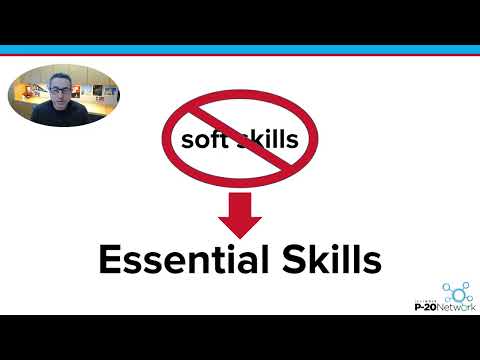
Klein urged parents and educators to stop calling these “soft skills,” arguing the label understates their difficulty and the instruction they require. “We ask people to stop referring to them as the soft skills,” he said. He described three guiding principles families can use—take a strengths-based approach, cultivate a growth mindset, and use design-thinking to break problems into root causes—and three practical learning strategies: engage children with real, meaningful problems; create feedback loops with explicit instruction and reflection; and provide repeated practice.
Klein gave age-specific guidance for families: for preschool and early elementary children, model and teach listening, create opportunities for collaborative play, expose children to new routines to build adaptability, and give simple household responsibilities to teach planning and organization. For preteens, he recommended continued instruction in context-appropriate communication and increasingly complex authentic tasks. For teenagers, he recommended fostering self-direction, asking reflective questions after successes and failures, and encouraging workplace experiences such as jobs and internships to practice teamwork and roles.
Klein also described work he leads with the Illinois P-20 Network and a statewide employer listening tour with the Illinois State Board of Education’s Career and Technical Education office. Employers who participated emphasized punctuality, listening, willingness to learn, and constructive feedback as priorities; Klein said practical credentials (for example, a driver’s license or forklift certification) remain useful but that employer feedback consistently elevated competency with essential skills.
Resources: Klein noted the Career Pathways Virtual Trailheads video series—dozens of interviews posted during the COVID-19 pandemic—and an essential skills guide that maps which competencies appear in each video; both resources are available free online.
The video concluded with Klein thanking Round Lake CUSD 116 and encouraging families to use the guide and videos as tools to support students’ development of the essential skills.