Get Full Government Meeting Transcripts, Videos, & Alerts Forever!
Get email alerts on the Grants And Policy topic
No spam. Unsubscribe anytime.
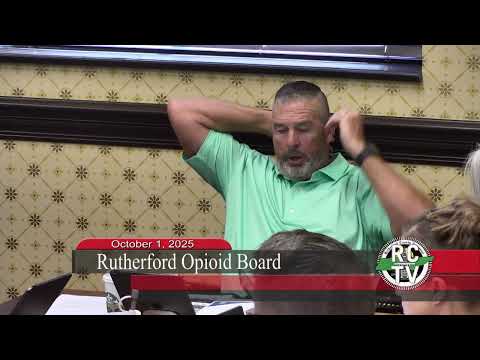
Rutherford County opioid board adopts $100,000 grant cap and approves multiple awards, including naloxone distribution project
Summary
The Rutherford County Opioid Abatement Board voted to cap future grants at $100,000 per application (effective November 2025) and approved several awards and advances, including a $25,000 advance to a small grantee and $88,600 for a countywide naloxone 'Caring Libraries' program contingent on attorney sign-off.
The Rutherford County Opioid Abatement Board on Wednesday voted to impose a $100,000 cap on grant awards per application beginning with the next funding cycle in early 2026 and approved a package of grants and advances aimed at recovery housing, harm reduction and small-agency cashflow.
The cap motion, moved by a board member and adopted in a roll-call vote, was framed by the chair and several members as a step to distribute limited abatement funds more equitably across applicants and guard against unrestricted spending. A board member said, “I move to approve a $100,000 limit on all applications beginning November 2025.” The measure passed and was entered as board policy for the upcoming cycle.
Board members said the cap is designed to be a default limit and left room for exceptional requests to be brought back as formal motions. Members emphasized the different cost structures across prevention and treatment programs and urged staff to provide clear notice to applicants about the change.
In the same meeting the board approved several funding actions:
- A $25,000 advance to Recovery Is The New High to cover bed vouchers while the organization waits for reimbursement. Staff said the funds were already budgeted and the payment would function as an advance that the grantee would reconcile through reimbursement paperwork.
- Full funding for Threshold Recovery/Foundation’s nine-month recovery-housing proposal. Staff reported the foundation requested roughly $115,250 to create scholarships, case management and wraparound services intended to serve about 50 unhoused men. Reviewers recommended awarding the requested amount with normal monitoring and the board approved the recommendation.
- Conditional funding for Chase Away Fentanyl’s harm-reduction proposal. The nonprofit requested about $97,460 (later adjusted to $88,600 in eligible direct costs) to install five remote naloxone dispensers—called “Caring Libraries”—at identified county hotspots, pair them with community trainings and run a targeted media effort. Reviewers praised the localized approach but flagged missing financial attachments and asked for clearer sustainability documentation. The board approved the request for $88,600 in eligible direct costs on the condition the county attorney confirms the arrangement would not create county liability.
- A motion to fund Doors of Hope at a reduced amount ($168,000) failed. The nonprofit had asked for $268,834 to support a nine-month wraparound program for justice-involved women; reviewers recommended award with monitoring but some members raised questions about sustainability and current bed capacity. Because the motion to approve a reduced amount failed, no award was finalized for that request in this meeting.
Board staff and members said they will continue to monitor all grantees and that award conditions and monitoring requirements will be enforced. The board’s finance staff reiterated that most of the approved payments are already budgeted and will be routed through the normal budget and commission approval processes.
The board scheduled the new cap to go into effect for applications processed after the November meeting and to be reflected in early-2026 cycle materials. The board directed staff to notify prospective applicants and to allow formal exceptions only by motion and majority vote.