Lifetime Citizen Portal Access — AI Briefings, Alerts & Unlimited Follows
Senate committee recommends Ruby Dylan Williams for Arizona housing director after scrutiny on audits and a $2M wire fraud
Loading...
Summary
The Senate Committee on Director Nominations voted 3-2 to recommend Ruby Dylan Williams to lead the Arizona Department of Housing after extended questioning about auditor-general findings, a $2,000,000 wire-fraud loss and steps the agency has taken to strengthen oversight and performance metrics.
Ruby Dylan Williams, the nominee to lead the Arizona Department of Housing, received a committee recommendation to the full Senate after a March hearing in which lawmakers pressed her on auditor-general findings and reforms intended to prevent fraud and strengthen program oversight.
Williams, who has worked at the department since January 2020 and served as interim director beginning March 2025, told the Committee on Director Nominations she has prioritized operational changes, including rewriting policies and instituting a performance system that tracks 68 key metrics. "I am ready to lead the state's Department of Housing," she said in her opening remarks, citing projects such as Sycamore Vista in Camp Verde and the Centerline development in Glendale as examples of public-private partnerships the department supports.
Committee members focused substantial questioning on two audit-related items flagged in recent reviews: payments the auditor-general said were made without proper verification and a $2,000,000 wire transfer later identified as fraud. Chair Senator Jay Kaufman recited the audit finding that the department paid more than $8,100,000 without required verifications and pressed Williams on why those controls were not already in place. Williams said the vulnerabilities stemmed from multiple parties and prior processes and described steps taken since discovery, including rewritten procedures, heightened grantee vetting and a two-step verbal verification requirement for large wire transfers.
On the wire-fraud incident, Williams said agency staff were misled by fraudulent communications after a grantee's and a title company's email systems were infiltrated and that the department has since required both pre-transfer verbal confirmations and post-transfer verifications before funds are accepted as received. "That is a non-negotiable going forward," Williams said, adding the department has stopped doing business with the nonprofit implicated in the fraud.
Lawmakers also questioned the department's budget priorities and its reliance on federal programs. Williams urged protecting federally supported programs, including the Low-Income Housing Tax Credit (LIHTC) and HUD-administered funds, arguing these programs are central to housing production. She said LIHTC often covers a majority of project costs but requires layered financing and federal compliance, including Davis-Bacon wage rules in some projects.
Several senators pressed Williams on project costs and whether state rules or federal wage requirements contribute to high per-unit construction prices. Williams acknowledged market drivers such as materials, insurance and supply-chain delays, and said the department uses its Qualified Allocation Plan (QAP) and underwriting criteria to try to limit cost escalation where possible. She said developers and local partners have pursued federal waivers in some cases but that no statewide Davis-Bacon waiver for Arizona LIHTC projects had been granted.
The hearing included public testimony from industry leaders who urged confirmation. Speakers from the Arizona Multi Housing Association, Ulysses Development Group, Gorman and Company, Lincoln Avenue Communities and a local affordable-housing developer described process reforms, greater predictability and increased housing production under Williams' oversight. "Arizona is one of the best places to work for affordable housing," one developer said, urging the committee to advance the nomination.
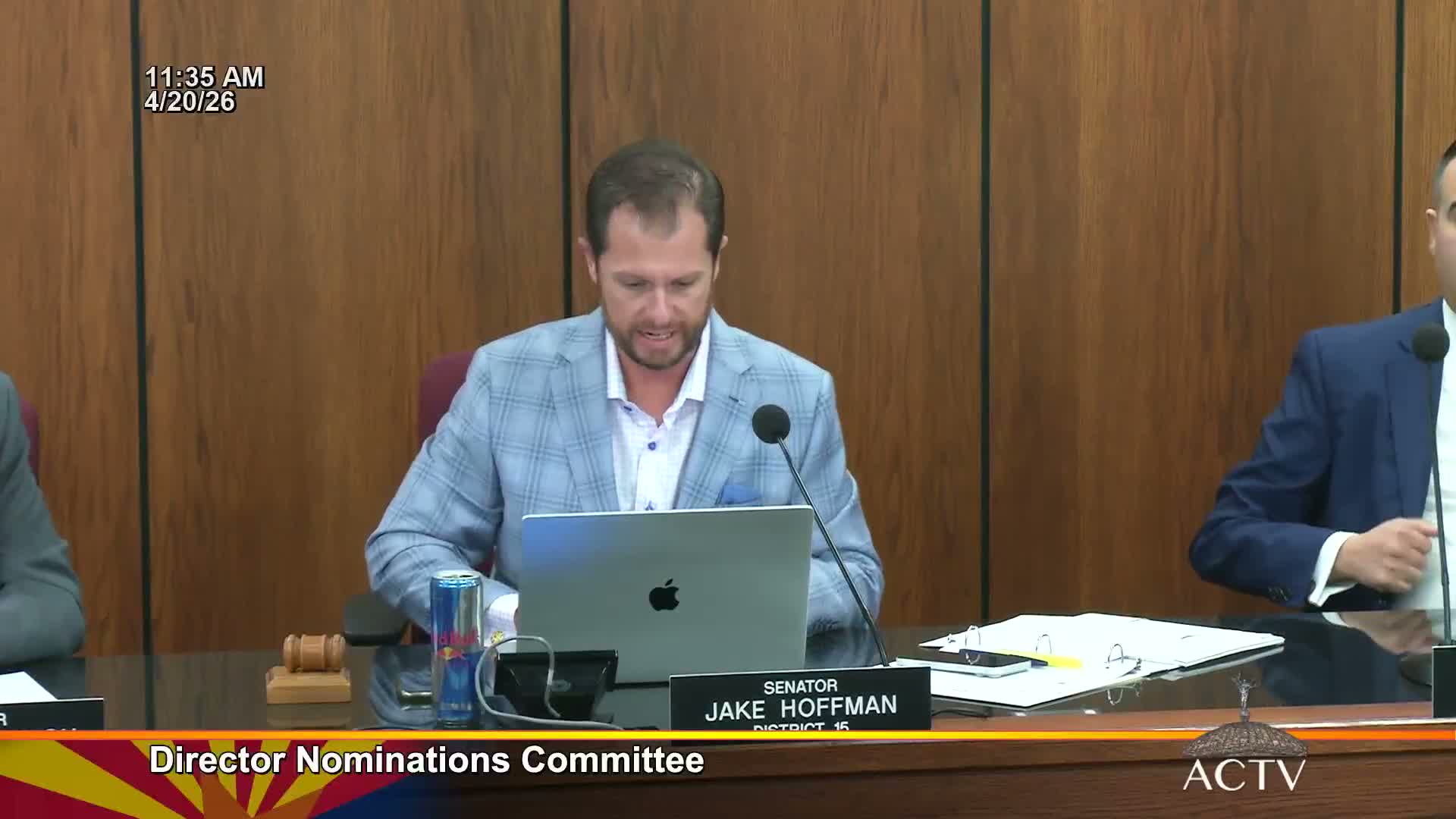
Despite the endorsements, some committee members expressed reservations about the pace and completeness of the department's audit implementations. Senators Kavanaugh and Hoffman said they were not persuaded Williams had previously driven sufficient proactive controls in her deputy-director role and voted against the recommendation. Senator Ortiz and others supported the nominee, citing experience and recent reforms.
Votes at a glance: The committee recommended confirmation by a 3-2 vote. The motion to recommend was made by the vice chair and the committee chair announced the tally as three yeas and two nays. Members who were recorded in the transcript as voting: Senator Coburnau (Aye), Senator Ortiz (Yes), one affirmative recorded from the majority side (Aye), Senator Kavanaugh (No) and Senator Hoffman (No). The committee forwarded the nomination to the full Senate for final action.
What happens next: The committee's recommendation moves the nomination to the full Senate calendar. Williams told the committee she aims to continue building partnerships with tribal nations, city leaders, nonprofits and the private sector and to provide quarterly metric-based reports to the Legislature.
The hearing also produced several concrete procedural commitments from the nominee's office, including enhanced grantee vetting, site inspections tied to milestone payments and mandatory verbal verifications for wires; the department said it is actively working with the auditor-general and preparing materials for an upcoming sunset review.