Get Full Government Meeting Transcripts, Videos, & Alerts Forever!
Get email alerts on the Nominations topic
No spam. Unsubscribe anytime.
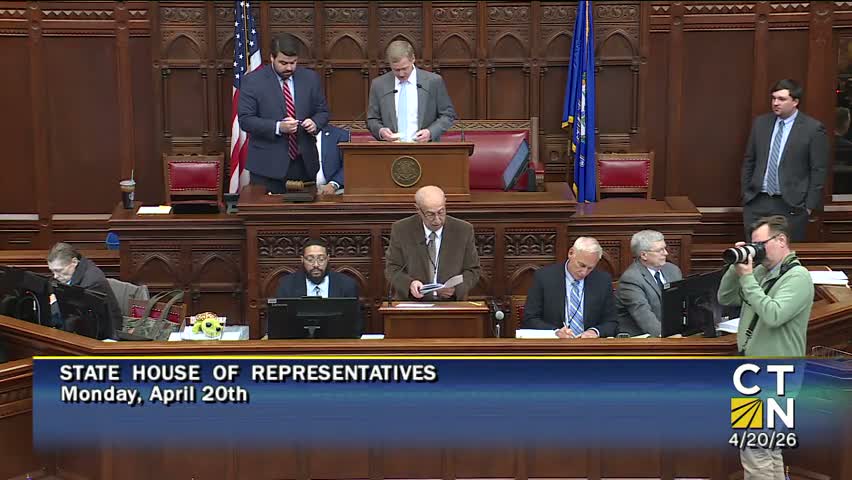
House approves long consent calendar, confirming scores of nominees
Summary
The House agreed to a consent calendar that included dozens of executive, regulatory and judicial nominees; members spoke in support for many nominees before the calendar passed by roll call.
The Connecticut House approved a lengthy consent calendar on Monday that confirmed a broad slate of executive, administrative and judicial nominees.
Committee chairs presented favorable reports for nominees including Harry Rilling to the Connecticut Port Authority board, Christine Pero Rapillo for the Judicial Review Council, and several reappointments to arbitration and education panels. The judiciary panel—s slate of superior court nominees — including Campbell Barrett, Felice Gray Kemp, Sean McGinnis and others — was advanced to the consent calendar after members spoke in support and some offered measured critiques during committee review.
Representative Concepcion, who presented multiple nominations on the floor, led proponents in urging adoption of committee recommendations. "His nomination passed unanimously out of committee," said the proponent for several nominees during the roll-call sequence, noting the candidates— experience and the committee vetting.
The consent calendar was adopted by roll call; the clerk announced the tally when the vote concluded and the package passed. Several members used floor time to single out local nominees and to underscore the value of the volunteers and appointees who serve on boards and commissions.
What happens next: individual nominees for judicial posts and boards will be added to the record and, where applicable, take the oaths or otherwise be seated according to existing appointment rules.