Lifetime Citizen Portal Access — AI Briefings, Alerts & Unlimited Follows
House passes wide-ranging overhaul of cannabis and hemp rules after hours of debate
Loading...
Summary
After hours of floor debate and several failed amendments, the House passed a substitute bill updating Connecticut—s cannabis, hemp and THC-infused beverage rules, keeping low caps on edibles and beverages while removing arbitrary limits on flower and concentrates and adding new testing, remediation and consumer-protection provisions.
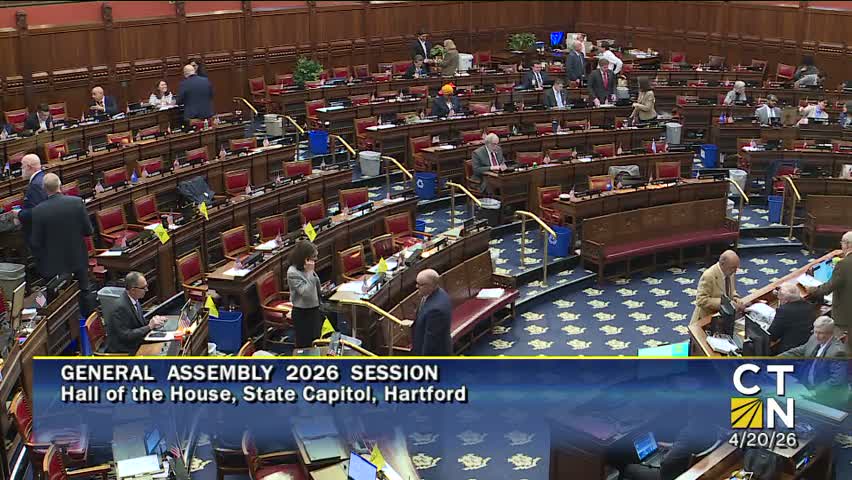
The Connecticut House on Monday approved a major rewrite of the state—s cannabis and hemp rules, passing Substitute House Bill 5350 after sustained floor debate and multiple amendments.
Representative Curtis Lamar, chair of the General Law Committee, told colleagues the measure updates rules to match regional market realities, closes regulatory gaps around hemp-derived THC products and creates new testing and remediation procedures to keep unsafe products out of circulation. "This bill modernizes our cannabis and hemp laws to reflect today—s market realities," Lamar said on the floor, urging passage.
The bill retains strict limits on edible cannabis products and THC-infused beverages — the measure caps those products at 5 milligrams of THC per serving — but removes the statutory caps that had applied to cannabis flower and concentrates. Supporters said concentrates and flower have different product dynamics and that arbitrary potency caps encourage dangerous dilution with untested additives.
Opponents pressed hard on public-health and youth-safety grounds, saying higher-potency products are linked to emergency-room visits and psychiatric crises among adolescents. Representative Tim Titliano expressed alarm at the change in potency policy, saying medical professionals repeatedly warned the committee against lifting limits on high-THC products. "We—e seen kids sickened by high-potency products," Titliano said during debate.
The bill also tightens oversight in several areas: it authorizes the Department of Consumer Protection (DCP) to set testing and remediation procedures for failed laboratory results; requires dispensaries to provide pharmacist consultation availability (35 hours per week, either on-site or by telehealth) and new training for retail staff handling medical patients; and restricts retailers— retention of personal data collected for age verification beyond 24 hours absent consumer consent.
Packaging and marketing rules were a major flashpoint. Lawmakers debated whether to allow additional label colors and branded packaging (to match products available across state lines) and whether the change required an Appropriations referral because of staffing needs at DCP. After a separate amendment removed a marketing expansion that had prompted fiscal concerns, the House adopted a narrower approach, keeping product review authority with DCP and adding an explicit DCP position in the budget to review packaging and advertising submissions.
Several floor amendments failed on roll calls. One, which would have required all legally mandated public-health warnings to appear on every package rather than rotate them, failed. Another amendment that would have restored THC caps for inhalable products also failed. Lawmakers who supported the limits said they would continue to press for further safeguards, citing hospital and pediatrician testimony before the committee.
The House adopted the bill as amended. Representative Lamar said the measure is intended to move consumers away from unregulated sources and into a safer, regulated market while remaining responsive to new products such as THC-infused beverages that are now available in nearby states.
What happens next: the bill advances to the Senate, where any further changes would be possible. Lawmakers on both sides said they expect more committee and regulatory work in the months ahead to implement testing protocols, pharmacist consultation procedures and marketing review processes.
Representative Lamar said he would monitor outcomes and return the bill to the legislature for course corrections if evidence shows unintended harms. "If evidence comes back that I'm wrong, you have my commitment to revisit it," he said.
Votes and next steps: The House passed the substitute bill as amended by a roll-call vote recorded on the floor. The bill now proceeds to the Senate for consideration.