Lifetime Citizen Portal Access — AI Briefings, Alerts & Unlimited Follows
Arizona House deadlocks on school‑safety interoperability bill, later votes to reconsider
Loading...
Summary
Lawmakers split over SB 13‑15, which would require interoperable school‑law‑enforcement communications and expand use of a $26 million fund; critics said it appears to favor a single vendor and raised procurement and funding concerns; the bill initially failed on third reading but the House later voted to reconsider.
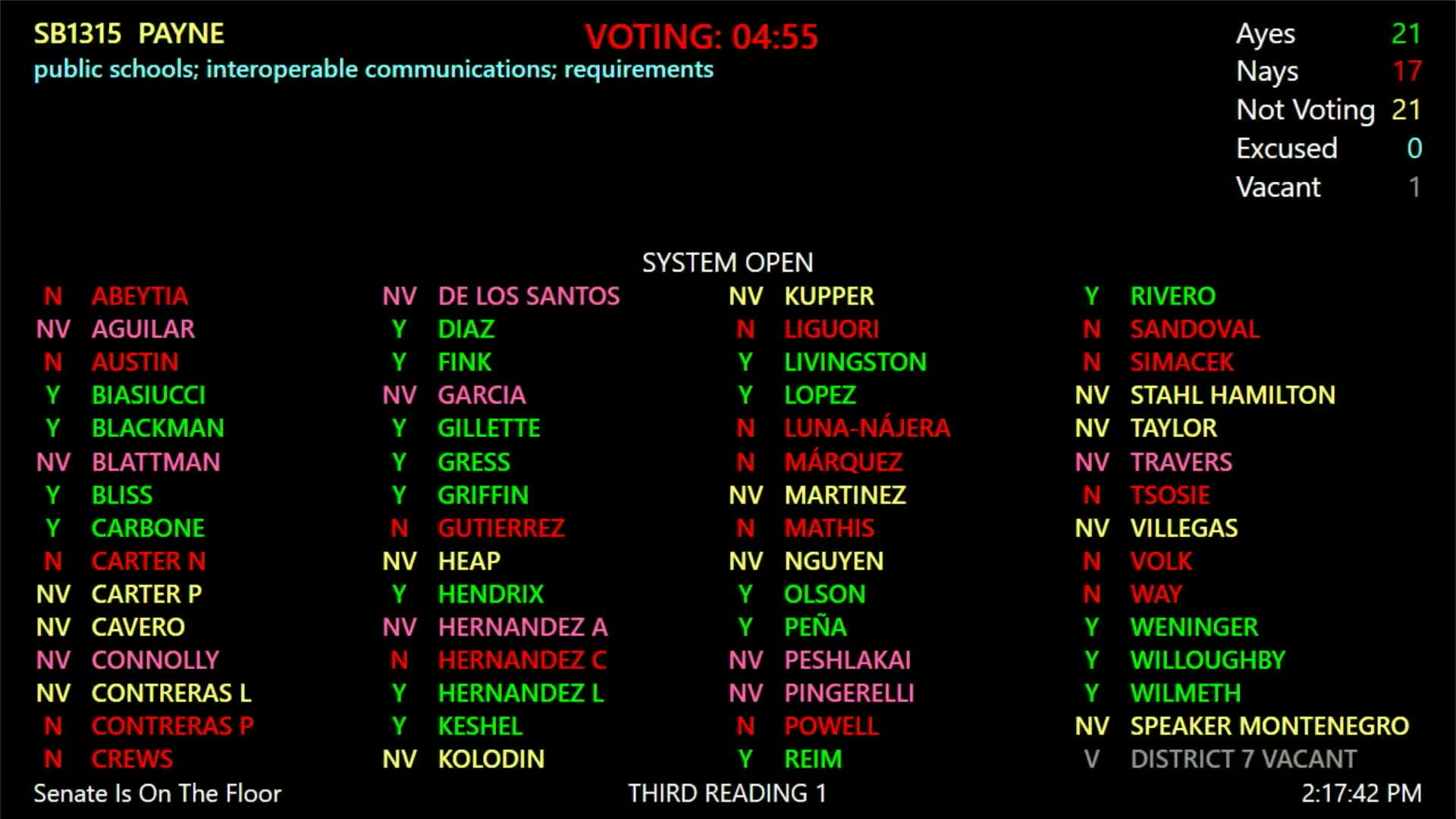
The Arizona House of Representatives deadlocked on Senate Bill 13‑15 — legislation aimed at improving school‑to‑law‑enforcement interoperable communications — during third reading on April 20, 2026, with procedural and procurement concerns dominating floor debate.
Opponents said the statute risks channeling state funds to a single vendor and does not fix past procurement problems. Representative Stahl Hamilton said the School Safety Interoperability Fund has received about $26,000,000 since 2019 and that prior contracts and the auditor general’s review showed procurement failures; he said the bill ‘‘compels all local law enforcement agencies to apply for the money from that fund, so that it is available for schools for interoperable communications, thus generating even more business for this specific vendor.’’
Backers described the bill as a necessary step to ensure reliable communications during school emergencies. Representative Gress, who spoke in favor, framed the measure as a way to streamline guidance and reduce fragmentation between multiple vendor systems.
On third reading the roll call was 25 ayes, 25 nays, 9 not voting and 1 vacant, and the bill failed to pass. Later in the day Representative Gress moved to reconsider the House’s earlier action; after division and additional floor procedure the House voted 30 ayes to 18 nays to carry the motion to reconsider and place the bill back on the calendar for further action.
The floor debate included multiple members urging additional stakeholder work: Representative Gutierrez and others urged the sponsor to consult with school districts, charters and law‑enforcement stakeholders to address procurement and implementation details before imposing new mandates. Several members also flagged potential interactions with other legislation and funding streams.
The House’s next procedural step is to set the bill again for debate and a formal re‑vote; no third‑reading outcome on the reconsidered bill was recorded on April 20.
Sources: Floor debate and roll calls during the April 20, 2026 House session.