Get Full Government Meeting Transcripts, Videos, & Alerts Forever!
Get email alerts on the Distressed Hospitals topic
No spam. Unsubscribe anytime.
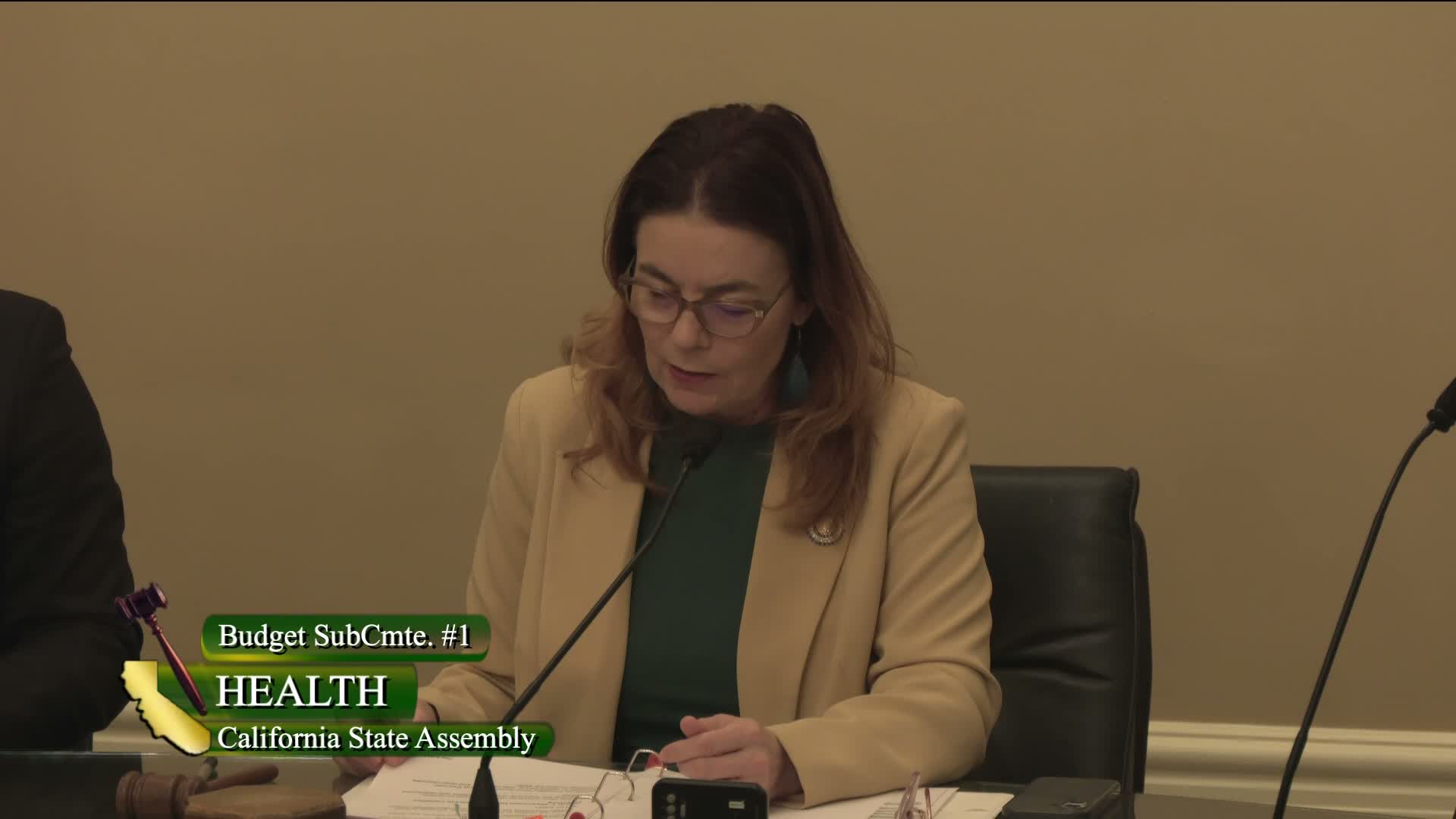
Subcommittee hears that distressed‑hospital loans were a lifeline; members press for $300M refresh
Summary
Officials told the Assembly Budget Subcommittee on Health that the Distressed Hospital Loan Program helped prevent closures but many hospitals remain fragile; staff said most borrowers will likely seek forgiveness and stakeholders urged replenishing $300 million to sustain the program.
The Assembly Budget Subcommittee on Health heard that the Distressed Hospital Loan Program (DHLP) provided crucial short‑term relief but left many hospitals in continuing financial distress.
Carolyn Abubishara, executive director of the California Health Facilities Financing Authority, described CHFFA bond, loan and grant activity and listed hospitals that have been helped by state programs. She said CHFFA has provided about $1.6 billion in bond financing in 2025 and is seeing increased requests for financing as federal policy changes take effect.
Elizabeth Landsberg of the Department of Health Care Access and Information (HCAI) said the DHLP acted as a “lifeline” after the pandemic, helping hospitals on the verge of closure implement turnaround plans. Landsberg and Dean O’Brien, HCAI’s deputy director for facility finance, said the program initially paused payments for borrowers; borrowers now enter an annual modification process and many will seek loan forgiveness as repayment years begin.
Legislative Analyst Office staff cautioned that the program eased short‑term cash flow but does not resolve structural financing problems and that HR1‑driven coverage changes are likely to raise uncompensated care. Assemblymembers asked about selection criteria and reserves; HCAI and CHFFA said awards emphasized community impact, sole‑provider status and immediate need rather than debt service reserves, and that most recipients had under 30 days cash on hand.
Hospital associations and providers urged replenishing the DHLP. Mark Verruckt of the California Hospital Association expressed support for replenishing $300 million; district and children’s hospital representatives also sought legislative assistance. The California Dental Association warned that dental infrastructure grants were forfeited by some recipients because of federal policy uncertainty.
The subcommittee did not take a vote; members signaled interest in legislative funding to refill the program and requested continued monitoring of repayment outcomes and impacts on access to care.