Lifetime Citizen Portal Access — AI Briefings, Alerts & Unlimited Follows
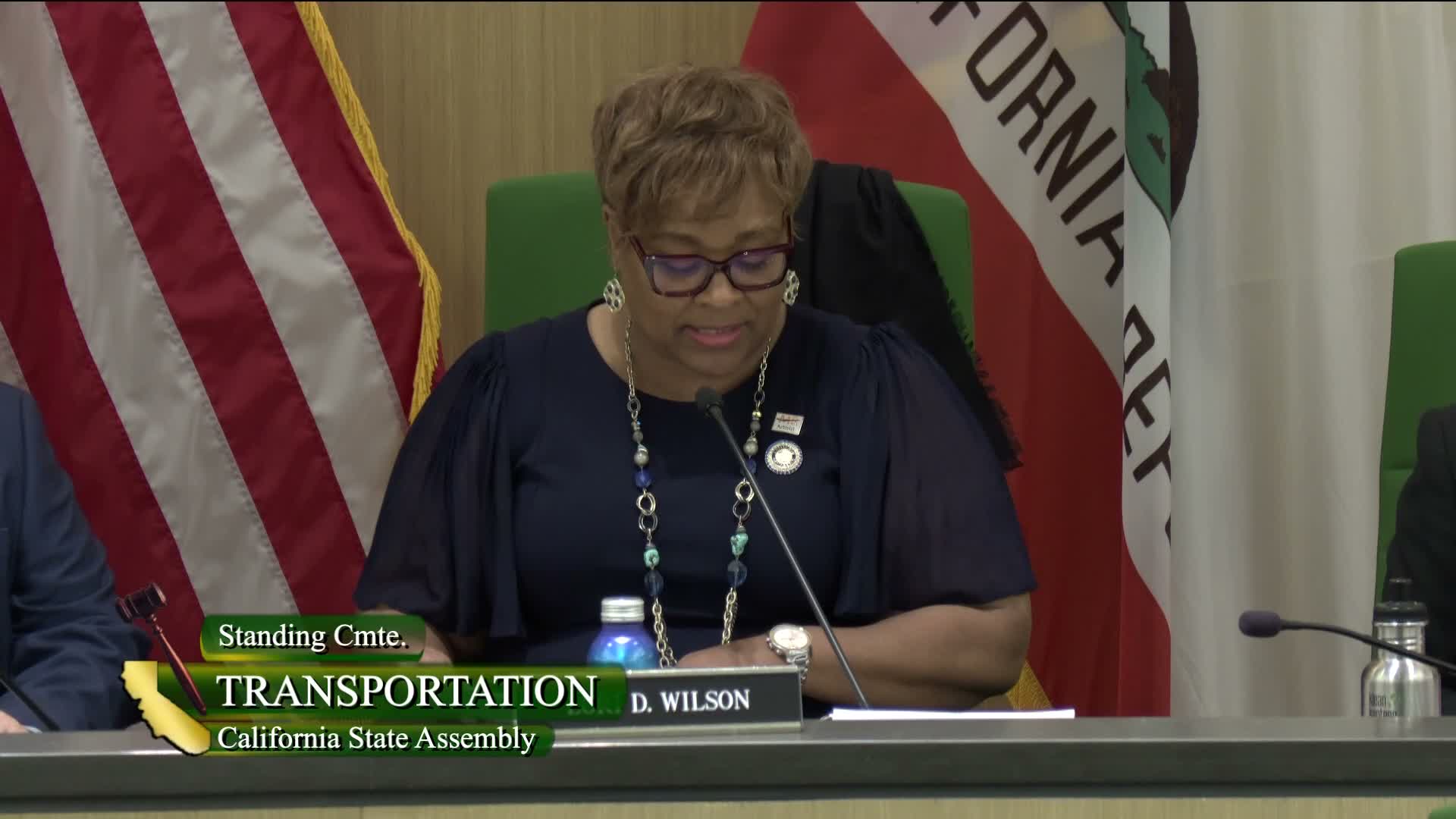
Assembly Transportation Committee advances multiple transportation bills; votes send several to Appropriations and Local Government
Loading...
Summary
The committee heard a broad slate of transportation bills including e‑bike rules, active‑transportation funding reforms and CDL verification measures. Multiple bills were referred to Appropriations or Local Government committees; several passed with committee amendments and others failed or were held for reconsideration.
The Assembly Transportation Committee considered more than a dozen bills addressing safety, funding and regulatory issues and voted to refer multiple measures for further review.
Among the bills the committee sent onward were AB 19 42 (e‑bike registration and plates), AB 20 15 (a Caltrans study on third‑party navigation apps), AB 21 68 (reforms to the Active Transportation Program), AB 22 63 (VTA authority for employee housing), AB 15 57 (clarify e‑bike power limits) and AB 16 85 and AB 16 87 (DUI package reforms). Several of those measures were passed out of committee with amendments and referred to the appropriate fiscal or policy committees; others failed to reach a majority and were left for reconsideration.
Roll call outcomes recorded in the hearing record included do‑pass referrals and a handful of no or not‑voting positions. Examples recorded in the committee record: AB 19 76 (pedestrian and bicycle project streamlining) was due passed to Local Government; AB 20 15 and AB 21 68 were due passed to Appropriations; AB 15 57 was due passed to Judiciary; AB 22 84 (a proposal to have the attorney general maintain a list of noncompliant e‑bike products) initially failed to move out of committee and the author requested reconsideration.
The votes reflected a split among committee members on several items, especially where bills raised questions about local control, equity and implementation burden. Members who voted yes commonly cited public safety and the need to expedite projects that protect pedestrians and bicyclists; members who voted no frequently cited concerns about local authority, administrative burden for agencies like DMV, and potential impacts on small businesses and low‑income residents.
Next steps vary by bill: measures referred to Appropriations will receive fiscal review before floor consideration; bills referred to Local Government will move through that committee’s hearing schedule. Where the committee held a roll open, final outcomes could still change as members add votes.
Actions and formal referrals recorded during the hearing were taken as procedural steps to route bills for further review rather than final approval on the Assembly floor.