Get Full Government Meeting Transcripts, Videos, & Alerts Forever!
Get email alerts on the Referral Prioritization topic
No spam. Unsubscribe anytime.
Berkeley council adopts 2026 referral priority list after reweighted-range voting
Summary
The Berkeley City Council voted to adopt a prioritized list of 39 referrals for 2026 after City Clerk Mark Newmanville presented results from a reweighted range-voting tally that produced a three-way tie for the top-ranked items and showed public works dominating the list.
The Berkeley City Council voted Tuesday to adopt a prioritized list of 39 council referrals for 2026 after City Clerk Mark Newmanville presented the results of a reweighted range-voting (RRV) process that ranked the referrals and produced a three-way tie for the top position among public-works items.
City Clerk Mark Newmanville said council members had scored each referral from 0 to 5 and the RRV method reweighted scores to account for how much influence each member had already used. Newmanville told the council the final rankings are included in the staff packet and that three public-works referrals were tied for the number-one slot; he said the tie was left intact because it better reflected how the algorithm is intended to work.
"For each referral, council member rates every referral from 0 to 5," Newmanville said in his presentation, and he described how the scores are reweighted and ranked to produce the final list. He also noted that public-works items make up 19 of the 39 referrals and account for half of the top 20, raising capacity considerations for department workload.
The clerk told the council the practical next step is that the city manager and department heads will use the prioritized list, alongside budget and staffing realities, to sequence which referrals departments begin work on first. Newmanville said council could still remove referrals by motion, but the item before the body was adoption of the ranked list so it could inform planning.
During public comment, Jeff Lomax of Within Our Means, Berkeley criticized the city's fiscal approach and cited what he described as a $30,000,000 deficit, saying that recent tax and borrowing proposals were not meaningful structural reforms. "After asking residents to absorb a 10 to 25% increase in property taxes ... you've made no meaningful structural changes to reduce the city's $30,000,000 deficit," Lomax said.
Paul Matthew, an online commenter and long-time Berkeley resident, praised the use of a structured prioritization process but urged the council to assess how bond issuance would affect property-tax bills and to include lifecycle operating costs for projects funded by bonds.
Council Member Humbert praised the process and the council's emphasis on infrastructure and pedestrian and bicycle safety, saying the prioritized list provides a helpful framework despite constrained resources. Humbert said he was prepared to approve the list.
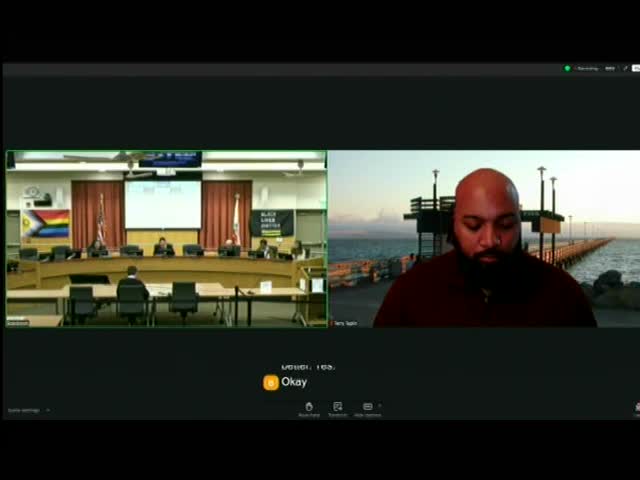
A motion to adopt the staff recommendation was moved and seconded. The clerk conducted a roll-call vote: Council Member Taplin — yes; Council Member Trego — aye; O'Keefe — yes; Luna Parra — yes; Humbert — yes; Mayor — yes. The motion carried and the prioritized list was adopted.
Newmanville said the adopted rankings will be provided to the city manager, city attorney and budget and finance staff to factor into planning for the year. The council then adjourned the special meeting and noted the regular meeting would begin at 6:00 p.m.