Get Full Government Meeting Transcripts, Videos, & Alerts Forever!
Get email alerts on the City Budget topic
No spam. Unsubscribe anytime.
Antioch finance director flags $16.6 million structural gap at midyear budget update
Summary
At its Feb. 10 meeting, Antioch’s finance director told the City Council the midyear general fund outlook shows a roughly $16.6 million deficit driven by a $110.9 million expenditure plan versus $94.3 million in projected revenues, requiring use of reserves and further policy choices to reach structural balance.
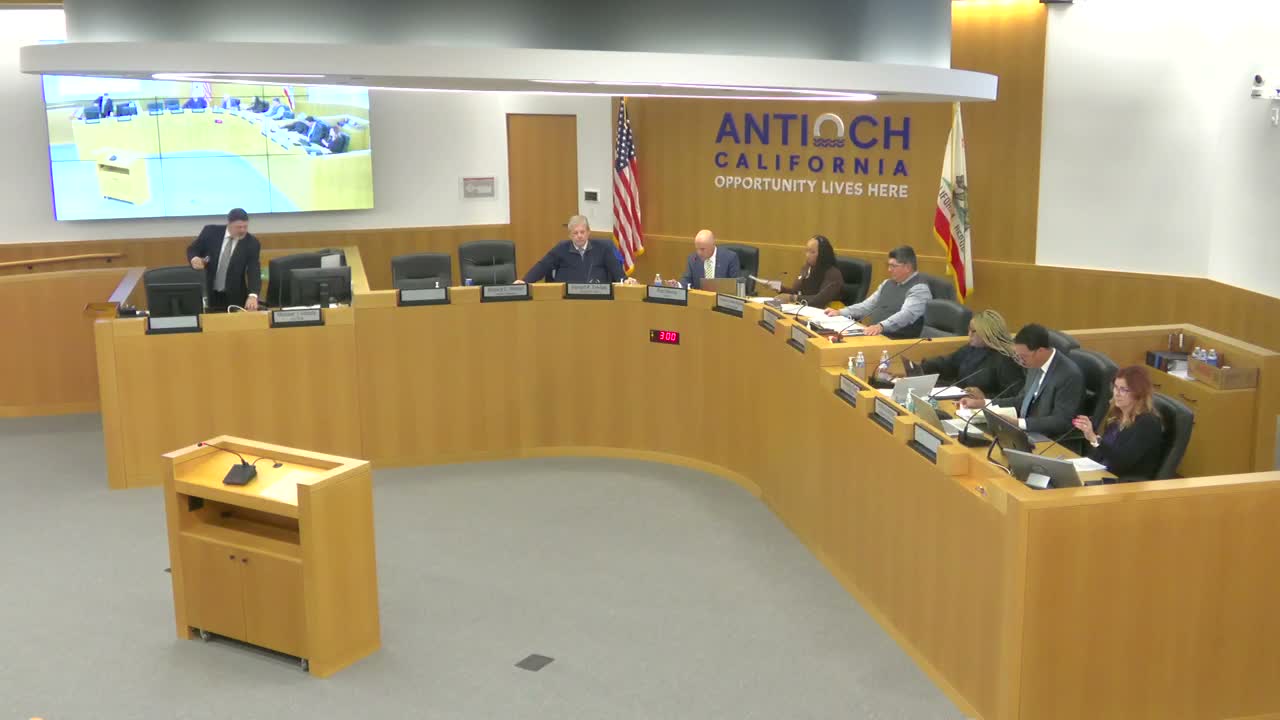
Antioch’s finance director briefed the City Council on Feb. 10 that the general fund is facing a structural gap of roughly $16.6 million for fiscal year 2025–26, prompting a series of budget study sessions to find longer‑term solutions.
Finance Director Merchant told the council the city projects $94,296,782 in revenues against $110,954,729 in expenditures, and the adopted budget includes using $11,657,947 of fund balance plus a $5,000,000 draw from the budget stabilization fund to balance the year. Merchant said the projected ending fund balance is $38,167,551, which remains above the city’s 20% minimum reserve target.
The presentation explained timing effects that skew midyear metrics: property tax distributions and several franchise payments are received on irregular schedules, and large items such as the city’s general liability insurance and CalPERS safety plan contributions are front‑loaded early in the fiscal year. Merchant said upfront payments — including a $4.7 million insurance premium and a multi‑million dollar CalPERS safety payment — make year‑to‑date percentages appear elevated in some categories.
Council members pressed staff on specifics. Mayor Pro Tem Freitas asked what success would look like and how the council should measure progress; Merchant and City Manager Scott said the next phase will target structural balance through staffing, program and fee changes rather than one‑time fixes. Councilmember Freitas and others also asked for clearer timelines and performance indicators tied to each priority.
On revenues, staff reported a downward revision of $1.1 million to regular sales tax projections and noted Measure W receipts (the city’s half‑cent) remain an important revenue source. Merchant said sales‑tax forecasting will be revisited with the city’s consultant in March, and noted the closing of a Raley’s store will be incorporated into updated estimates.
On expenditures, staff highlighted vacancy savings and a comprehensive cost‑allocation and fee study underway that is intended to inform a May master fee‑schedule update. The council set a schedule to begin budget study sessions in March and requested additional information on how the city would reach full compliance with service obligations while reducing the structural gap.
Next steps: staff will bring revised revenue and expenditure estimates to upcoming study sessions, present the cost‑allocation and fee study results, and seek policy direction to guide tradeoffs and pacing for structural recovery.