Get Full Government Meeting Transcripts, Videos, & Alerts Forever!
Get email alerts on the Governance topic
No spam. Unsubscribe anytime.
Fremont council votes to pursue accelerated study of charter city option, aims for Nov. 3, 2026 ballot
Summary
After public comment and debate about timing and costs, the council voted 5–2 to accept a referral to form an advisory committee and pursue an accelerated schedule to place a proposed charter on the Nov. 3, 2026 ballot; staff cautioned about procedural deadlines, procurement needs and resource constraints.
Fremont’s City Council voted 5–2 on Feb. 17 to accept a referral to initiate a study and drafting process to consider converting Fremont from a general‑law city to a charter city, and to pursue placing a proposed charter on the Nov. 3, 2026 ballot under an accelerated timeline.
Vice Mayor Zhang introduced the referral, saying she wanted the city to evaluate whether a charter would provide more local control and streamlined procedures. “My referral is [to] initiate a council‑drafted charter process to make Fremont a charter city and to place a proposed charter on the 11/03/2026 ballot with an accelerated schedule,” she said.
City Attorney Rafael Alvarado and other staff outlined procedural requirements and constraints: the city must provide public notice and hold the required hearings (including minimum 21‑ and 30‑day intervals between certain City Council steps), and a final charter must be submitted to the county registrar a set number of days before an election (staff cited the 88‑day county deadline). The city clerk estimated a cost on the order of $600,000 to place a charter measure on an established November ballot.
Public comment was strongly engaged: dozens of residents urged the council to study the issue (some urged haste so the community can vote in 2026; others urged caution and a longer 2028 timetable). Supporters argued a charter could improve local accountability and allow the city to adapt governance tools to local needs; opponents warned that drafting and implementing a charter is complex, may require outside facilitation and costs, and could divert staff attention from priorities such as an anticipated revenue measure.
Council debate focused on timing and resourcing. Councilmember Lu moved to accept the accelerated option (Option A); Vice Mayor Zhang seconded. Councilmember Kimberlin and Councilmember Campbell voted no, citing the compressed timeline, staff capacity constraints and a preference to aim for 2028 to allow fuller study and outside facilitation.
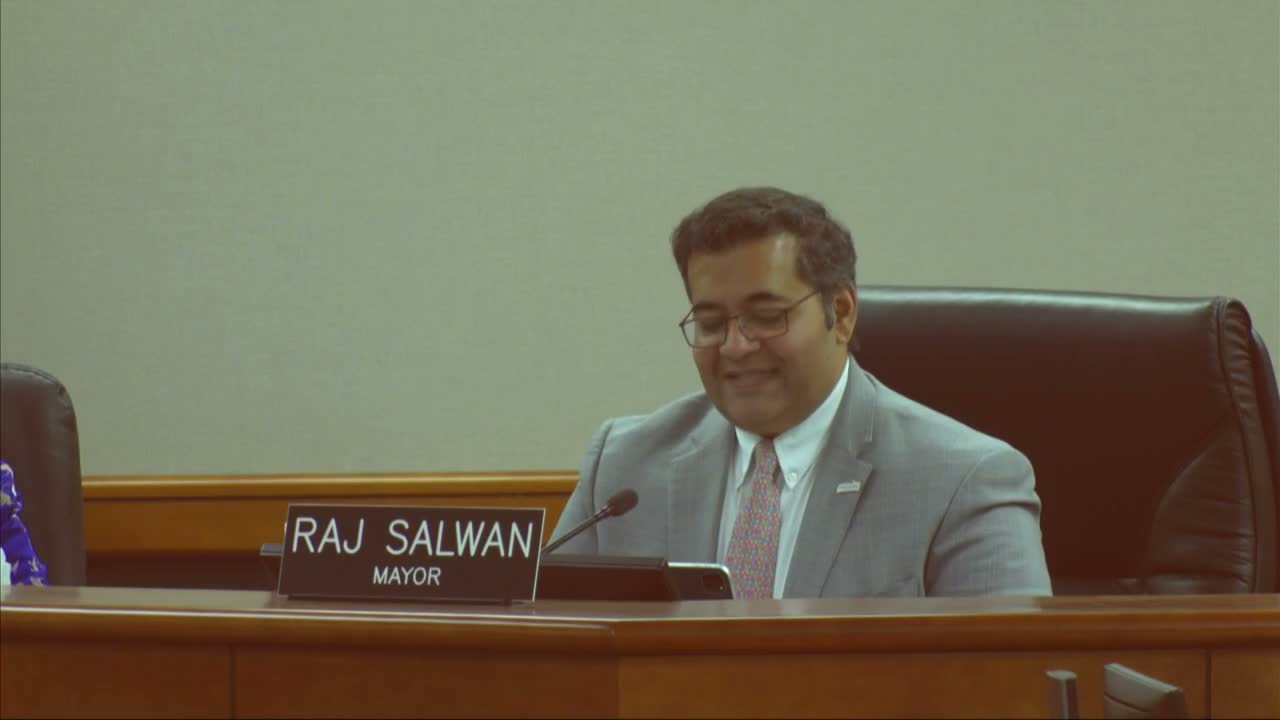
The motion passed 5 ayes, 2 nays. Staff said the council could pause or redirect the process at any point and that the advisory committee’s scope, membership criteria and facilitator needs would be defined in an upcoming resolution and work plan. Mayor Sawan and other supporters said the study is intended as an exploratory, nonbinding first step that would return recommendations to the council and ultimately to voters if the council decides to proceed.
Next steps: staff will return with a draft resolution and work plan, and the council will define the advisory committee’s composition, scope, and reporting timeline before any ballot language is finalized.