Get Full Government Meeting Transcripts, Videos, & Alerts Forever!
Get email alerts on the Local Government Reform topic
No spam. Unsubscribe anytime.
Fremont advisory committee splits over charter city move; agrees on staffing and term-limit proposals
Summary
The Fremont Charter Advisory Committee continued debate over whether to pursue charter city status or retain the current general-law council-manager model, reaching agreement on dedicated staff for elected officials and a preference for three-term limits but failing to reach consensus on form of government. The committee voted to skip a staff presentation of sample charter language and capped public comment at 20 minutes; deliberations will continue next meeting.
The Fremont Charter Advisory Committee met for its third session to continue drafting recommendations on city governance, with members divided over whether to pursue charter-city status or keep the current general-law council-manager structure.
The meeting opened with procedural items and a vote to omit a staff presentation of sample charter language from the agenda; the chair recorded a 4–2 result on that motion. Committee member S6 proposed — and the body adopted — a 20-minute cap on the initial public comment period, with remaining speakers to be heard later in the meeting.
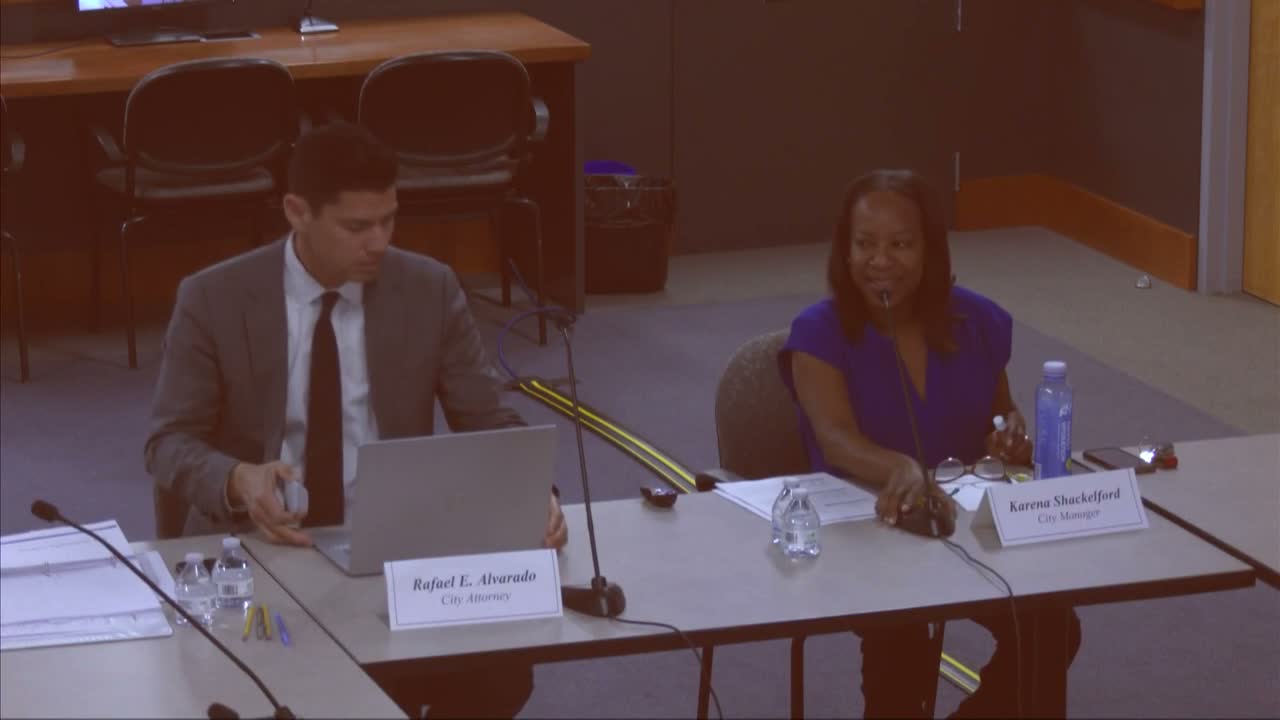
Much of the meeting focused on where executive and hiring authority should sit. City Attorney Rafael Alvarado told members that some powers often associated with a “strong mayor” — such as mayoral veto or sole appointment authority — generally require charter status, while increased council appointment authority can be implemented under the current general-law council-manager form. "If you say the mayor alone has appointment authority, that requires a charter," Alvarado said, explaining the legal constraints the committee should consider when drafting recommendations.
Committee members voiced differing priorities. Several members cited transparency and clearer lines of accountability as chief concerns. "Many residents think the mayor runs the city, and actually the city manager oversees day-to-day operations," said S6, arguing that residents’ expectations and actual authority are misaligned. Others urged protecting professional recruitment processes: Committee member Jones (speaker S7) said professional staff should conduct hiring and provide recommendations subject to mayor-and-council confirmation, rather than turning hiring into a political process.
A group of members said they favored charter-city options that would allow a full-time mayor and clearer executive authority; others warned that moving to charter status could raise costs and create voter concerns about new taxing authority. "Charter status can increase costs to taxpayers," Alvarado noted, adding that taxing authority (such as a real-estate transfer tax) was not part of this committee’s work plan and would require explicit council/voter action.
While the committee did not reach a final decision on the form of government, members achieved at least two substantive points of consensus: the body signaled support for providing staffing support to elected officials (at least one dedicated staff position to assist the mayor and shared support for council members), and a plurality expressed support for a three-consecutive-term limit with an intervening break before eligibility to return. Staff will return next meeting with budget and compensation data to refine those recommendations.
The committee also heard public comment from three speakers. Vipin Sharma urged the committee to address transparency and hiring under current law rather than rely on charter adoption; Advita Rao, representing Fremont Youth Vote, proposed lowering the school board voting age to 16; and Sandra B., a longtime Fremont resident, urged the committee to recommend a council-manager form and delay any charter measure until 2028 to allow more public deliberation.
Next steps: staff will post the presentation slides from prior meetings and bring compensation and staffing cost data to the next meeting. The committee will continue deliberations at its next scheduled meeting.