Get Full Government Meeting Transcripts, Videos, & Alerts Forever!
Get email alerts on the City Finance topic
No spam. Unsubscribe anytime.
City treasurer and PFM present investment performance; council debates term and liquidity
Summary
PFM reported the city's portfolio at about $121 million with a short-duration bias and solid quarterly returns; councilmembers asked staff to analyze liquidity needs and longer-term investment options and received a public pitch to study an ethical investment policy.
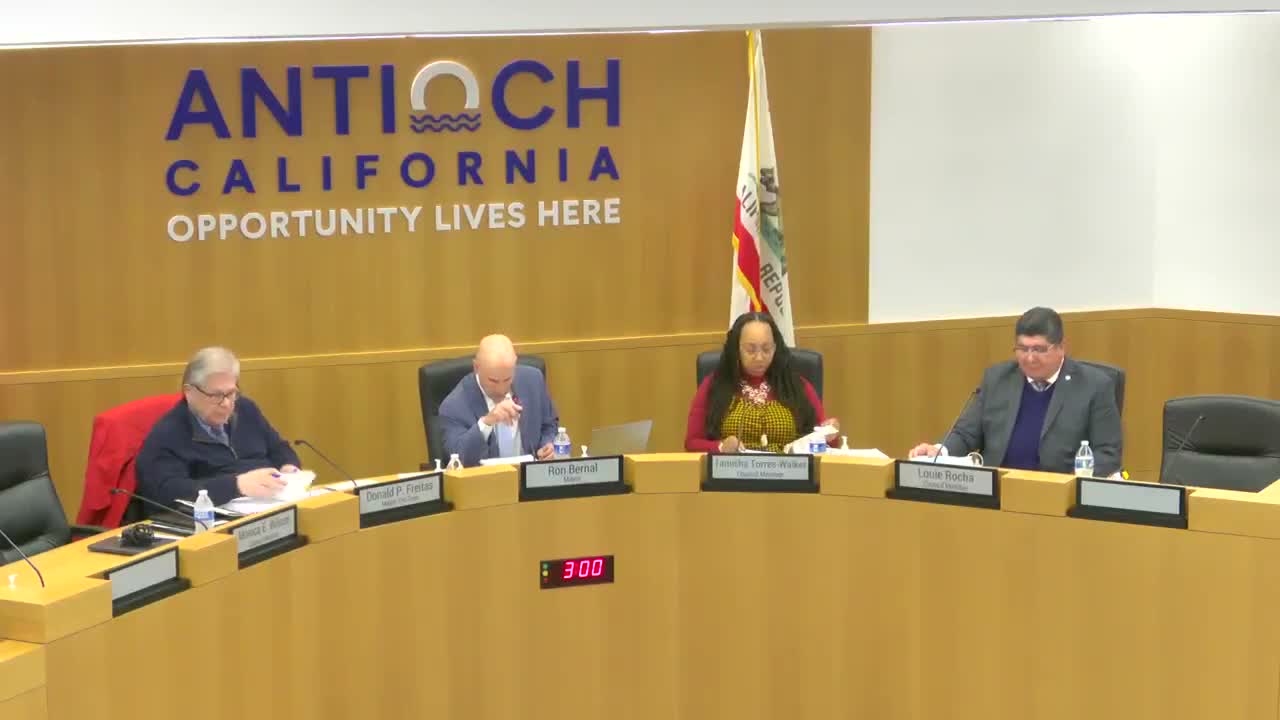
City Treasurer Jorge Rojas introduced a PFM Asset Management presentation on Feb. 24 showing the City of Antioch's investment portfolio balance at about $121 million and a portfolio duration aligned to the 1- to 3-year U.S. Treasury benchmark.
Justin of PFM told council that the portfolio produced meaningful income in the quarter (about $1.2 million in interest and a positive market-value change) with an annualized interest figure consistent with higher-coupon holdings. PFM said the portfolio has a liquidity bias and that most holdings fall in the one-to-three-year range; the firm and the treasurer recommended continued review of liquidity needs before extending duration.
Mayor Pro Tem Freitas and other council members questioned why the city has little or no exposure to instruments longer than three years and asked staff to provide an analysis comparing returns and risks if the city extended maturities to four or five years. The treasurer said state law permits investments up to five years and staff would follow up with more detailed comparisons.
A member of the public urged the council to consider an ethical investment policy similar to other Bay Area cities and offered to meet with staff to identify specific holdings that could be excluded. Councilmembers asked staff to meet with the resident and return with analysis on both liquidity needs and possible ethical-investment constraints.
The council requested follow-up materials to answer questions about rolling liquidity needs, the distribution of maturities in the portfolio, and hypothetical performance if longer-dated securities were included.