Lifetime Citizen Portal Access — AI Briefings, Alerts & Unlimited Follows
Antioch officials hear CORE report as city and county tout shelter exits, warn of funding cliff
Loading...
Summary
City and county presenters told Antioch council that a housing‑focused outreach team (CORE) helped clear a longstanding encampment and connect dozens to shelter and rapid rehousing, while county officials warned that federal and state funding shifts create uncertainty for sustaining gains.
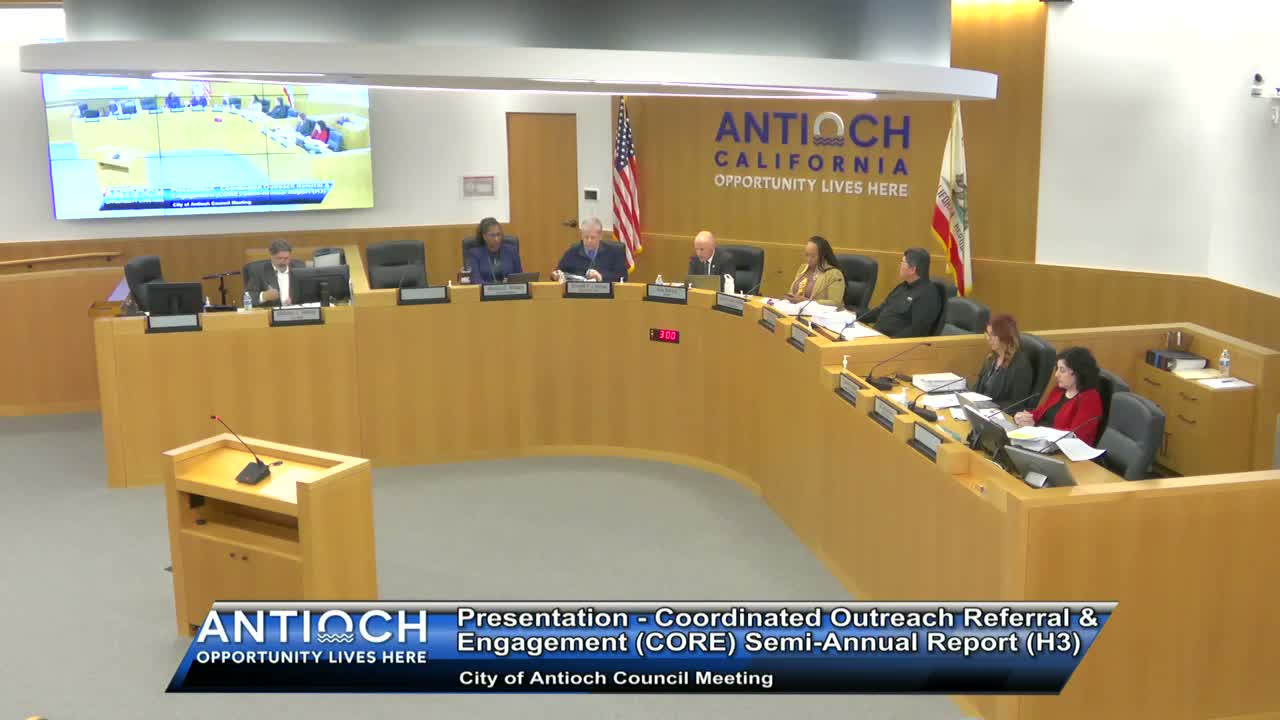
Jenny Robbins, the city’s community response director, and Shelby Ferguson, CORE director, told the Antioch City Council on April 14 that their housing‑focused outreach team has played a central role getting people off the streets and into services. "CORE served over 1,000 individuals here in Antioch, with 94 percent of those individuals having roots here in Antioch," Ferguson said, highlighting local connections to services.
The presentation described a coordinated encampment‑resolution grant effort that began outreach in spring 2025, cleared a longstanding Sunset and Dev encampment in August, and moved most residents into Opportunity Village, a staffed shelter site. Shelby Ferguson said the team helped about 39 unhoused people achieve document readiness and that about 190 people exited to more stable destinations in the first half of the fiscal year; of those who exited to housing, staff reported 98 percent remained stably housed.
The council heard specifics about barriers workers encounter while placing people in housing: pets (many encampment residents had multiple animals that complicated landlord acceptance), document readiness (lack of IDs and Social Security numbers), income instability, and behavioral‑health and substance‑use needs. "Pets are also a barrier to get somebody into housing," Ferguson said, describing microchipping and vaccination work that had to be done to move some residents into hotels and shelters.
Jamie Schechter, homeless services chief for Contra Costa Health, placed CORE’s local numbers in a county context, saying the continuum of care served more than 14,000 people in 2024 — a 40 percent increase since 2020 — and noting that housing costs are the primary driver of homelessness. "Workers need to earn $45.50 to afford a two‑bedroom apartment in Contra Costa County," Schechter said, describing how affordability pressures and changing federal funding priorities complicate long‑term planning.
Council members pressed presenters on program duration and funding. Staff said the encampment‑resolution grant is a three‑year award that funds CORE, Opportunity Village, and rapid rehousing through June 30, 2028, and that the hotel lease for Opportunity Village runs to January 2027. Staff said the program includes wraparound case management and short‑term rental subsidies intended to transition residents into permanent housing.
Council members and presenters also discussed partnerships: CORE works closely with Antioch police, Hope Solutions, Housing Consortium of the East Bay, local nonprofits such as Joy Bound (which assisted with pet needs), and county crisis response teams for behavioral‑health incidents.
Why it matters: Council members said the CORE model shows how targeted local investments and state encampment grants can reduce visible encampments and help individuals into sustained housing — but presenters warned that state and federal funding shifts, including potential changes to HUD and state HAP grants, threaten long‑term capacity. The council did not take a formal action on this presentation; staff encouraged continued collaboration and monitoring of funding timelines.