Get Full Government Meeting Transcripts, Videos, & Alerts Forever!
Get email alerts on the Housing topic
No spam. Unsubscribe anytime.
Berkeley council clears path to sell ADUs as condos with tenant safeguards
Summary
The council voted to implement AB 10‑33, creating a ministerial path to sell accessory dwelling units as condominiums while adding a 90‑day right of first refusal and a five‑year no‑fault eviction conversion prohibition to reduce displacement risk.
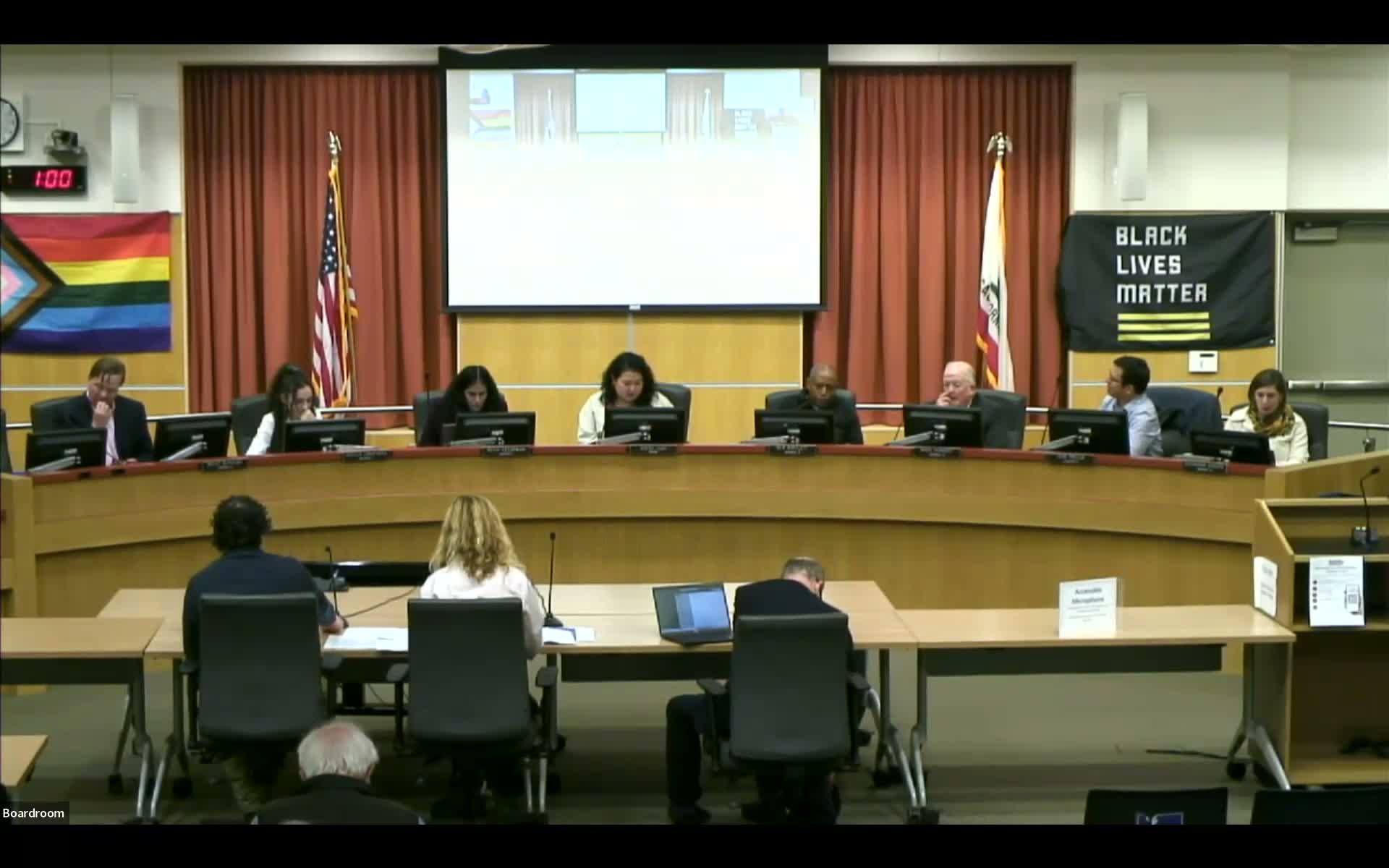
Berkeley’s City Council voted on Jan. 20 to adopt amendments enabling separate sale of accessory dwelling units (ADUs) under state law (AB 10‑33), adding targeted tenant protections intended to limit displacement of existing renters.
The ordinance, presented by Jordan Klein, director of planning and development, creates a ministerial pathway to “condoize” ADUs on eligible lots and requires lienholder consent, safety inspections and buyer disclosures in line with state rules. Planning staff said the chapter creates no new development rights and preserves tenant protections for covered ADUs, including right of first refusal and right to remain where required by existing condominium conversion rules.
Vice Mayor Luna Parra introduced supplemental amendments the council considered at length. The council ultimately approved a version that reduces the right‑of‑first‑refusal period to 90 days for all ADU tenants (shortening the planning commission’s one‑year proposal), imposes a five‑year prohibition on condo conversion after certain no‑fault evictions, and retains limits on owner‑move‑in evictions for current tenants. The supplemental also preserves an option allowing owners to opt into rent limitations in place of paying the affordable‑housing mitigation fee in some cases.
Council members pressed staff on which ADUs qualify — for example, how amnesty‑permitted units are treated — and staff explained that units that obtained full certificates of occupancy through the city’s amnesty path could qualify for conversion, while units that only received a certificate of compliance (limited safety screening) would not qualify.
Speakers at the public hearing were split: housing advocates, student groups and the Rent Board urged stronger tenant protections and said safeguards would not meaningfully harm production; landlord‑oriented speakers and some residents warned that fees or added restrictions could disincentivize ADU production. Planning staff said recent production averages roughly 100–180 ADUs per year and did not expect a major change in production under either approach, while noting some fee options (the affordable‑housing mitigation fee) could be large in specific cases (staff presented an illustrative calculation that produced an example mitigation amount around $221,538 under certain cost assumptions).
On a roll‑call vote after extended amendment‑making, the council carried the main motion to adopt the ordinance with the 90‑day right of first refusal applied to all ADU tenants (roll call recorded in the meeting). The ordinance creates a ministerial pathway for separate sale while layering the council‑approved tenant protections; staff will return with final drafting and implementation steps required for compliance with state law.
What happens next: the ordinance implements a local regulatory path to AB 10‑33; staff will complete final code language and administrative processes for applicants and will publish guidance about tenant notification, lienholder consent and mitigation fee calculations.