Get Full Government Meeting Transcripts, Videos, & Alerts Forever!
Get email alerts on the Transit Budget topic
No spam. Unsubscribe anytime.
BART director warns of $350–$400 million annual shortfall; service cuts and layoffs possible
Summary
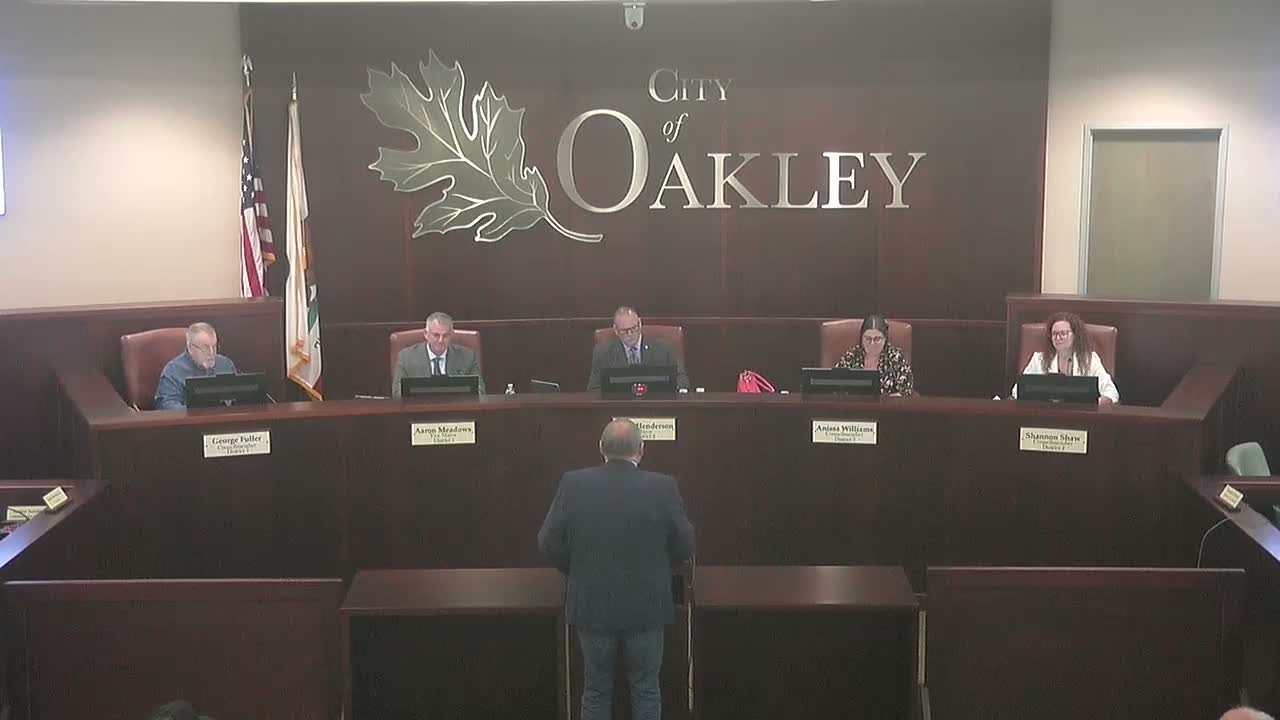
Mark Foley told the Oakley City Council BART will exhaust COVID-era emergency funds and face a $350–$400 million operating deficit beginning in July unless new revenue is secured; the agency may need major service reductions, fare hikes and layoffs if a regional ballot measure fails.
Mark Foley, the BART board member representing District 2, told the Oakley City Council the transit agency faces a severe operating deficit that could force substantial service reductions and layoffs if additional revenue does not materialize.
"Starting in July, we will begin running a deficit of somewhere between 350 to $400,000,000 per year for operating expenses," Foley said, describing how fare revenue has dropped from about 71% of operating revenue pre-pandemic to roughly 30% now. He said BART has exhausted most emergency COVID funds and is exploring a mix of options including a regional ballot measure, a proposed state loan as a short bridge, fare increases, service cuts and staff reductions.
Foley outlined possible steps should a revenue measure fail: an initial round of staff reductions and a shift to earlier evening service (examples he cited included ending service at 9 p.m. on weekdays), reductions in line service and a phased proposal that could include up to 600 layoffs and closure of stations if deficit mitigation fails. "If you close both Pittsburg and Antioch, that entire segment can be turned off," Foley said when describing station-closure concepts.
Council members expressed alarm that East Contra Costa County — which has paid BART taxes for years but lacks extensive service — could lose stations or continue paying taxes for reduced or no local rail service. "If that becomes a reality and we lose these stations, are we still going to be on the hook for paying BART taxes?" Council Member Shaw asked; Foley confirmed taxes would still be levied unless jurisdictional action changed the tax structure.
Foley said a regional ballot measure being discussed (Connect Bay Area) could provide substantial funding but would not fully close the gap. He urged outreach and town halls to explain impacts and timelines to East County residents.
Next steps: Foley said BART staff would prepare two budget scenarios for the board this summer and pursue a combination of revenue and cost-control measures; council members asked for local outreach and town halls to inform residents about possible service changes.