Get Full Government Meeting Transcripts, Videos, & Alerts Forever!
Get email alerts on the Library Parcel Tax topic
No spam. Unsubscribe anytime.
Residents and advocates clash over proposed 30-year El Cerrito parcel tax for a new library
Summary
Speakers at the Feb. 3 El Cerrito City Council meeting both criticized and defended a proposed 30-year parcel tax to fund a new library, raising questions about bond math, ballot timing, parking and whether funding assumptions are sound; council did not take a formal action on the measure at this meeting.
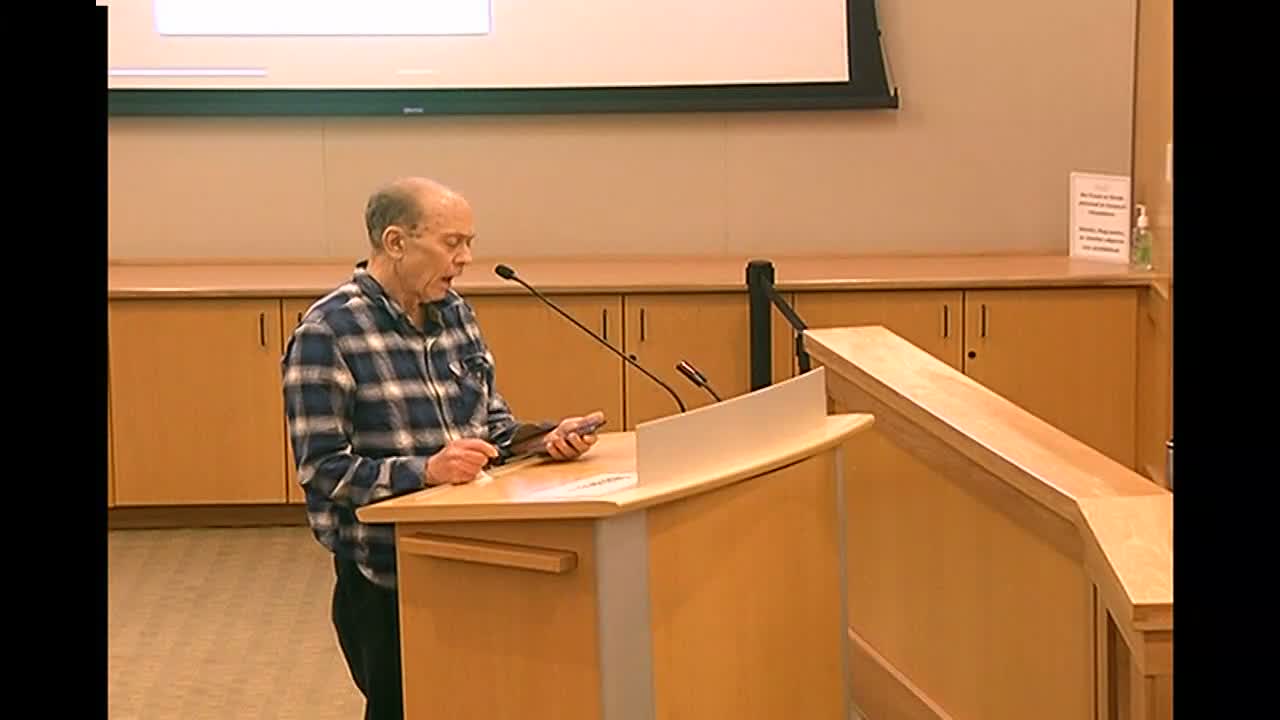
Several El Cerrito residents used the council’s oral-communications period to press elected officials for more clarity before placing a 30‑year parcel tax for a new library on the ballot.
"The proposal before you is infeasible," said Ira Chernow, an El Cerrito resident, arguing the initiative’s promised revenues and the debt-service coverage ratio in the petition are inadequate. He told the council the tax was projected to raise "$2,700,000 per year" with operating costs of "$900,000 per year," leaving roughly "$1,800,000 for bond payments," while actual bond payments would exceed $2,000,000; he urged the council to "bring in the bond underwriter and get a definitive opinion on what's affordable with the proposed taxes." (Ira Chernow)
Laurie Schreier, who said she has lived in El Cerrito for 23 years, said she supports a new library in principle but opposed the measure "as it is written," citing a possible $100,000,000 price tag over 30 years, a lack of dedicated parking, and the cost and timing of holding a June special election that would cost roughly $80,000 in city funds. Schreier urged council to "pull this initiative off the ballot" until a comprehensive fiscal impact report and a parking study are completed. (Laurie Schreier)
By contrast, Greg Lyman and Michael Fisher spoke in favor of the measure, framing it as the practical step needed to move planning forward. Lyman gave an example of bond math, saying "a bond sold at $36,000,000 would result in $2,300,000 annual payment for 30 years," and argued a yes vote would fund either of the proposed construction scenarios and allow the city to recover the June election cost. (Greg Lyman)
Michael Fisher emphasized that the existing library is "too small, too old, not seismically safe" and said the measure would not collect money until planning is complete: "The library measure provides funding, nothing more and nothing less." (Michael Fisher)
Why it matters: Speakers raised substantive fiscal questions—debt-service coverage, operating-cost estimates, election timing, and site parking—that could affect how the project is scoped, financed, and presented to voters. Multiple speakers called for an independent bond underwriter's assessment and a fuller fiscal-impact analysis before moving forward.
What officials said: Councilmembers and staff did not adopt or suspend the measure at this meeting. Several councilmembers acknowledged the points and asked staff to bring more detail to future discussions; no new financial commitments were made.
Next steps: The council's budget and library task‑force work will determine timing and any follow-up reports. Public commenters asked the council to delay placing the measure on the June ballot until the identified fiscal, parking and site issues are resolved.