Get Full Government Meeting Transcripts, Videos, & Alerts Forever!
Get email alerts on the Code Enforcement topic
No spam. Unsubscribe anytime.
Antioch revamps code enforcement: expanded hours, drone evidence and thematic enforcement announced
Summary
City code enforcement leaders told council they’ve shifted to a thematic enforcement strategy, added evening/weekend coverage, used technology (drones) and logged 2,060 inspections and nearly 1,000 new cases since August 2025; council asked for follow‑ups on hot spots, vendor enforcement and interagency coordination.
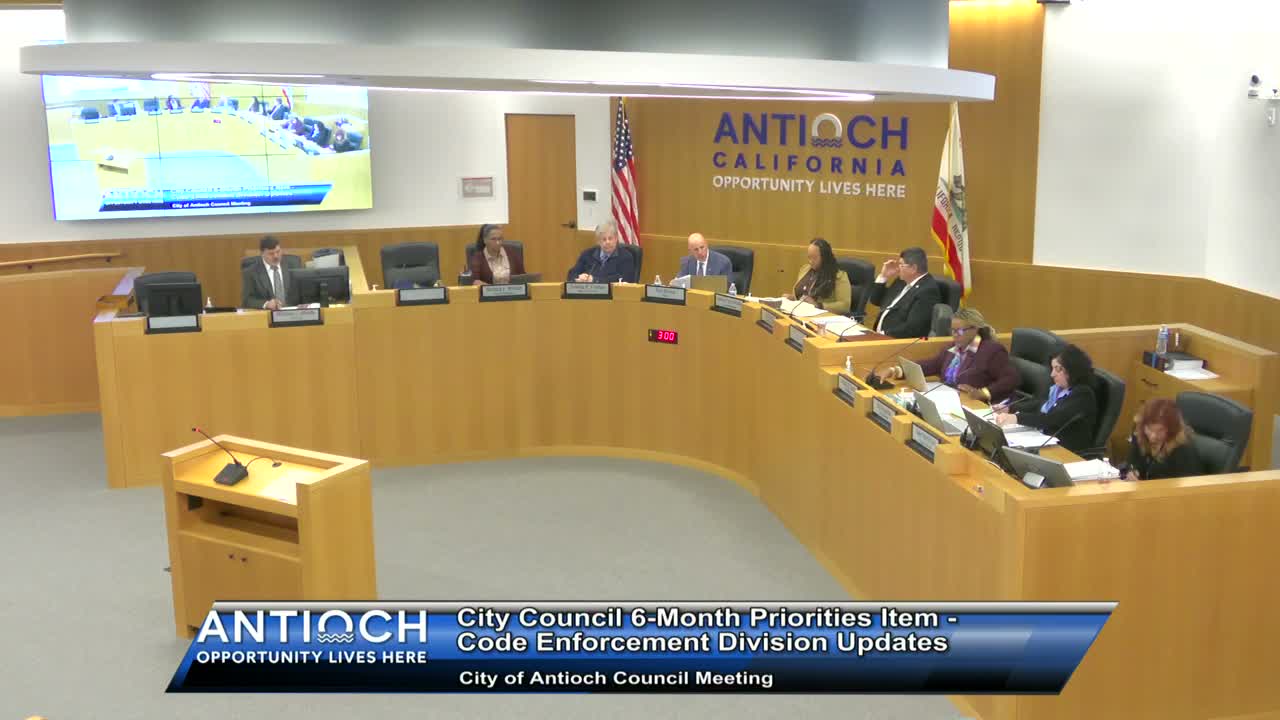
City code enforcement leaders presented a six‑month update March 10, describing operational changes intended to improve responsiveness and reduce neighborhood blight.
Interim Code Enforcement Manager Sunny and Director David Storer told the council the division is moving from static geographic beats to a thematic approach that targets corridors, commercial hotspots, illegal dumping and repeat problem sites. Sunny said the division currently operates with nine dedicated staff (authorized for 12) and that initiatives have included expanded evening and weekend enforcement, targeted vendor outreach and investments in equipment including drones to document violations.
Staff cited metrics for August–December 2025: roughly 2,060 inspections, nearly 1,000 new cases opened and over 1,000 cases closed. A recent vendor enforcement operation ran across six nights, contacted 81 vendors and issued 64 warnings while emphasizing education and permitting pathways.
Council members and residents pressed staff for targeted maps of hot spots (Deer Valley/Empire Mine, J Street between 4th and 6th), clarity on interagency cooperation for freeway and railroad‑right‑of‑way issues, and explanations of program costs and vacancy staffing plans. Staff said they would return with more detail, including a separate briefing on the SeeClickFix (Securefix) intake process and outreach efforts to reduce repeat violations.
Public commenters praised the expanded hours and outreach but asked for more action on recurring problems such as neighborhood dumping, grease and vehicle repair on residential streets and concerns about harassment and staff conduct in the field. Staff reiterated a progressive, compliance‑first posture and said enforcement would remain collaborative with police, public works, county health and fire agencies when appropriate.