Get Full Government Meeting Transcripts, Videos, & Alerts Forever!
Get email alerts on the Local Taxation topic
No spam. Unsubscribe anytime.
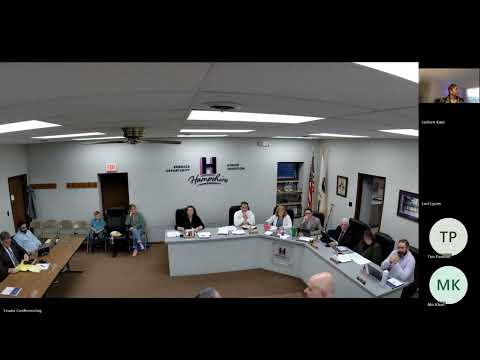
Hampshire board votes to reinstate 1% local grocery tax to replace state collection
Summary
After a lengthy debate about revenue, confidentiality of state receipts and economic-development uses, the Village of Hampshire trustees voted to adopt a 1% local grocery tax to replace the state-collected amount, with staff warning that exact grocery receipts are restricted by state law.
The Village of Hampshire board voted to reinstate a 1% local grocery tax on May 1, 2025, adopting language to replace the state-collected grocery tax that the governor recently removed.
President Mike Reed told trustees the change fills a budget hole left by the state action and provides a tool the village can use for economic-development rebates. "The governor has graciously, allowed us to be the bad guys and reinstitute this if we want," Reed said, urging trustees to consider future flexibility when negotiating with prospective retailers.
Finance staff told the board they could not publish exact grocery-tax receipts for individual businesses because state rules restrict sharing that data. Miss Lyons, the village staff presenter, explained the practical effect: "We expended 100% of the DCEO revolving loan fund for the Streetscape project during fiscal year 23, as well as some ARPA funds," and the village met the federal threshold for single-audit testing, complicating reporting. Trustees pressed staff for an aggregate estimate but were told the law makes individual or line-item disclosure difficult.
Trustees debated fiscal scale and equity. Some argued Hampshire’s grocery tax base is small (the village has only one full grocery store), while others said any lost revenue is worth reclaiming to support services. Board members also discussed using a local grocery tax as an economic-development tool, similar to existing sales tax rebates.
After discussion, the board moved and approved the ordinance to reinstate the 1% grocery tax to be collected locally; the clerk recorded a roll-call vote and the motion carried.
The next steps include ordinance preparation and publication as required; staff will follow statutory notice and implementation procedures.