Get Full Government Meeting Transcripts, Videos, & Alerts Forever!
Get email alerts on the Transportation topic
No spam. Unsubscribe anytime.
Proponents pitch 30-year 'Better Roads, Safe Streets' measure, say Sanger could see multimillion-dollar boost
Summary
Proponents of a proposed 30-year Fresno County transportation measure told the Sanger City Council it would direct 65% for local streets and roads, 25% to transit and cap administrative fees, and estimated Sanger’s annual share could rise from about $645,000 today to roughly $4 million under the proposal; councilmembers pressed for a city-level allocation breakdown and details on oversight.
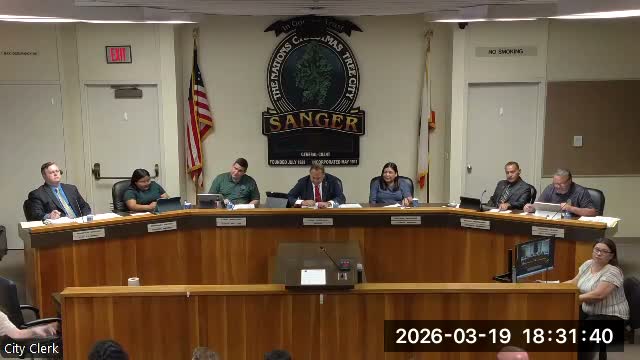
Sanger — Proponents of a proposed countywide measure called “Better Roads, Safe Streets” presented the proposal to the Sanger City Council on March 19, saying it would expand long-term local funding for streets, active transportation and transit.
Ashley Swearingen of the Central Valley Community Foundation described the measure as a 30‑year plan that dedicates 65% of revenues to local streets and roads, 25% to public transportation, 5% to regional projects and limits administrative fees to about 1%. She said the measure couples local flexibility with enforceable performance targets, including a countywide goal to reach a 70 pavement‑condition index (PCI).
“Our proposal focuses on the places where people live — sidewalk to sidewalk repairs, active‑transportation improvements and accountable oversight,” Swearingen said. The coalition also emphasized a public database of projects, annual audits and a citizen oversight body.
Proponents told the council that, under their allocation method, Sanger’s current combined local streets and active‑transportation allocation of about $645,000 per year could rise to roughly $4,000,000 annually under the new measure. They framed the increase as a projection based on the measure’s formula and a 30‑year planning horizon.
Council members asked for more detail. Councilmember Montelongo said he wanted a city‑level breakdown showing how the countywide allocation would be distributed among municipalities; he asked the presenters to provide the calculations and a clearer methodology. Councilmember Hurtado asked how members of the citizen oversight committee would be appointed; presenters said the measure specifies oversight roles and that the committee would meet regularly (they said at least four times per year in the measure language).
Proponents acknowledged other ballot proposals circulating and contrasted their plan’s emphasis on local flexibility, lower fees and performance requirements. They said they are collecting signatures and asked the council to “report” the measure when the ballot is finalized this summer so the county’s action can proceed to voters.
The presenters offered to provide a city‑specific allocation breakdown and supporting documents; they listed the project website as betterroadsafestreets.org for additional information.
What happens next: proponents said they are collecting signatures to qualify the measure for the November ballot and offered to return with detailed allocations. Councilmembers asked staff to follow up with the proponents’ data so the city can evaluate projected local revenue and oversight language.