Get Full Government Meeting Transcripts, Videos, & Alerts Forever!
Get email alerts on the Public Health topic
No spam. Unsubscribe anytime.
Covina council adopts ordinance to restrict high‑potency kratom products
Summary
Councilmembers voted unanimously to adopt Ordinance 26‑01, restricting retail sales of concentrated/synthetic kratom extracts and applying youth‑access safeguards similar to tobacco and cannabis frameworks.
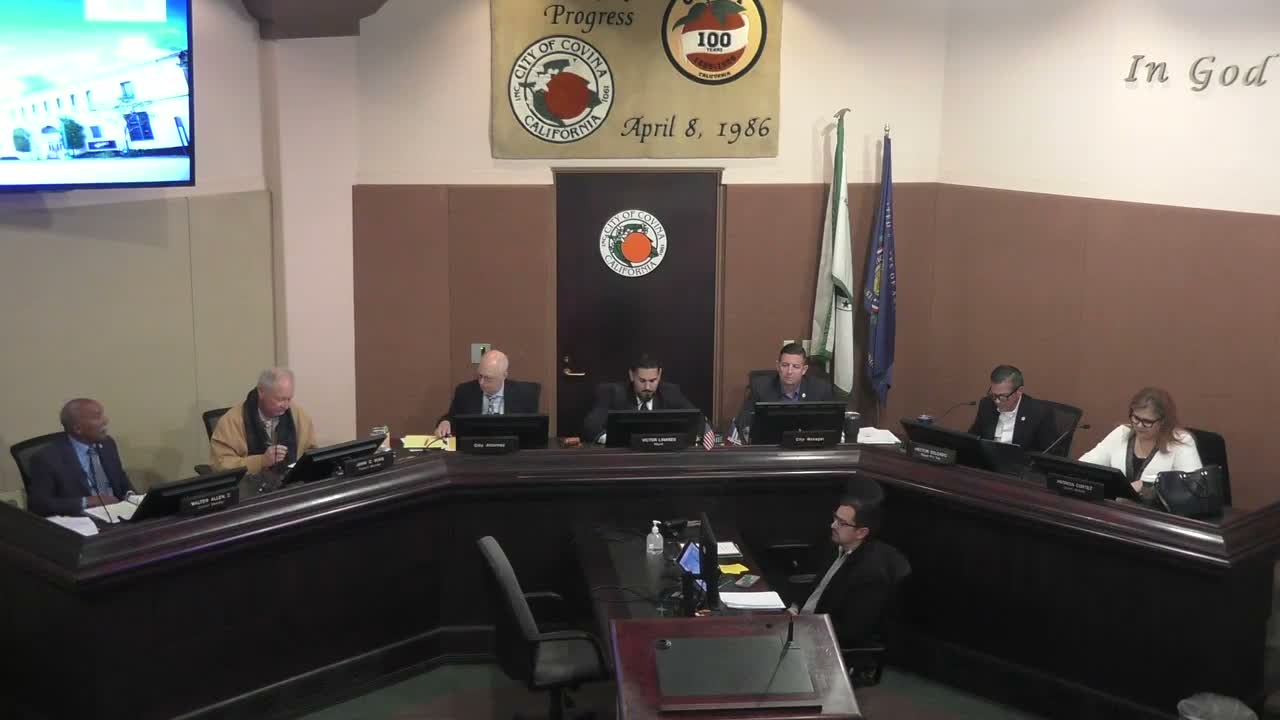
The Covina City Council voted unanimously to adopt Ordinance 26‑01, a measure to regulate high‑potency synthetic or concentrated kratom products and restrict youth access.
Captain Robson, introduced by Chief Chris Walzak, told the council that certain kratom derivatives (referred to in the presentation as a high‑potency compound) bind opioid receptors with higher affinity than morphine and that concentrated extracts and enhanced alkaloid products pose public health risks and can appeal to young people. Robson said the ordinance does not ban traditional kratom leaf products but would regulate higher‑potency extracts, require retail standards and seek to limit sales to minors.
Councilmembers questioned whether the product is currently illegal under federal law and how it is sold. Robson said such products are available in multiple forms — concentrated extracts and pill‑type preparations — and that affordability and youth‑targeted packaging are concerns. Several councilmembers, including a longtime drug enforcement professional, praised the ordinance as a way to get “out in front” of emerging synthetic opiates.
Councilmember Allen moved to adopt Ordinance 26‑01 and Councilmember King seconded. The clerk conducted a roll call and the ordinance passed unanimously.
The ordinance, as described in the presentation, focuses on enforceable retail standards and age verification; the council did not amend the ordinance on the floor before voting.