Lifetime Citizen Portal Access — AI Briefings, Alerts & Unlimited Follows
Covina residents urge halt to proposed battery storage project, demand full environmental review and more outreach
Loading...
Summary
Dozens of residents told the Covina Planning Commission they were not adequately notified about a proposed battery energy storage system (BESS) near homes, raised safety and economic‑benefit concerns, and urged a third‑party environmental impact report and independent town halls before any permit is considered.
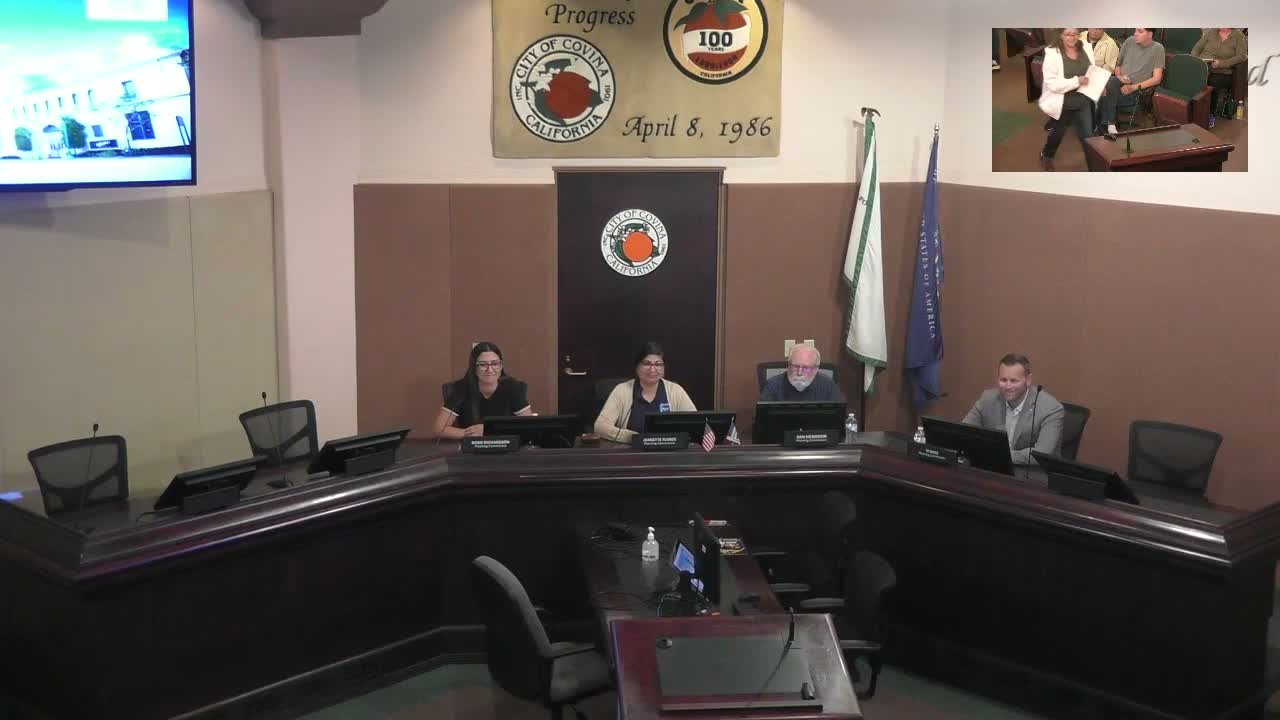
Dozens of Covina residents used the Planning Commission’s public comment period to press elected officials to delay any permitting for a proposed battery energy storage system and to require a full environmental impact report.
Speakers representing nearby homeowners, grassroots coalitions and individuals raised overlapping concerns about fire and toxic‑gas risks, inadequate notification and the distribution of economic benefits. “I have been canvassing the neighborhoods and giving information to inform my fellow neighbors,” said Joanne Ramirez, who said residents near the site were unaware of the proposal. Jose Cabral, an HOA board member who lives about half a block from the proposed site, said homeowners were not notified of earlier meetings and asked, “How is the community benefiting from this?”
Other commenters cited technical safety concerns. Armida Carrion pointed to the project’s mitigated negative declaration, saying it understates local exposures and specifically flagged a quarter‑mile school proximity question as incorrect. Dr. Brie Serrano cited published research and the Los Angeles County firefighters’ union cease‑and‑desist letter, saying the risk of “runaway fires” from lithium‑ion batteries warrants stricter review and a third‑party EIR.
Several speakers asked the city to host independent, accessible town halls led by city officials and experts not paid by the developer. “I would like to ask the planning commission to try to set up an independent town hall or information session with residents of Covina to truly center their concerns,” said Lee, who attended the developer’s outreach meeting and said many Covina residents were not informed.
Speakers also raised equity and economic questions. Dr. Sylvia Cervantes and others emphasized that the facility would be steps from homes where children live, and questioned why residents who contributed solar power were not offered battery options; Jonathan Montalvo (No Data Center coalition) and others said the developer’s materials list limited community benefits such as transient construction jobs and that long‑term impacts were unclear.
Commissioners responded after public comment by acknowledging the volume of concern and urging additional outreach. Commissioner Nasse and Commissioner McMeekin said the commission hears the community and emphasized the project was not currently on the commission’s agenda. Vice Chair Jeanette Flores and Commissioner Richardson said they would support more town halls and broader notification before any formal hearing. “We hear you. We care because we are living it with you,” Commissioner Nasse told speakers.
No formal action or vote on the BESS was taken at the meeting. Staff and commissioners repeatedly noted that under state law the commission cannot act on items not on the agenda and that a full staff report and hearing will be required before any decision.
What happens next: Commissioners said they will request or support additional outreach and that the item will return only after staff has prepared a complete report and the matter appears on an agenda with opportunities for public hearing and staff presentation.