Get Full Government Meeting Transcripts, Videos, & Alerts Forever!
Get email alerts on the Environmental Policy topic
No spam. Unsubscribe anytime.
Environmental Commission revises priorities, forms wildlife, Clean California and native-plant subcommittees
Summary
On March 10 the Calabasas Environmental Commission discussed updating 2024 priorities, emphasized wildlife protection, native-plant initiatives and student/community engagement, and voted to create three new subcommittees: wildlife protection, Clean California participation, and native plants/pollinators.
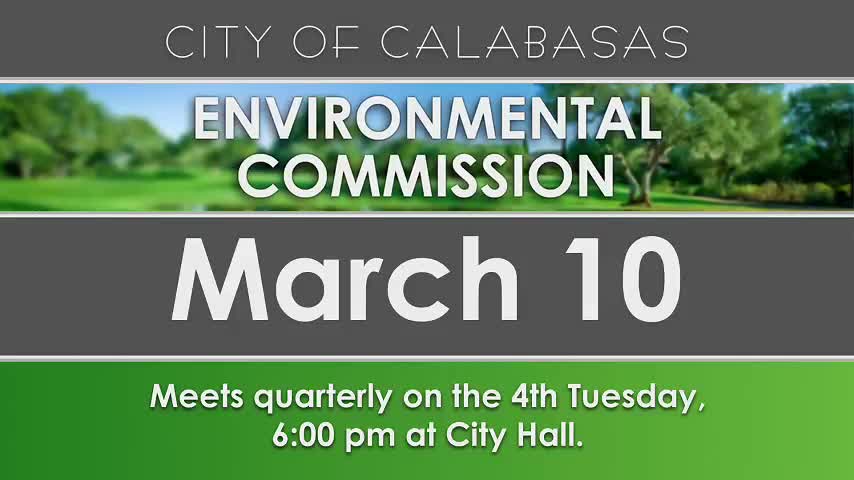
The Calabasas Environmental Commission spent a sizable portion of its March 10 meeting debating whether to refresh priorities that were set in 2024 and moved to create several new subcommittees to pursue specific goals.
Vice Chair Filish and other commissioners argued the commission should refocus on wildlife protection and humane wildlife management, including public education and habitat protection. Commissioners also voiced support for greater emphasis on native plants and water conservation, student engagement across grades, and stronger partnerships with other city commissions and community groups.
After discussion and a call for written feedback, the commission agreed on a timeline: commissioners and staff will collect written priority suggestions from members and their council liaisons by April 23 so staff can present revised priorities at the May 12 meeting.
On motions and votes, the commission approved the creation of three new subcommittees by voice or roll call vote: Wildlife Protection (initial commissioners: Filish and Byrne), Clean California/community-recognition (initial commissioners: David and Randy) and Native Plants and Pollinators (Whitney and Randy). The commission also formally dissolved the 'Flora for Our Future' subcommittee after it completed its seed-distribution goals.
Commissioners described immediate follow-ups: staff will circulate updated subcommittee rosters and will explore management approval for partnerships (for example, coordinating free milkweed distribution via external partners), arrange educational sessions, and work with community members and students to implement activities such as habitat plantings and pollinator hubs.
What’s next: staff will send a recap email with the updated subcommittee list and will coordinate the April 23 feedback deadline and the May 12 priority item on the upcoming agenda.