Lifetime Citizen Portal Access — AI Briefings, Alerts & Unlimited Follows
Aurora City Council rejects MOU with GEO facility after hours of public testimony
Loading...
Summary
After more than an hour of public comment focusing on alleged abuses at the Aurora GEO processing center and police accountability concerns, the Aurora City Council voted 6–4 to reject Resolution 2026‑30, a memorandum of understanding between the Aurora Police Department and the GEO-run Aurora processing center.
The Aurora City Council declined to approve a proposed memorandum of understanding between the Aurora Police Department and the GEO‑operated Aurora processing center on Monday, rejecting the measure on a 6–4 vote after lengthy public testimony opposing the agreement.
The resolution (Resolution 2026‑30) would have formalized operational parameters for APD responses to criminal and emergency incidents at the facility. Mayor Kaufman moved to adopt the resolution; the motion was seconded by Council member Hancock and brought for a roll‑call vote. After an initial announcement of the tally that the chair corrected on the record, the clerk confirmed the motion failed 6‑4.
City staff said the document is an interagency understanding—intended to set incident‑command procedures and clarify when APD might deploy officers to the quasi‑federal site—and stressed it does not override state or federal law. Police staff and the city’s legal adviser advised against negotiating changes on the dais and recommended any substantive amendments be handled through a delegated negotiation process.
Chief Todd Chamberlain, who participated remotely, told the council the figure he cited for the facility’s population came from an ICE director: about 1,000 people in custody and “approximately 600–700” with criminal‑related charges tied to their detention status. Several council members and speakers in the audience disputed that characterization and asked for source documentation; at least one public‑health professional and other advocates later cited different figures (including a public‑health nurse who cited a snapshot of 1,283 detainees with roughly 22% having criminal records).
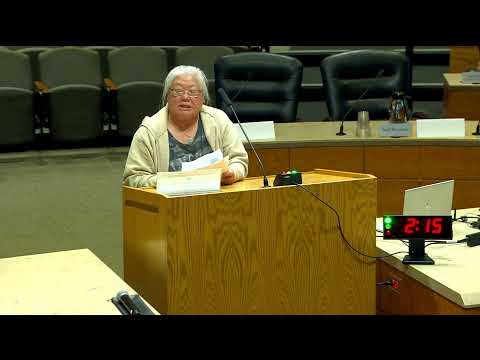
Public testimony that preceded the vote was strongly opposed to the MOU and to the continued operation of the private GEO facility. Dozens of speakers — including youth leaders, disability and civil‑rights advocates, and residents — described the facility as having a pattern of inadequate medical care and alleged abuses. Marcela Scheiflin, a disability and civil‑rights advocate who is not an Aurora resident, told the council the MOU “fails every standard of normal municipal governance,” pointing to the proposed 10‑year term, absence of structured review, and lack of reporting obligations.
Young speakers and community organizers testified that the Aurora SAVE program and other surveillance efforts target youth by compiling social‑networking maps, school records and family history; they urged the council to pursue community‑led alternatives rather than policing‑led surveillance. Jeffrey McFarland of the Denver Aurora Community Action Committee called for a Civilian Police Accountability Council with subpoena and hiring/firing authority.
Opponents also raised legal and First Amendment concerns tied to protest activity near the facility, and requested clarity about what information APD would share with federal partners during civil disturbances. Staff repeatedly said the draft MOU limits information exchange to incident context and criminal‑reporting needs and would not supplant state law.
Council members who spoke during debate asked for additional data and for safeguards; several said they were troubled by inconsistencies between figures cited by the chief and numbers reported by community groups and public‑health advocates. City staff offered that, if council wanted changes, staff could work with council members to pull together a negotiating team and return with amendments for discussion off the dais.
The council’s decision leaves open both operational practice and the prospect of a future, amended proposal; staff and council members discussed using an executive‑session negotiation or forming a small committee to seek specific revisions and clarifications before any reintroduction.
The council took other actions Monday: it continued two service‑plan items—the second readings for items 11b3 and 11b4—to May 4 to allow additional developer outreach and community Q&A, and unanimously approved final readings for annexation and zoning ordinances for a 2.496‑acre Tapias LLC parcel (items 15a–15c).