Lifetime Citizen Portal Access — AI Briefings, Alerts & Unlimited Follows
Senate committee limits state charter‑authorizer fees, citing impact on school dollars
Loading...
Summary
The Finance committee adopted an amendment capping State Public Charter School Commission fees (proposed cap $463,000 or up to 3% per pupil, whichever is less) and recommended SB 2351 to the calendar committee after testimony from the charter commission; vote recorded 8 ayes, 1 no, 1 present‑not‑voting.
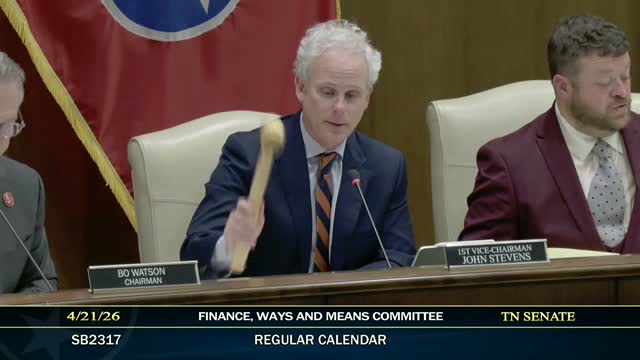
The Senate Finance, Ways and Means Committee advanced legislation to cap the State Public Charter School Commission’s authorizer fee after lawmakers heard that the fee structure can divert instructional dollars from charter schools.
Chairman Watson framed the bill as an equity issue for charter schools: because the state authorizer’s fee is calculated on a per‑pupil basis with no cap, fast‑growing, high‑performing charter schools can pay far more than local authorizers, reducing funds available for teachers and student services. "The difference between $714,000 and $35,000 is $679,000 — that's going to the state charter authorizer as compared to what the local LEA is capped at charging," the chairman said, using the example of one high‑performing charter school to illustrate the impact.
Public testimony and fiscal detail: Hayden Pendergrass of the Public Charter School Commission told the committee the commission has no reserve, a roughly $3.0 million operating budget and about 21 employees; he said the commission has been moving toward fee self‑sufficiency and would prefer a percentage reduction approach to a hard cap, but supported a more comprehensive review. "We don't currently have a reserve," Pendergrass said, adding that the commission planned to return unspent authorizer fees to schools in prior years.
Committee action and vote: Committee members discussed possible budget implications and whether the cap would force the commission to seek general‑fund dollars in the future. To keep the fiscal impact under the budget threshold, the proposed amendment sets an immediate cap (example figure discussed of $463,000 for the current year) or up to 3% of per‑pupil state allocation, whichever is less. The committee adopted the amendment and recommended SB 2351 for passage to the calendar committee on an 8–1–1 tally (eight ayes, one no, one present‑not‑voting).
What to watch: Sponsors said the cap is intended as a pause that will require the commission to justify its expenses to the legislature and to prompt a broader look at authorizer fees, both local and state. The commission signaled willingness to participate in a future, more comprehensive study of authorizer fee structures.