Get Full Government Meeting Transcripts, Videos, & Alerts Forever!
Get email alerts on the Cannabis Tax topic
No spam. Unsubscribe anytime.
San Luis Obispo County board holds cannabis business tax at 6% after public pleas
Summary
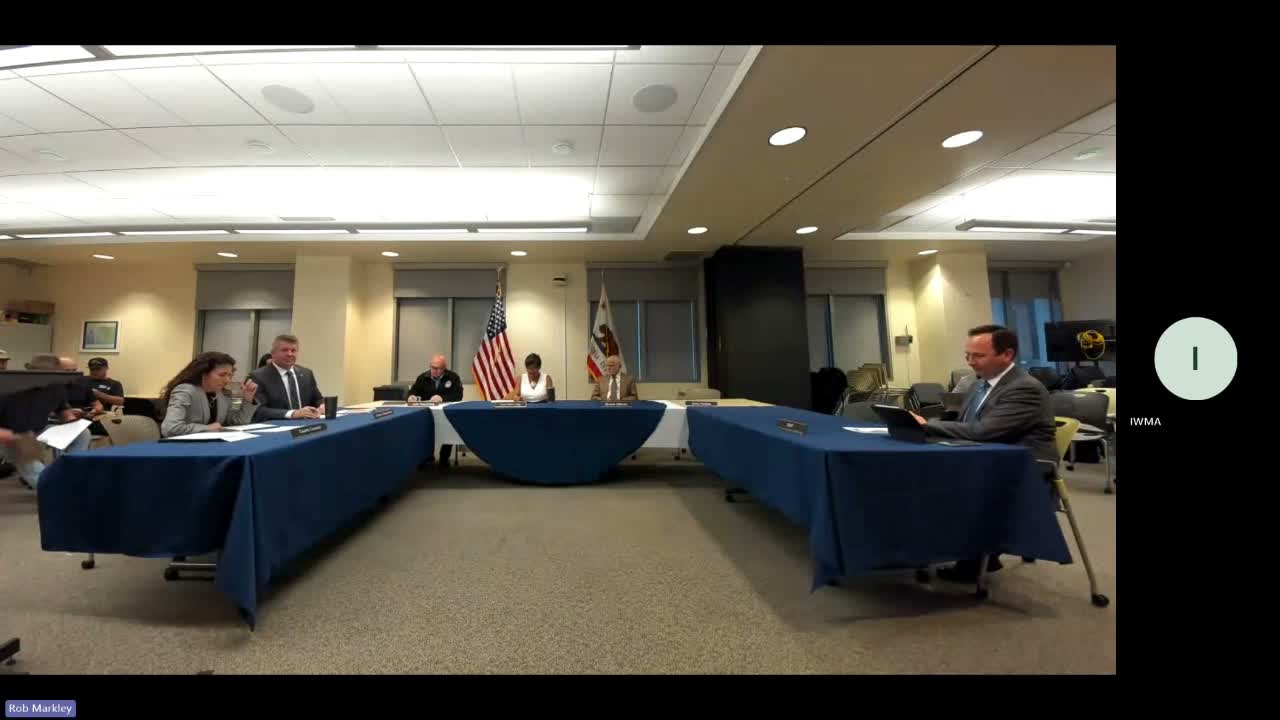
After public comment from local cannabis operators and a staff review of revenue history, the San Luis Obispo County Board of Supervisors voted unanimously to maintain the cannabis business tax at 6% of gross receipts for fiscal year 2024–25 rather than let it rise to 8% on July 1.
The San Luis Obispo County Board of Supervisors voted unanimously on a motion to keep the county's cannabis business tax at 6% for fiscal year 2024—— 25, rejecting an automatic increase to 8% set to take effect July 1.
The action came at a special meeting that opened with a staff presentation by Justin Cooley (ACTTCPA), who summarized the 2018 voter-approved measure that set a 4% baseline and allowed automatic increases up to 10% unless the board acted. Cooley told supervisors the county could let the rate increase, hold it at 6% or lower it, and offered revenue estimates: roughly $125,000 per percentage point; letting the rate rise to 8% would be about $1,000,000 in projected revenue versus about $750,000 at 6% for the coming year.
The meeting drew a series of industry speakers who urged the board to maintain (or lower) the tax. Michael Joseph, a local operator, said the 2-point difference ‘‘is huge for us’’ and that the smaller margin at 6% allowed businesses to hire and plan. Steven, who identified himself as a local processing-facility owner, said wholesale prices have fallen sharply since 2018 and warned that an 8% gross-receipts tax could force farms to close or move to other counties. "Would you rather have 6% of something or 8% of nothing?" he asked.
Other public commenters raised county and regional comparisons. Austin Canela cited at least a dozen jurisdictions that have reduced or suspended local cannabis taxes and suggested hybrid taxing models (for example, square-foot charges for cultivators versus gross receipts) and expanding retail as alternate revenue levers. Marie Paul pointed to recent increases in reported cannabis tax revenue, estimating roughly a 60% rise in the latest fiscal year and urging the board not to raise the tax.
In deliberations, a board member asked whether the county was subsidizing the industry. Cooley replied that it depends on the accounting: fees and expenses differ, but when combined with taxes the program is roughly at break-even over its life, and the county has taken in a little over $2.5 million since the tax began. Supervisor Gibson said the tax was designed to address perceived local impacts and supported holding the rate at 6%, noting concerns that higher rates could drive activity to the black market.
The chair said regulatory amendments are forthcoming, scheduled for a July 13 agenda, to address cultivation expiration, non-storefront retail hours and cost-recovery for abatement of unpermitted activity. The board then moved, seconded and adopted a resolution to maintain the cannabis business tax at 6% of gross receipts for FY 2024—— 25. The roll call recorded three "yes" votes by the supervisors present and the motion passed.
The board thanked speakers and staff and closed the special meeting; the next regular meeting was announced for July 9 at 9 a.m.
Notes: Quotes and attributions are taken from the meeting transcript. Where the transcript contained variant spellings of local names and county references (e.g., "Slow County," "Slough County"), the article uses the correct jurisdiction name: San Luis Obispo County.