Lifetime Citizen Portal Access — AI Briefings, Alerts & Unlimited Follows
Industry warns House committee that fixed 40% local‑processing mandate for tires could destabilize market
Loading...
Summary
Witnesses at the House Natural Resources Committee hearing on House Bill 630 said an immediate requirement that 40% of discarded tires be processed locally risks market distortion, double subsidies and hazardous stockpiles; they urged phased goals, changed incentives and better data from DRNA and Hacienda before adopting the mandate.
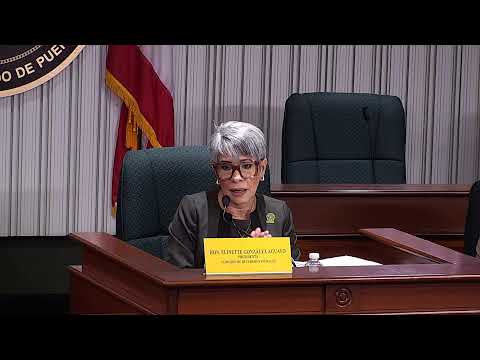
At a hearing of the House of Representatives’ Natural Resources Committee on April 20, engineers and recycling company representatives urged caution before imposing an immediate 40% local‑processing requirement in House Bill 630.
Engineer Edgardo Velázquez, who identified himself at the hearing as a mechanical engineer, told the committee that small differences in per‑pound incentives add up across Puerto Rico’s large tire volume. “Si pulverizas y lo exportas, le dan 15.6” cents per pound, he said, while local recycling currently receives “15 centavos” per pound. Velázquez argued those cent‑differences, when multiplied by millions of pounds, create large transfers of money and affect whether local processing is economically viable.
Velázquez and other witnesses described the island’s current system as export‑oriented because international freight economics and established markets—especially in ports with low backhaul costs—make exporting whole or compacted tires financially attractive. He also cited Laws 171 and 172 of 1996 as the legal framework that helped create the market for handling end‑of‑life tires.
Representatives of Christian John Recycling—Alexander de Lara and company president Samuel Morales—testified that forcing a fixed share of material to local processors could harm long‑standing operators. Alexander de Lara said the company has invested in feasibility studies and local processing options and warned that “the imposition of a minimum obligatory 40 percent without complete technical studies can provoke negative consequences,” including market distortion and accumulation of processed material without buyers.
Samuel Morales, who described more than three decades in the industry, told the committee that delayed government payments have already strained businesses: he said his company has “90 employees suspended” and that the government owes roughly “5,000,000” for past services. Morales said the sector’s past performance—he cited large cleanups and longstanding collection networks—should be protected from policies that inadvertently privilege new entrants or single buyers.
Several witnesses detailed operational risks that could follow a rigid mandate: double billing of the special tire fund if material is paid once for processing and again for export; the possibility that processors would accumulate unsold product when local demand is insufficient; and incentives that unintentionally subsidize firms already able to sell material at positive market prices for metals and granulate.
Both Velázquez and Christian John Recycling recommended alternatives to an immediate, fixed mandate. Velázquez suggested lowering the export incentive for pulverized exports (currently cited in testimony as 15.6 cents per pound), redirecting those funds to strengthen the recycling incentive (cited as 15 cents per pound), and removing export incentives for metals that already fetch favorable market prices. He also asked the Department of Natural and Environmental Resources (DRNA) to receive monthly import statistics by tire size or weight so the agency and the committee can model staffing, fund flows and realistic local processing capacity.
Sherly Boccac, who said she worked on earlier legislative versions, reminded the committee of the law’s original purpose: to prevent dangerous accumulations of tires and protect public health. She and other witnesses recommended staged, capacity‑based targets set by the board through regulation rather than a one‑time, immediate 40% floor.
Committee members said they would consider all submissions and noted remaining data gaps. The committee chair told witnesses that the panel would not issue a final report until it had complete data from Hacienda and DRNA. The hearing closed without a vote; committee work on the measure will continue once the requested statistics and analyses are available.