Get Full Government Meeting Transcripts, Videos, & Alerts Forever!
Get email alerts on the Compensation And Staffing topic
No spam. Unsubscribe anytime.
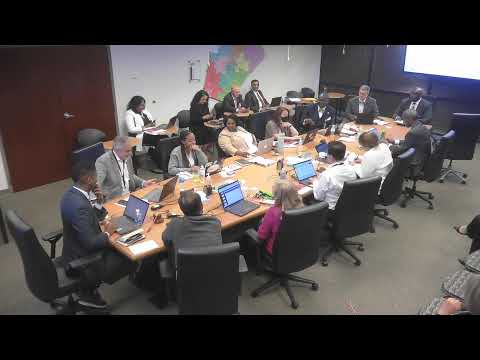
Board hears preliminary staffing and pay-study findings that flag lean central office and pay compression
Summary
Consultants reported the district's central office is lean compared with large peers and identified pay-compression clusters — especially in trades, IT, finance and school leadership — that could undermine retention; staff said final reports and funding options will follow in coming weeks.
Consultants presented high-level, preliminary findings from two separate reviews — an organizational staffing study led by Improve LLC and a market compensation study coordinated with MGT — that together indicate Wake County Public Schools operates a relatively lean central office and faces pay-compression risks in several critical roles.
Noah Ullman, president of Improve LLC, told the school board the organizational study used Oracle position data (filled positions, not vacancies) and five-year trend analysis to compare staffing levels against industry benchmarks. He said central-office headcount was about 2,882 across seven divisions, roughly 14.4% of an approximate 20,000 total district staff, and that many roles coded to central office spend substantial time in schools (special-education service providers, custodial managers, bus drivers and other operational staff).
"This is a preliminary, very preliminary review," Ullman said, asking the board to await final data verification with division leaders before drawing firm conclusions. He recommended the final report be written in plain language and broken down by department to help the public and other government partners interpret differences among peer districts.
Terrence McConner, senior director for salary information systems, summarized the market study approach: staff and consultants analyzed 56 positions (28 benchmark roles) using CompAnalyst data and a custom survey of comparable districts and select employers. The study used a November 2025 data pull and direct outreach to peers such as Chapel Hill, Charlotte-Mecklenburg, Durham, Guilford and others; several invited peers did not respond.
McConner said Wake County Public Schools "is not behind the market across the board," but the more significant pattern is pay compression: entry salaries for many groups may be near market, yet the district falls behind after roughly eight to ten years of service, creating retention pressure. He and the consultants flagged clusters of concern in skilled trades and technical specialist roles (master crafts, HVAC, facilities), IT and technical services, finance and other professional technical roles, and some school leadership positions (principals and assistant principals).
Board members repeatedly urged the consultants to contextualize peer comparisons by funding structures — noting differences in state funding formulas, local taxing authority and federal grant mix — and to show department-level detail that explains how budget growth from 2021 to present breaks down by compensation, new positions and one-time federal dollars. A board member said the final report should make explicit that direct comparisons with out-of-state peers can be misleading without additional funding-context analysis.
The consultants said they will finalize draft chapters after confirming outstanding data with division leaders, return to committee-level meetings for deeper review, and present full reports in the coming weeks. Board discussion made clear any compensation adjustments would be considered in future budget cycles, with staff directed to examine funding options and implementation timelines.
The studies remain non-final. Board members said the timing is useful for budget development but cautioned that any recommendation to raise compensation will require identification of sustainable funding sources and committee-level review.