Get Full Government Meeting Transcripts, Videos, & Alerts Forever!
Get email alerts on the Nolan Road Fashion Square Tif topic
No spam. Unsubscribe anytime.
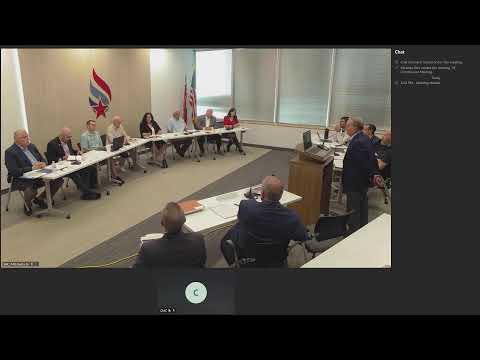
TIF Commission recommends Nolan Road Fashion Square redevelopment plan, sending it to city council
Summary
The Independence TIF Commission voted to recommend approval of a $97–100 million redevelopment plan for Nolan Road Fashion Square that would relocate a Price Chopper and use tax-increment financing and sales-tax tools; the vote was 6–1 with one vote unrecorded and the plan moves to city council.
The Independence Tax Increment Financing (TIF) Commission on April 21 recommended that the City Council approve the Nolan Road Fashion Square redevelopment plan, a private-led project the developer says will bring about $97–100 million in investment and keep a Price Chopper grocery store in Independence.
The commission’s recommendation came after a presentation from David Martin of Gilmore and Bell and developers from TriLine Properties, and a staff finance briefing from John Hansen of IRR Corporate and Public Finance. Members voted in favor of resolution 2026-01 by roll call; the recorded tally was six ayes, one no and one vote not recorded, and the commission chair said “the ayes have it.”
Why it matters: the plan targets a long-vacant, blighted shopping center at the northwest corner of Highway 40 and South Nolan Road and uses the grocery relocation as an anchor to attract tenants. The developer and consultants said the requested incentives are necessary to move the project from a projected negative 3.8% return without incentives to a financeable return near 8.8% with the full package of tools.
Developer and financing details: David Martin entered exhibits 1–8 into the record, including the TIF plan, cost-benefit analysis and a blight study. TriLine Properties’ president Richard Dubey told the commission his firm plans to refurbish or demolish dilapidated structures, reuse existing elements where cost-effective and construct a 63,000-square-foot Price Chopper as the anchor. Dubey said: “The price chopper store is the key” and described extensive interior pillaging and vacancy on the site that, he said, requires substantial renovation.
IRR’s Hansen said the gross project is approximately $100 million and that, net of a materials sales-tax exemption, the capital need is closer to $97 million. He said the financing mix would include roughly $16 million (about 17%) from TIF, about $9 million (roughly 9%) from sales-tax rebates, CID/TDD and special assessments making up another portion, and roughly $50 million in private investment. Hansen summarized projected long-term benefits to taxing jurisdictions and stated, “This proposed financing structure does not call for the city or any taxing jurisdiction to be responsible for any payment of debt service associated with the financing.”
Requested public tools: the package the commission reviewed includes (per the TIF plan) 50% tax-increment capture on property and sales tax increments, an amendment and extension of an existing CID (including a proposed 1% CID sales tax and CID special assessment), 50% of economic activity taxes, and a chapter 100 sales-tax exemption on construction materials (estimated to save about $2.9 million). Martin and Hansen also described a city pledge to capture most of the previously uncaptured portion of sales-tax growth (capped at 2.625 of the current 2.875 rate) in order to close the financing gap.
Timeline and lease terms: the developer sought the commission’s recommendation to move to City Council in early June; Hansen said a bond sale could occur in early 2027 with construction beginning then and the Price Chopper opening in late 2027. Dubey confirmed the Price Chopper lease contemplated is 20 years.
Questions and concerns: commissioners questioned procurement, local contractor participation and how the project compares with the earlier “Hub” redevelopment. Dubey said construction would follow public-bidding requirements if bonds are used. Commissioners pressed the public-risk point; one commissioner asked whether cost overruns or lower-than-expected sales would impose costs on the city and Hansen reiterated the financing structure does not require the city to pay debt-service shortfalls.
Policy and community considerations: commissioners and the chair raised competing civic points. Chair Reyes framed the project as an opportunity to send a message against allowing blight, saying the project demonstrates the commission’s role in addressing long-standing property deterioration. Another commissioner cautioned the project creates a potential perverse incentive: owners might let properties decline to obtain substantial public funding for remediation. The chair and developer also discussed safety measures (removing canopies, improved lighting, and on-site security) and the possibility of a police substation on the site, which Dubey said remains under discussion with the city.
Public comment: the chair opened the public-comment period and asked supporters to speak first and opposers after; no members of the public approached the microphone during the public portion recorded in the transcript.
Vote and next steps: the commission voted to recommend approval of resolution 2026-01 (which designates the redevelopment area, finds blight, approves the redevelopment projects and the developer of record) and will forward that recommendation to City Council for final approval. If council and subsequent financing steps proceed as outlined, the developer expects bonds and construction to follow in early 2027.
What remains unresolved: the commission’s recommendation does not finalize the financing tools—City Council must still consider the TIF plan, CID amendments, sales-tax exemptions and any bond issuance. Several commissioners requested continued attention to enforcement and procurement conditions and urged tracking of actual project performance against earlier projections.