Get Full Government Meeting Transcripts, Videos, & Alerts Forever!
Get email alerts on the Arpa Small Business topic
No spam. Unsubscribe anytime.
Councilors press city officials on ARPA small‑business reallocation as critics fault program administration
Summary
At a Montgomery City work session, council members and public commenters pressed city economic development staff over a proposed re‑obligation of ARPA small‑business funds and a proposed $500,000 administrative allocation, questioning past contractor performance and transparency around how much money reached businesses.
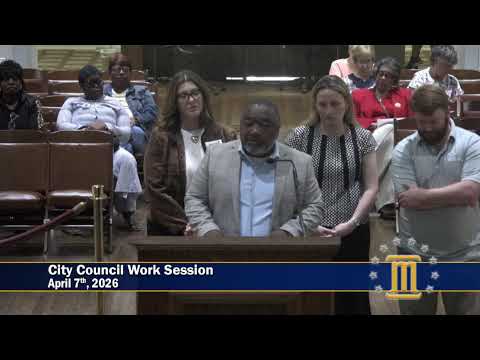
Montgomery City Council members and members of the public on Tuesday pressed city economic development officials for clearer accounting and stronger oversight of a proposed re‑obligation of federal ARPA funds intended for small‑business support.
Council member Jim Wright raised a widely circulated figure alleging roughly $1.7 million was spent on administration while only about $37,500 reached businesses, calling that result “a very expensive $37,000 to administer.” Economic development staffer Robinson responded that the published item was incorrect and said the outlet had not verified details with the city; he described program documents and e‑mails the office has circulated to council members.
Why it matters: Council members and several public commenters said previous program design shifted too much money toward contractors and away from direct aid to small businesses. The work session focused on whether the city should re‑authorize a $500,000 administrative allocation to stand up a new, accelerated distribution effort and how to avoid repeating earlier implementation problems.
Robinson told the council the program is split equally between the city and county, and described a two‑part history: an initial technical‑assistance track and a later loan track that did not generate the anticipated number of completed loans. He said staff are proposing a new run of applications with community outreach, marketing and “boots on the ground” staff, and that new monitoring and contract management will be put in place.
Public commenter Wade Preston, representing the small‑business community, urged caution and sharply criticized prior contracting choices. “About a year and a half later, that administrator was named and contracted, and they were paid $1,760,000,” Preston said, arguing that the program had evolved away from direct grants and that “over $2,000,000 of this $5,000,000 that was earmarked for small businesses is already gone.” He offered an alternate plan for getting money to businesses more quickly.
Several council members pressed for specifics: how much has been disbursed to businesses, what benchmarks contractors missed, whether entities such as Hope Credit Union met contractual milestones, and what would happen if the county declined its share of funding. Robinson said staff have begun more active monitoring and that, if the county does not participate, the city could either proceed with a smaller program or return the funds.
On vendor selection, some council members asked why the city would not rely on a previously engaged contractor, Levitate; Robinson said Levitate had been helpful but that the new vendor being considered has specific, demonstrated experience in rapid, compliance‑oriented program rollouts and could stand the program up faster within the shortened timeframe.
What’s next: Councilors said they will address the resolution in the regular council meeting and indicated they may propose amendments to clarify how administrative fees and consultant payments will be limited and how remaining ARPA balances will be tracked and reported.