Get Full Government Meeting Transcripts, Videos, & Alerts Forever!
Get email alerts on the Data Centers topic
No spam. Unsubscribe anytime.
Residents urge Burke County commissioners to scrutinize proposed Hildebrand data center over water, power and noise concerns
Summary
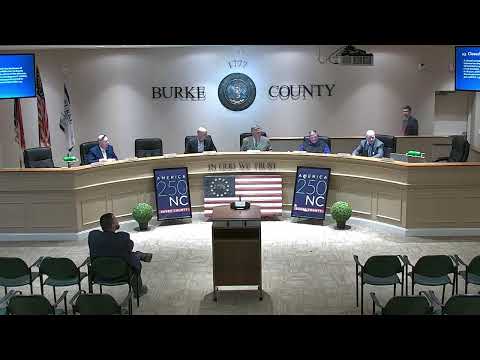
At the April 20 Burke County meeting, two Hildebrand residents urged commissioners to oppose a proposed AI/data center near Klein Park Drive Court, saying the project could strain local water and power systems, bring constant noise and create air emissions; they asked officials to ensure full community consent and explore alternative sites.
John Clark, a Hildebrand resident, told the Burke County Board of Commissioners that he and neighbors are alarmed by a proposed data center on property he said was purchased in 2022 near Klein Park Drive Court. "The power usage for a 200‑megawatt plant could equate to the energy used by 133,000 homes," Clark said, asserting the facility would far outstrip the town’s current electrical and water resources. He said a 200‑megawatt facility could require about 800,000 gallons of water a day — roughly four times Hildebrand’s current daily use — and warned of potential rate increases, infrastructure strain and public‑health impacts for residents with asthma and other breathing conditions.
Belinda Klein, a second pre‑registered speaker, told commissioners "AI data centers are not going to create many local jobs" and urged the board to weigh environmental and long‑term community costs against short‑term incentives. Klein questioned the claim that cooling systems are a closed loop, saying evaporation and "blow down" require water replacement and can introduce contaminated wastewater into local aquifers or rivers. "We're being asked to sacrifice our water, our land, our air," she said. "You guys represent us, and you should have our best interest at heart."
Chair responded that Hildebrand has its own planning and zoning process and that the county does not directly control that town’s approvals. He thanked the speakers and said the board would note their concerns. No formal action on the data‑center project occurred at the meeting.
Why it matters: Public comments put officials on notice about community concerns that could shape local permitting, intergovernmental coordination or requests for additional environmental and infrastructure studies. Residents asked why the project would locate in a neighborhood rather than at the county’s 83‑acre industrial site.
What officials said next: The chair explained the limits of the county’s role in a municipal zoning decision but acknowledged the value of the comments. The board did not vote on the data‑center question; Hildebrand’s local planning body is the primary forum for permitting decisions, according to the chair.
Next steps: Residents asked to be kept informed. The board recorded the comments during the county’s public‑comment period; the transcript includes the speakers’ full statements for record and follow‑up by county staff or the town planning office.