Get Full Government Meeting Transcripts, Videos, & Alerts Forever!
Get email alerts on the Sgr 29 topic
No spam. Unsubscribe anytime.
Committee reviews proposed constitutional amendment to create dedicated education fund; supporters urge predictability
Summary
The House Finance Committee reviewed SGR 29 on April 21, 2026, a proposal to add a constitutional provision creating a dedicated education fund. Supporters including the Association of Alaska School Boards and local educators testified in favor; the Division of Elections reported a $0 election fiscal note while Treasury described management costs as indeterminate.
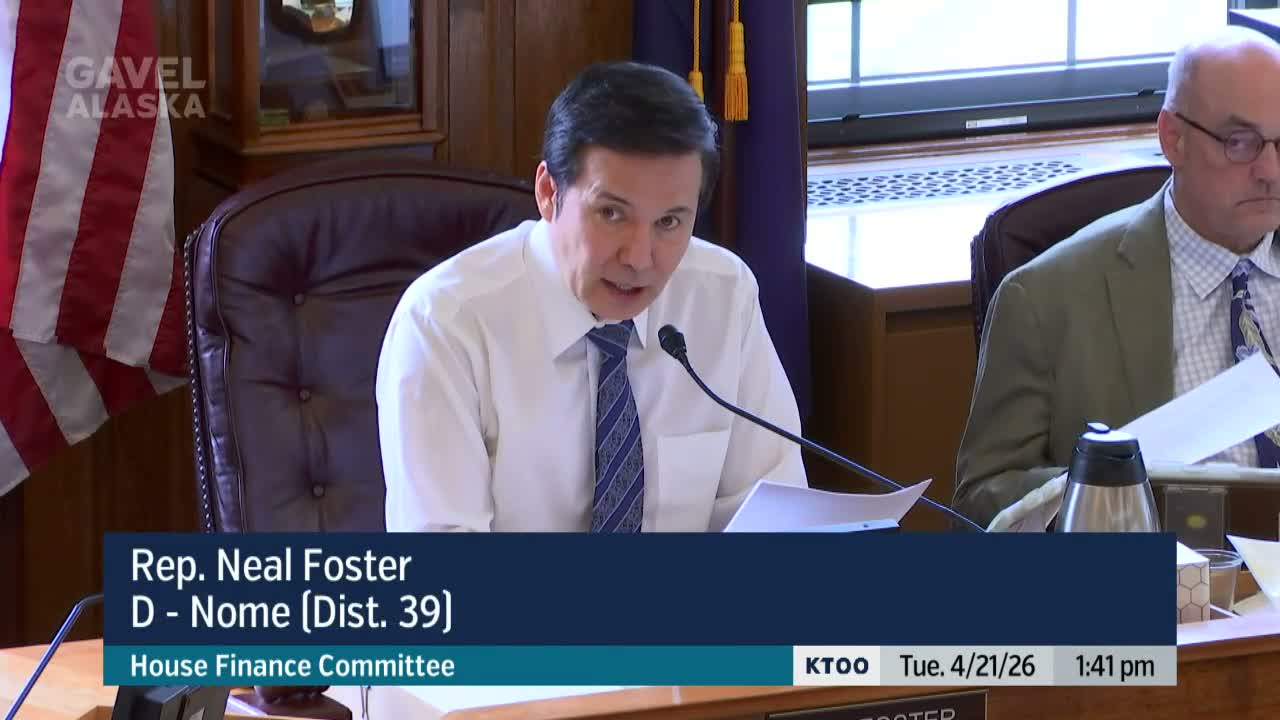
The House Finance Committee on April 21 reviewed SGR 29, a proposed constitutional amendment to create a dedicated education fund in the state treasury that could be appropriated only for public education.
Tim Gruesendorf, staff to Senator Hoffman, told the committee the resolution would add a new constitutional section establishing an education fund and noted that if each legislative chamber approves the amendment by two-thirds it would go to voters. “It bypasses the administration, goes straight to the voters to let them have their say,” he said.
Public testimony was uniformly supportive in the hearing. Erica Burr, a teacher and parent from Fairbanks North Star Borough, urged lawmakers to consider broader investments in early childhood education as part of long-term school funding strategies. Lon Garrison, executive director of the Association of Alaska School Boards, told the committee SJR 29 aligns with AASB policy and could provide “sustained, stable, and protected funding for public education” and allow for more predictable long-range financial planning for districts.
Carol Beecher, director of the Division of Elections, said the division submitted a fiscal note with a control code (ICIG) and a $0 estimate for election-administration costs related to placing the amendment on the November 2026 ballot, noting the pamphlet costs would be minimal. Pam Leary, Treasury Division Director in the Department of Revenue, said the fiscal impact of managing a dedicated fund is indeterminate and depends on how the fund is capitalized and invested; Treasury generally charges basis points on assets under management and would select investments consistent with liquidity needs.
Committee members questioned where deposits to the fund would come from (land transfers, appropriations, windfalls, or Permanent Fund draw), whether a new dedicated fund could reduce overall returns versus keeping assets in the Permanent Fund, and how the fund would be managed. Gruesendorf and Garrison said deposits could come from a range of sources and envisioned the fund as a protected vehicle for education allocations; Garrison referenced the existing public school trust and noted similar revenue ($36 million was cited as current public-school-trust revenue) that currently contributes to education funding streams.
Representatives emphasized the need to examine investment strategy and long-term return implications before committing significant capital to a separate fund. The Division of Elections and Treasury provided technical notes; no final action was taken. The committee closed public testimony on SJR 29 and will continue review in subsequent sessions.