Get Full Government Meeting Transcripts, Videos, & Alerts Forever!
Get email alerts on the Autonomous Vehicles topic
No spam. Unsubscribe anytime.
Sen. Robert Myers’ bill would require certified safety operators in commercial autonomous vehicles
Summary
Sen. Robert Myers presented SB 148 to the Senate Transportation Committee on April 21, 2026, proposing statutory definitions, liability rules and a requirement that a qualified safety operator remain in the driver’s seat of commercial autonomous vehicles; the committee set the bill aside for future consideration.
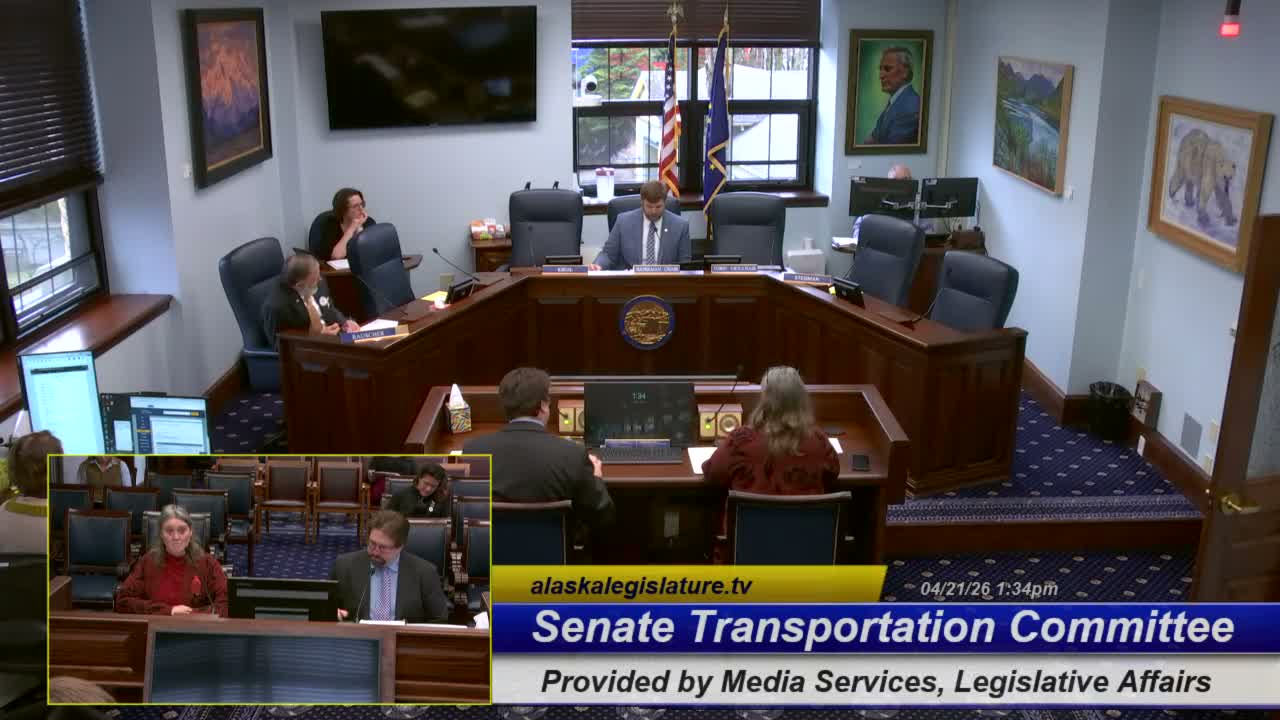
Juneau — The Senate Transportation Committee on Tuesday heard testimony on Senate Bill 148, a measure from Sen. Robert Myers that would add statutory definitions, clarify liability and require a qualified safety operator to be present in commercial autonomous vehicles operating on Alaska roads.
Sen. Robert Myers, sponsor of SB 148, said the state lacks statute-level definitions and legal clarity about autonomous vehicles. “Autonomous vehicles are no longer a future concept. They are already operating on public roads across the country,” Myers said, adding that the bill is intended to “close that gap in a measured and practical way.”
The bill would add new language to Alaska Statute 28.9 to define categories of driving automation and establish an order of liability that can include an operator, modifier, programmer and manufacturer. Section 2 of the bill establishes an immediate effective date, according to the sponsor’s sectional review presented by Theresa Wolstead, the sponsor’s legislative aide.
A central feature of the proposal is a requirement that a human safety operator be present in commercial vehicles using autonomous technology. “This ensures there's always someone capable of intervening if the technology fails or encounters conditions it cannot manage,” Myers said, pointing to Alaska’s snow, ice and extreme weather as conditions that current systems have not been widely proven to handle.
Patrick Fitzgerald, political coordinator for Teamsters Local (transcript: “Teamsters Local 9 5 9”), testified in favor of the bill and said the safety operator should be fully capable of driving and hold appropriate credentials. “Senate Bill 148 will require a safety operator be in the driver's seat of any commercial vehicle operating autonomously,” Fitzgerald said, adding the operator should have a commercial driver’s license with endorsements when needed.
Committee member Sen. Rauscher pressed the sponsor on scope, asking whether the bill effectively exempts passenger cars and instead targets larger commercial vehicles such as trucks and buses. “So, basically, this bill has nothing to do with passenger cars. Is that what we're saying?” Rauscher asked. Myers replied the language is focused on larger commercial vehicles and is not intended to ban consumer systems such as driver-assist features in passenger cars.
Rauscher also described concerns about fully automated passenger cars operating in icy conditions and asked whether the sponsor would consider adding a ban for certain consumer uses. Myers said the draft aims to balance safety and innovation and that he is open to discussion about where to draw the line.
The public testimony period produced no speakers in the room or online. After closing testimony, Myers made brief closing remarks and said the House companion bill is already in rules. The committee set SB 148 aside for further consideration at a future meeting; there was no vote on the measure.
What’s next: The committee took no final action and left the bill for further consideration. The sponsor and staff said they expect more discussion as the Legislature continues its work.