Lifetime Citizen Portal Access — AI Briefings, Alerts & Unlimited Follows
Senate Finance Committee hears bill to adopt market‑based sourcing for corporate income tax
Loading...
Summary
House Bill 280 would move Alaska from cost‑of‑performance to market‑based sourcing for corporate income tax apportionment, add carve‑outs for broadcasters, banks and telecoms, carry a Jan. 1, 2027 effective date, and carries a Department of Revenue implementation request of $321,700 and two FTEs; the committee set the bill aside pending fiscal follow‑up.
The Alaska Senate Finance Committee on April 21 heard House Bill 280, a measure to change how the state apportions corporate income tax by adopting market‑based sourcing — taxing sales where customers receive the benefit rather than where a company records its costs — and to modernize the state’s multistate tax compact.
Bridal Anderson, staff to Rep. Neil Foster, told the committee the bill "clarifies that the state gets to tax a business based on where the customer receives the benefit of service, rather than where the company does its work," and that that change is intended to reflect digital sales patterns. Anderson said House Finance added three targeted exemptions — for broadcasters, financial institutions and telecommunications providers — and removed an earlier proposal creating a statewide "highly digitized business" tax after discussions with the Department of Revenue.
The department’s acting tax director, Brandon Stanos, told the committee the administration had included similar language in its omnibus tax bill and that the Department of Revenue is neutral on HB 280. "We are neutral on this bill," Stanos said, and then described how the House‑finance amendments would operate for specific industries: banking language to align with Multistate Tax Commission guidance; a broadcaster exception that would source certain advertising sales to the payer’s location rather than audience location; and a full exemption from market‑based sourcing for telecommunications so those firms would continue to use cost‑of‑performance sourcing.
Supporters of market‑based sourcing argue the method is a more consistent, modern approach used by many other states. Anderson told the committee 36 states already use some form of market‑based sourcing. The bill as presented would take effect Jan. 1, 2027, to give the department time to develop regulations and implementation processes.
A fiscal notes presenter, identified in the record as Raquel, summarized the Department of Revenue fiscal analysis: "It shows an FY '27 appropriation will be needed of $321,700 — that's unobligated general funds — and would require two full‑time positions to implement." The fiscal note also stated revenue change is indeterminate in initial years but estimated full‑implementation revenues in the $10–15 million range annually; Bridal Anderson had also described an approximate $15 million annual increase in some bill summaries. The department noted regulation updates would be required.
Committee members asked technical questions about how the exemptions would apply in practice. Senator Keogh asked whether telecom companies that invested in Alaska infrastructure could end up more subject to tax than out‑of‑state firms; Stanos confirmed that under cost‑of‑performance rules firms with costs located in Alaska are currently sourced to Alaska, whereas market‑based sourcing would attribute sales to where customers are located. Senator Kaufman asked where the broadcaster definition draws the line — for example, whether platform distribution companies or channel creators on streaming platforms would be treated as broadcasters; Stanos said the bill uses the term "platform distribution company" and indicated he would need a corporate income specialist to answer how broadly that term would reach.
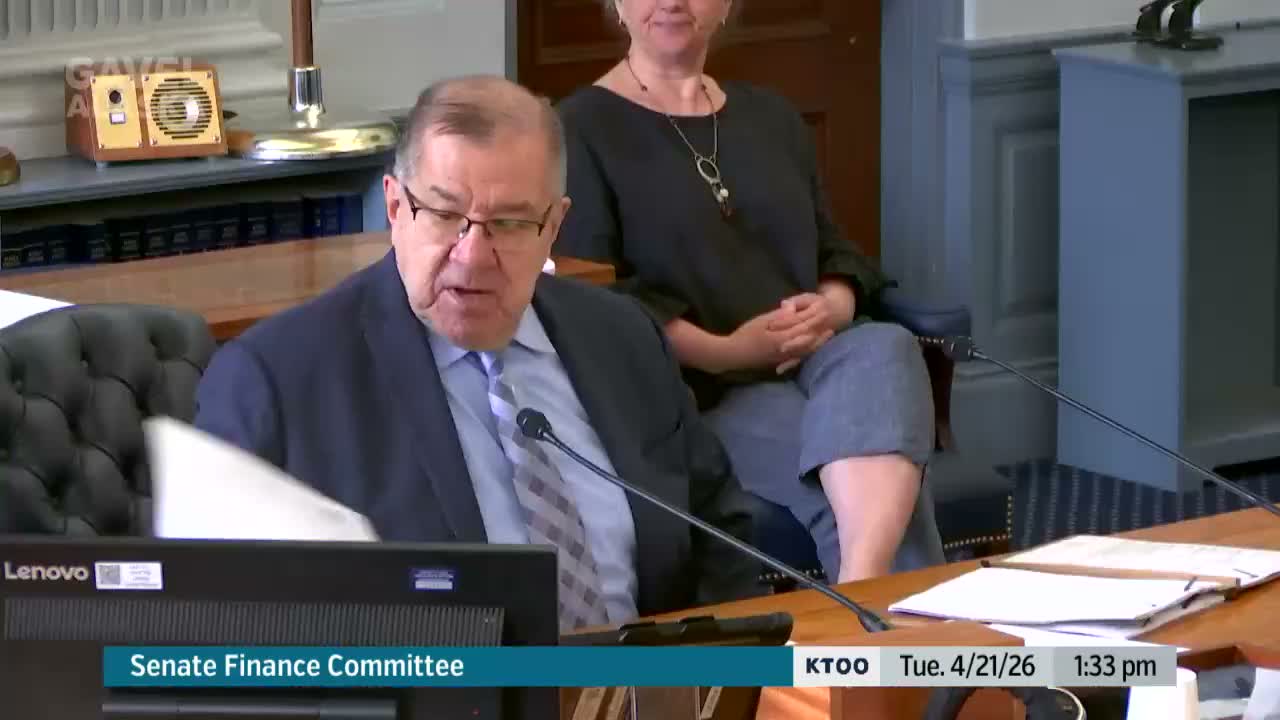
After hearing presentations and questions, the committee opened the public hearing and received no testimony from online participants or members of the public. Co‑Chair Senator Hoffman said, because this was the bill’s first hearing, the committee "will set this bill aside for further consideration" while fiscal impacts and regulatory work are clarified. The committee noted plans to return to additional House bills the following morning.
What’s next: HB 280 was laid aside pending follow‑up on the fiscal note and the department’s implementation analysis; the committee did not vote on the measure at the April 21 meeting.