Get Full Government Meeting Transcripts, Videos, & Alerts Forever!
Get email alerts on the Hb 362 topic
No spam. Unsubscribe anytime.
House committee hears bill to license respiratory therapists, hears fiscal estimate and workforce details
Summary
The House Finance Committee heard HB 362 on April 21, 2026, which would establish state licensure for respiratory therapists. Sponsor Representative Carolyn Hall and invited testifier Angela Euler said licensure would align Alaska with national practice, while the division estimated start-up costs of roughly $46,100 in FY27 covered by licensing fees.
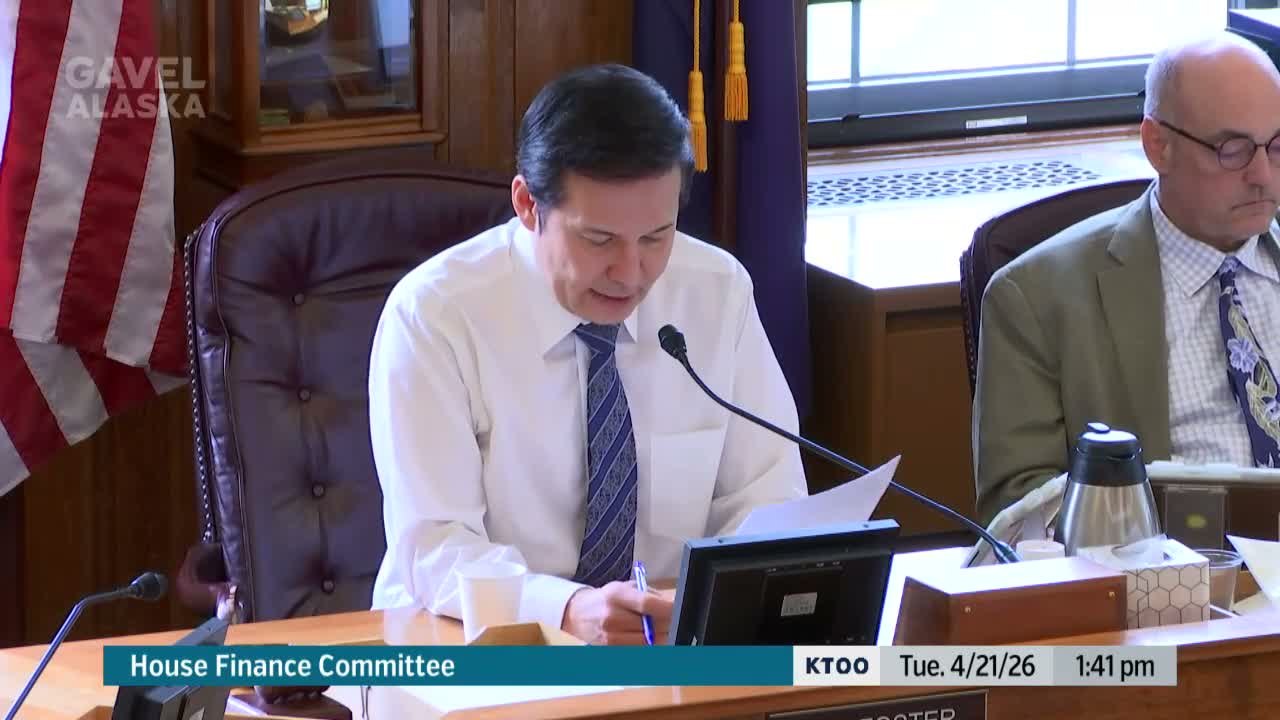
The House Finance Committee on April 21 heard introductory testimony and the fiscal note for House Bill 362, which would create a licensure program for respiratory care practitioners in Alaska.
Representative Carolyn Hall, the bill sponsor, told the committee Alaska is currently the only U.S. state that does not require professional licensure for respiratory therapists and said the change would “bring Alaska in line with national practice standards, improve patient safety, and integrate respiratory care into the broader health care system.”
Angela Euler, a registered respiratory therapist and president of the Alaska Society for Respiratory Care, testified in support and described RTs’ role across neonatal, trauma and critical care settings. “Anyone who has experienced a breathing deficit episode will tell you it is one of the most terrifying events a person can experience,” she said, arguing that licensure would ensure consistent education, national credentialing and continuing education requirements.
Sylvan Robb, director of the Division of Corporations, Business and Professional Licensing, walked the committee through the bill’s fiscal note (control code BZU AO). The division estimated $46,100 in costs in fiscal year 2027 and about $41,600 in subsequent years, to be covered by licensing fees. The bulk of the first-year cost reflects reclassifying a vacant office assistant position to a licensing examiner (about $18,000 of the additional cost), plus travel (roughly $4,000), regulation development and potential investigation expenses.
During questions, Euler estimated there are roughly 200 to 250 practicing respiratory therapists in Alaska. Committee members asked whether licensure would change insurance billing or reimbursement; Euler said it would not directly increase reimbursement rates and that respiratory therapists are typically salaried employees whose compensation is employer-determined. The division estimated licensure application fees in the range of $100 to $325 for a two-year license, noting the exact fee schedule would be determined after regulations and experience with the program.
Several members pressed the sponsor on the bill’s oversight structure. Representative Bynum and others questioned why the measure relies on the Division of Corporations, Business and Professional Licensing (a non-board program) rather than establishing a professional board. Euler and Hall said the bill draws language from other states and aligns with national credentialing (the National Board for Respiratory Care), while Robb said the division already regulates many health-related programs without boards and would keep state standards current through travel and engagement with national organizations.
Representative Hall noted the bill includes a grandfathering provision allowing those already practicing to continue for up to one year while obtaining licensure. Hall said, to her knowledge, there had been no recorded opposition to the bill so far.
The committee set HB 362 aside for now; the chair said future meetings may include public testimony and further committee review.