Lifetime Citizen Portal Access — AI Briefings, Alerts & Unlimited Follows
Arizona GOP caucus reviews wide slate of House bills, highlights measures on masks, bullion and nursing-home investigations
Loading...
Summary
Republican House caucus reviewed numerous House bills and Senate amendments ahead of floor action, including measures limiting vaccine/mask mandates (HB 2086), authorizing bullion custody and up to 10% deposits (HB 2140), and aligning nursing-home complaint timing with federal rules (HB 2195). Sponsors generally indicated concurrence with Senate changes.
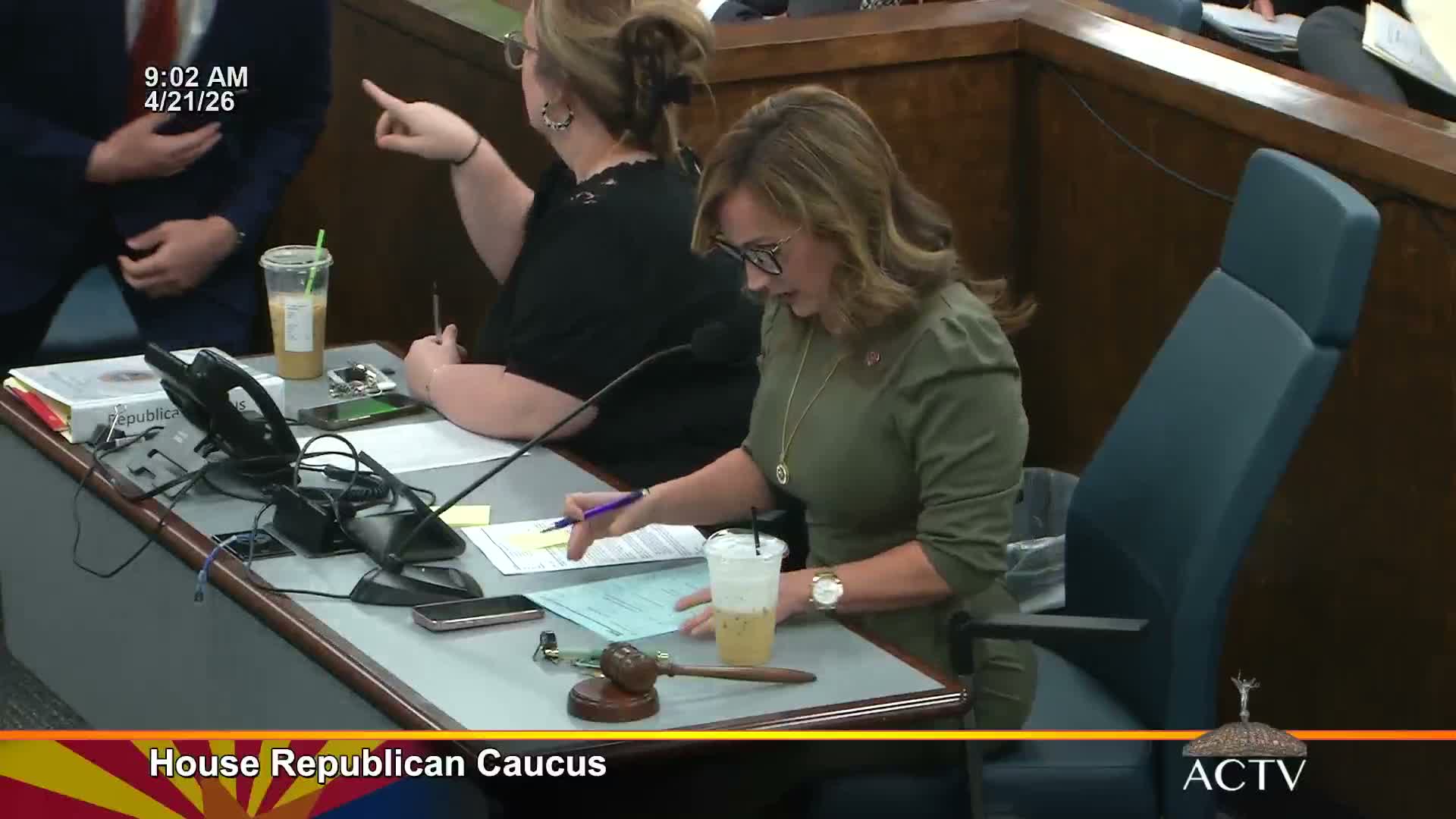
Republican members of the Arizona House caucus met to review a broad package of House bills and the Senate's amendments, with staff summarizing legislative changes and sponsors noting concurrence on most items.
The caucus spent notable time on HB 2086, which staff (speaker 6) described as prohibiting governmental entities and special health care districts from requiring an Arizona resident, person entering business premises, or employee to receive any vaccination or to wear a mask or face covering except as outlined by the bill; the Senate removed a business-wide prohibition. Staff presented the amendment changes and invited questions; no vote was taken in caucus.
On state finances, staff summarized HB 2140 as giving the State Treasurer operational control over a state bullion repository and authorizing deposits of up to 10% of state monies in physical gold or silver held in an approved U.S. depository. Sponsor Representative Fink (speaker 7) told caucus, "This was just a change, instead of state setting up the state bullion repository that the treasurer can, contract with someone, that can keep that gold and silver," indicating the amendment shifts custody to contracted depositories rather than creating a state-run vault.
Health-care oversight also drew attention. Staff explained HB 2195 would require the Arizona Department of Health Services to initiate complaint investigations relating to nursing care institutions consistent with Centers for Medicare & Medicaid Services timeframes and to modify personnel-record-access procedures. Representative Bliss (speaker 9), the bill sponsor in caucus, said the measure "align[s] skilled nursing facility inspections and complaint investigations with federal requirements just to streamline it."
Representative Griffin (speaker 4) spoke at length about HB 2028 amendments aimed at defendants who cannot pay probation assessments. Griffin described judges encountering homeless defendants who cannot meet a statutory minimum assessment: "The way the statutes are written now that they have to pay everybody has to pay a minimum of $20. And so the homeless doesn't have $20," he said, explaining the amendment returns discretion to courts to require community service or other alternatives when defendants are unable to pay.
Other measures discussed included HB 2592, directing the Arizona Department of Administration to identify opportunities to implement AI systems, streamline procurement, and establish AI governance; HB 2440, allowing a one-time 90-day extension of transition services for certain inmates if an updated plan is provided; and a range of education bills clarifying advanced-math enrollment criteria and school accountability provisions. Staff summarized each bill's Senate amendment and asked whether sponsors concurred; sponsors generally signaled concurrence during caucus.
The caucus did not record formal votes in the transcript and concluded with staff moving through remaining items on the blue sheets. The meeting functioned as review and coordination before floor action rather than as a forum for final decisions; the moderator closed caucus after sponsors indicated concurrence or acknowledged the amendments.