Lifetime Citizen Portal Access — AI Briefings, Alerts & Unlimited Follows
Senate passes bill allowing petition sponsors to withdraw referendums amid fierce debate
Loading...
Summary
On April 20, 2026, the Arizona Senate approved House Bill 28‑73, an emergency measure that would allow referendum sponsors to withdraw petitions after signature collection; opponents said the change shifts power from voters to sponsors and could undercut referendum rights. The bill passed 20–9 with one not voting and was sent to the House.
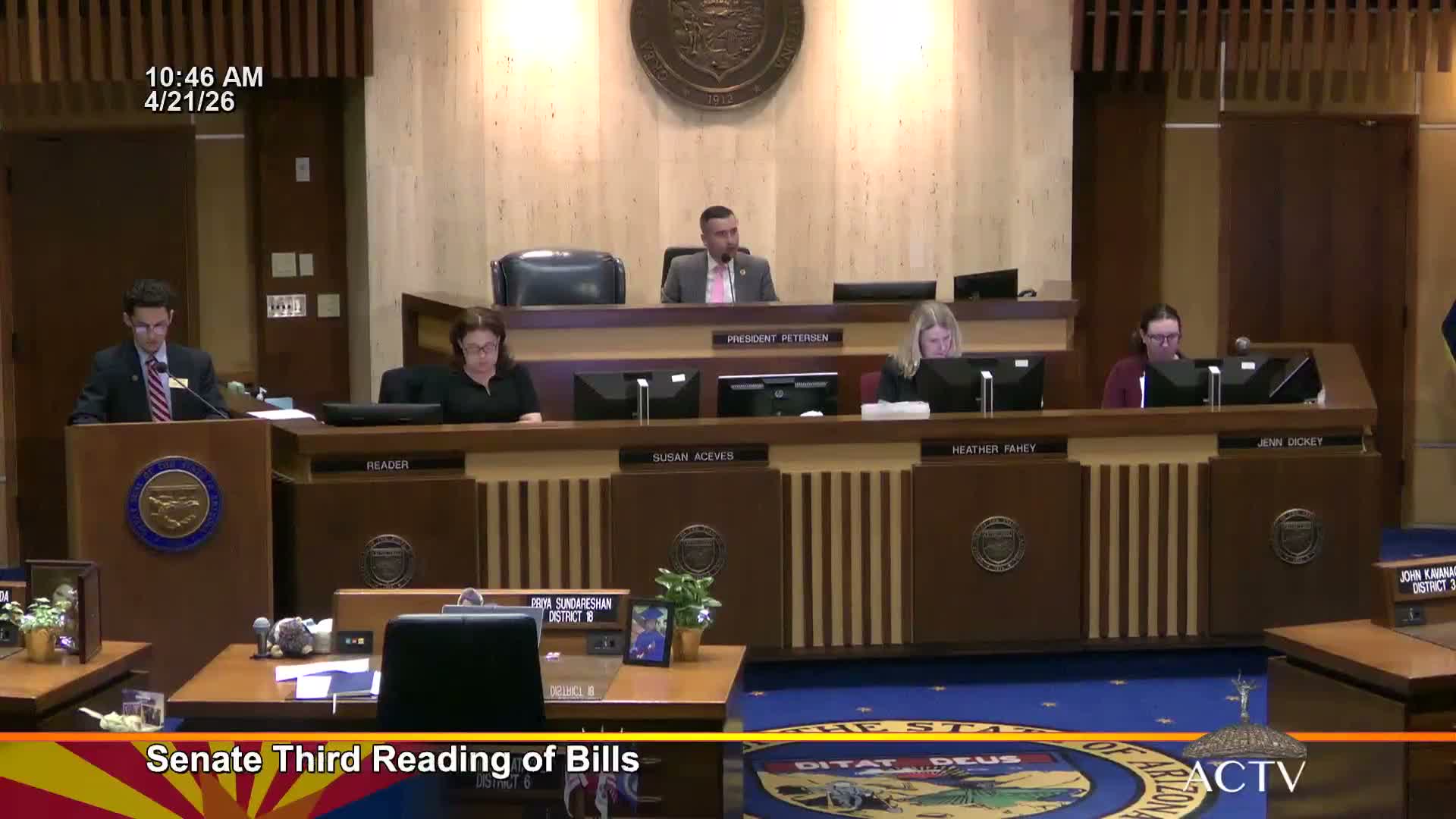
The Arizona Senate on April 20 passed House Bill 28‑73, an emergency measure that would let a petition sponsor withdraw a referendum after signatures have been gathered, a move opponents said would transfer control from voters to private sponsors and could short‑circuit pending legal challenges.
Senators speaking against the bill said it undermines the referendum power. "The referendum power is reserved to the people, not a sponsoring committee or a pack," said the senator explaining a no vote, arguing that once a valid petition is filed it becomes an exercise of the electorate's constitutional right. Several senators tied the bill to an active petition effort in Marana and warned the measure could interfere with ongoing court review and future participation in direct democracy.
Senator Epstein characterized the bill as "an incredibly sneaky approach to government," saying it gives private groups and well‑funded political action committees the power to decide whether a petition reaches the ballot. Senators opposing the bill raised concerns about retroactivity, the inclusion of an emergency clause and the prospect that a single large donor could influence a PAC to withdraw a petition and prevent voters from deciding.
Supporters of the bill, as recorded in the proceedings, defended the measure's intent as a local‑governance reform; the sponsor's position was noted in the debate record as opposing the opponents' constitutional reading. The transcript records that some sponsors contended the bill is narrowly framed for specific local circumstances but opponents said the language is broader and statewide in effect.
The Senate approved the measure on a roll call recorded by the secretary: 20 ayes, 9 nays, 1 not voting. The measure includes an emergency clause; the clerk was instructed to transmit the bill to the House inclusive of that clause.
What happens next: because the bill passed with an emergency clause, proponents intend the law to take effect immediately on the governor's signature; the transcript notes the bill will be transmitted to the House for further action.