Lifetime Citizen Portal Access — AI Briefings, Alerts & Unlimited Follows
Bill would require insurers to reimburse noncontracting labs; sponsor and insurer warn of high fiscal impact
Loading...
Summary
HB 2932 would require insurers to reimburse noncontracting laboratories when an in-network provider refers a patient, and would remove prior-authorization requirements for diagnostic services. Sponsor staff said the insurer Access reported significant fiscal concerns and provided category-level cost estimates; lawmakers asked about contracting and rate negotiation practices.
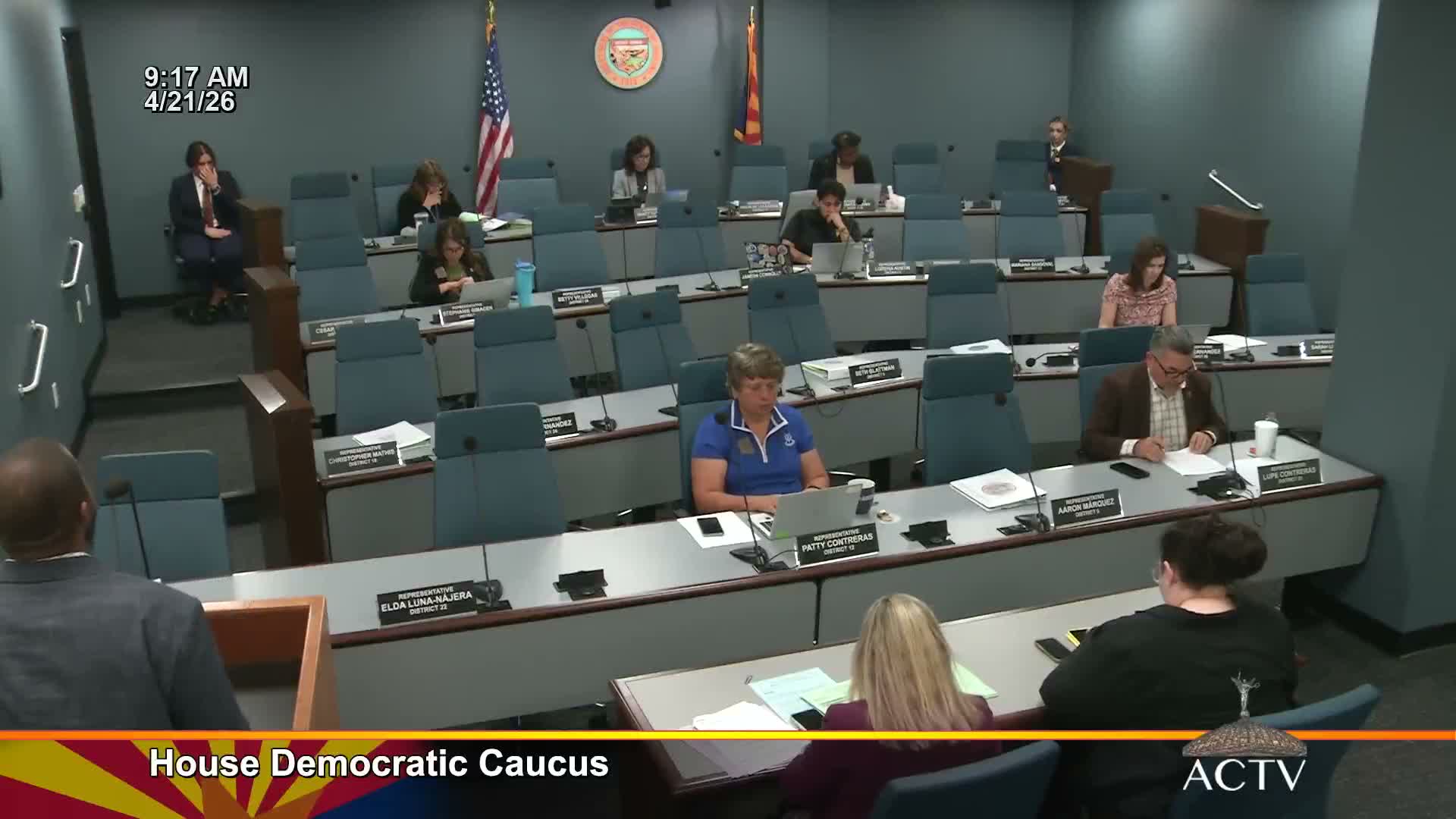
Noah, the bill sponsor’s floor presenter, told the caucus that House Bill 2932 would obligate an insurer to reimburse a noncontracting laboratory when an in-network provider refers a patient and would prohibit prior authorization for diagnostic services. “We did reach out to Access on the impact of this bill, and they stated that the bill would have high fiscal impact as well,” Noah said.
The sponsor and staff explained the mechanics: under the amendment, a provider in the insurer’s network could send a patient to any laboratory, and the insurer would be required to reimburse that lab at a specified rate even if it has no contract with the insurer. Noah said this would remove prior-authorization limits and could allow providers to refer widely for diagnostic services, which include imaging, pathology and laboratory testing as well as specialty biomarker tests.
Access (as summarized in caucus materials) provided category-level figures showing rapid growth in higher-cost diagnostic testing. The sponsor relayed that biomarker testing costs for calendar-year 2024 were reported as 12,200,000 and are on track to exceed 15.3 million in the next reporting year; the sponsor also cited total costs in the pathology, laboratory and radiology categories of about $344,000,000 for calendar year 2024. Noah summarized Access’s estimate that a 12% increase in utilization in the cited categories could imply roughly $43,000,000 more in total funds and about $6,900,000 in general-fund impact, as reported to staff.
Members asked detailed questions about market effects, conflict-of-interest protections and contracting processes. Representative Alcantara asked whether the bill limits providers’ financial relationships with outside labs; sponsor staff replied that “the way the bill is written, it does not. It does not say the provider cannot have a relationship or financial interest.” Noah and other presenters described the RFP and contracting process insurers use to secure network pricing and explained that opening reimbursement to noncontracting providers could lead to higher prices if those providers are paid nonnetwork rates.
Supporters framed the bill as improving access for patients who are referred by in‑network clinicians but whose local or specialist labs are not in the insurer’s network. Opponents and insurer representatives flagged the potential budgetary consequences and the difficulty of maintaining negotiated rates if the insurer must reimburse noncontracting entities.
The sponsor said he intends to concur with the Senate amendment and will follow up with fiscal and legal staff. The caucus did not record a formal vote in the transcript; sponsors repeatedly stated their intention to concur with amendments and were available for questions.