Get Full Government Meeting Transcripts, Videos, & Alerts Forever!
Get email alerts on the Tourism topic
No spam. Unsubscribe anytime.
Presenter urges Oglesby to boost tourism with clearer wayfinding and an online tourism hub
Summary
At a planning meeting, a presenter recommended that Oglesby improve physical wayfinding, update business listings and create a standalone, photography-first tourism website to help visitors find parks, restaurants and river access and to increase local spending.
The presenter, identified only by role in the meeting record, told Oglesby officials and community members that clearer directional signage, up-to-date business listings and a standalone tourism website would help visitors find parks, restaurants and river access and could increase local spending.
Why it matters: the presenter argued small, low-cost changes — clearer signs, combining entries to avoid clutter, better photos and a visitor-focused website — would make more of the town’s assets discoverable and keep visitors in town longer. As an example, the presenter said one town installed about 18–20 decorative wayfinding signs and ‘‘saw retail sales go up by almost 15%’’ after that change (the presenter attributed the figure to an external case study and did not present primary data during the meeting).
Key recommendations and examples
The presentation laid out several practical steps: alert recently changed businesses to update online listings (for example, listing a business as "Cindy’s, formerly Delaney’s"); encourage owners to respond to online reviews and replace poor photos; reduce sign clutter by combining entries; and add small directional signs to locate ball fields, parks and river access.
The presenter emphasized that navigation apps are useful for getting to known places but do not replace physical wayfinding: ‘‘what you put on [a sign] tells us about things we didn’t know you had,’’ they said, arguing signs surface attractions visitors otherwise would miss.
Examples cited included Modesto, The Woodlands and Appleton, Wisconsin; the presenter said one community installed roughly 18–20 signs and reported about a 15% increase in retail sales after adding signage. The presenter presented these as illustrative case studies rather than as locally verified outcomes.
Parks, visitor information and river recreation
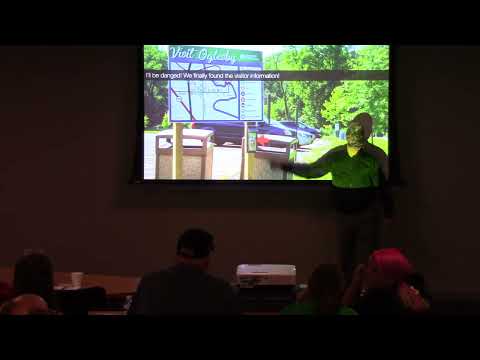
Meeting remarks described several facilities and discovery problems: the presenter said the team had difficulty finding tournament fields and parks, and that after three days they finally located the visitor information center. They recommended brochure kiosks or racks at key parks and fields and clearer naming on signs (for example, labeling a complex rather than individual fields) so visiting families and tournament attendees can find destinations more easily.
The presenter also raised river-based recreation as an economic opportunity, asking whether local vendors rent inner tubes or paddleboards for the Vermillion River and encouraging the town to list fishing and seasonal recreation opportunities in visitor materials.
Digital presence and messaging
Rather than promoting municipal facilities in technical language, the presenter urged the town to market specific visitor activities (for example: "three trails to try" or "three family paddling routes") and to consider a standalone, photography-first tourism website that is mobile-optimized. They noted the city website already contains new-resident and tourism pages but recommended a separate visitor-facing hub to present visual itineraries and links to businesses.
Next steps reported in the meeting
The presenter pointed to two library videos that show how to build a simple tourism site and offered to help city staff or volunteers with photography and sample copy. No formal motion or vote was recorded during the presentation.
The presenter framed the recommendations as largely "low-hanging fruit" that the town could implement quickly to improve visitor discovery and support local businesses.